Chromatography
Published over 16 years ago. See the latest and most current information on Chromatography.
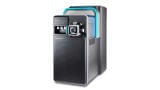
Develop a method that is approximately five times faster and produces data of equal or better quality than current HPLC methods by using the ACQUITY UPLC H-Class System. This system provides an ideal solution for laboratories running USP compendial HPLC methods or that are looking to migrate current methods to the efficiency and cost-effectiveness of UPLC.
GOAL
Successfully transfer the compendial HPLC method for the analysis of Loratadine, as written, to the ACQUITY UPLC® H-Class System and subsequently migrate to a UPLC®-optimized method.
BACKGROUND
Drug substances and drug products are routinely analyzed for impurities and related substances and for assay of active pharmaceutical ingredient (API) content to ensure efficacy and safety of the pharmaceutical product. The U.S. Pharmacopeia (USP) compendial methods used for these analyses typically employ HPLC utilizing long columns resulting in excessive run times. In the case of Loratadine and Loratadine Tablets, an antihistamine drug used to treat allergies, the USP method for Related Substances (RS) and Assay uses a 4.6 mm x 15 cm L7 column at 1.0 mL/min with an isocratic run time of approximately 20 minutes. A second RS method (designated Test 2) for Loratadine prepared by a different synthetic route calls for a 4.6 mm x 25 cm L1 column at 1.2 mL/min with a gradient run time of 50 minutes in order to separate an additional impurity. Any reduction in analysis time can correspond to significant cost savings for an analytical lab.
SOLUTION
The method provided from the USP was run on a traditional HPLC system (Alliance® HPLC with a 2998 Photodiode Array Detector) exactly as written in the monograph. The entire analysis was then run, exactly as written, on the ACQUITY UPLC H-Class System. Results from these two assays (retention time reproducibility, relative retention time, and impurity levels) were compared to show the ACQUITY UPLC H-Class System has the ability to perform compendial methods of this type equally or better than traditional HPLC technology. The compendial HPLC method was transferred to a UPLC method using the instrument’s built-in ACQUITY UPLC Columns Calculator. Using this newly calculated method, the entire sample set was analyzed, and the results compared (retention time reproducibility, relative retention times, and impurity levels) to the HPLC results. Using this significantly shorter run time method with a reduction from 20 minutes for the isocratic run to 4 minutes, the results compared favorably to those obtained both from the ACQUITY H-Class System running the
HPLC method and the traditional HPLC system (Figure 1).
ILM Guide 2026/27


 Product directory