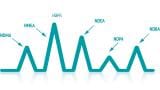
Scientists have created a new computational model that could forecast where outbreaks of cholera are likely to occur.
Researchers from Ohio State University are working with the Centers for Disease Control and Prevention (CDC) on the project, with the aim of tackling the deadly disease in earthquake-ravaged Haiti.
Ohio State researcher Marisa Eisenberg said that the initial findings show that cholera is spread through both contaminated environmental water and human contact.
As the data is processed via the computational model, the researchers hope to identify typical outbreak patterns and identify "hotspots" – areas that are key to preventing the disease from spreading rapidly.
Joseph Tien, professor of mathematics at Ohio State, who collaborated on the project, said: "Before the earthquake, cholera hadn't been reported in Haiti in decades, so we're in new territory as far as what the disease will do there in the coming months and years."
The results of the research and the computational model could be later used in South East Asia and in the Democratic Republic of the Congo, where the disease is still common.



 Product directory