Chromatography
Published over 14 years ago. See the latest and most current information on Chromatography.
High-pressure gas cylinders are a common sight in many laboratories: a default for supplying analytical instruments with their gas requirements, high-pressure gas cylinders are familiar and provide the gas that’s required, so it could be said that the old adage, ‘if it isn’t broke, don’t fix it’, could well apply.
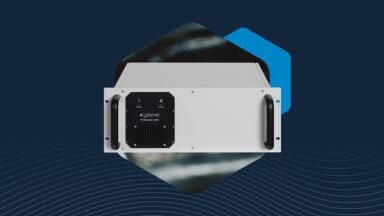
Despite this, increasing numbers of analytical instrument users are choosing to supply their GC FID, LC/MS and other types of instrument with gas via an analytical gas generator. Driving this decision will be a combination of factors broadly grouped into four areas; safety, cost, convenience and purity.
Safety Concerns
High-pressure gas cylinders can provoke safety concerns in a number of different ways, some with potentially fatal consequences. The presence of high-pressure gas cylinders in the laboratory has been likened to sharing the laboratory with a potential missile. This stems from the behaviour of a cylinder that suddenly de-pressurises. There is enough force released with a European ‘L’ size cylinder to accelerate the cylinder to something like 66mph or 108km/h in around 1/10 seconds. Cylinders weigh in at 200lb (98kg), so there’ll be enough momentum to cause some severe damage.
ILM Guide 2026/27

 Product directory