Showing 325 to 336 of 2887 results
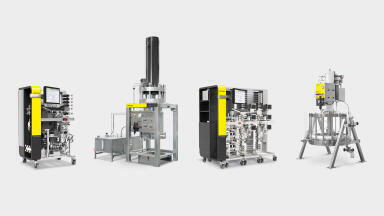
Chromatography is a laboratory technique used to separate and analyse mixtures of substances into their individual components. It's a widely used method in chemistry for a variety of purposes, including identifying and quantifying the components of a mixture, purifying substances, and studying chemical reactions.
The basic principle of chromatography involves the distribution of a mixture between a mobile phase and a stationary phase. The mobile phase, which can be a liquid or a gas, carries the mixture through the stationary phase, which is typically a solid or a liquid-coated solid. As the mixture moves through the stationary phase, the different components of the mixture interact with it to varying degrees, causing them to separate based on their chemical properties.
ILM Guide 2026/27


 Product directory

















.jpg)