
News
Published over 3 years ago. See the latest and most current information on News.
The Royal Society of Chemistry (RSC) has named a team from Australia’s Monash University as recipients of its prestigious Environment, Sustainability and Energy Horizon Prize: John Jeyes Prize, for their ground-breaking discovery of a more sustainable approach to production of ammonia-based fertilisers.
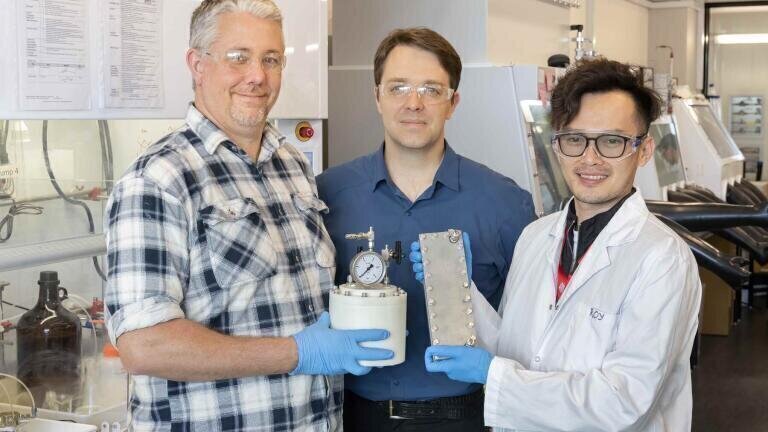
The Monash Ammonia team has developed a unique electrolyte(1) that supports the reaction to convert nitrogen into ammonia at near ambient pressures, using just renewable energy, nitrogen from the air and room temperature water. The group has also formed spin-out company, Jupiter Ionics, to scale up the process.
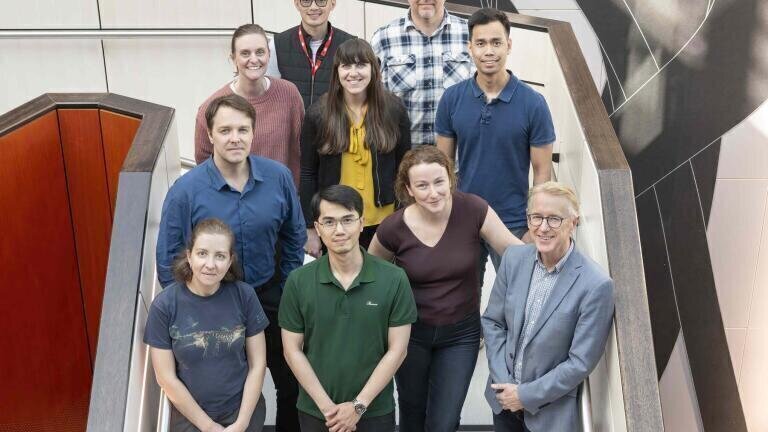
Receiving a trophy and a professionally produced video to celebrate the work, Associate Professor Alexandr N. Simonov, ARC Future Fellow, School of Chemistry, of Monash University and the Monash Ammonia team, said:¯ “The success of our work would never be possible without a concerted effort from a diverse and harmonious team of highly talented scientists motivated by achieving one globally important goal.”
The Monash Ammonia team’s work has tackled the geo-political events impacting food production and high dependence on nitrogenous fertilisers, by facilitating a decentralised approach to fertiliser production, capable of using renewable energy at times when it is available in abundance and otherwise may be wasted. The approach is working towards a shift in the way food is produced through not only not only decarbonising processes, but also democratising them.
Dr Helen Pain, Chief Executive of the Royal Society of Chemistry, said: “The Horizon Prizes recognise brilliant teams and collaborations who are opening new directions and possibilities in their field, by combining their diversity of thought, experience and skills, to deliver scientific developments for the benefit of all of us.
“The work of the Monash Ammonia team is a fantastic example of why we celebrate great science; not only because of how they have expanded our understanding of the world around us, but also because of the incredible contribution they make to society as a whole. We are very proud to recognise their work.”
1. Published in Nature volume 609, pages722–727 (2022)
More information online
ILM 51.6 Sept 2026





 Product directory