Chromatography
Published over 20 years ago. See the latest and most current information on Chromatography.
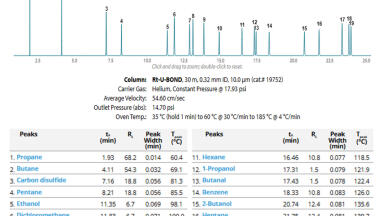
Measuring circulatory level of thyroid stimulating hormone (TSH) is the first line test recommended for the early detection of thyroid disorders in particular primary hyperthyroidism. Although the functional sensitivity of the current 3rd generation TSH assays have improved, in practical terms, medical laboratories usually are unable to report levels below 0.05μIU/mL. The immuno-PCR has given hope for lowering the detection limit and improving the functional sensitivity as recommended by the Department of Health. In this study, we optimised the conditions for an ELISA method which is the first part of an immuno-PCR method for detection of low levels of TSH and established the optimum conditions for purification, reduction and identification of the detector human anti-TSH antibody. The antibody was reduced and we identified it?s peak at 14 mins of the HPLC run, whereas the retention time for intact antibodies was 18 minutes. The incubation period after reduction of the antibody was the crucial part of the experiment. It should be kept as short as possible to prevent reduced fragments from reassociation. The reduced antibody is required for conjugation to the single strand oligonucleotide (ssDNA). The lowest functional sensitivity of the ELISA assay was found to be 0.02μIU/mL TSH and the assay was linear at the TSH concentration at 0-2.6μIU/mL.
ILM 51.6 Sept 2026




 Product directory