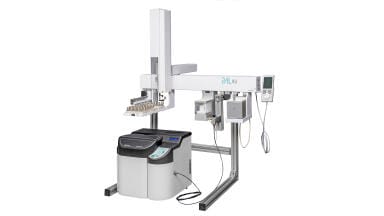
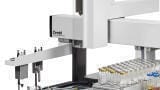
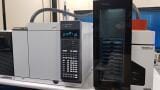
Markes International Ltd is pleased to announce a breakthrough in analytical thermal disorption with the availability of an automatic tag
read/write option for its new 100-tube thermal desorption (TD) autosampler, ULTRA 2.
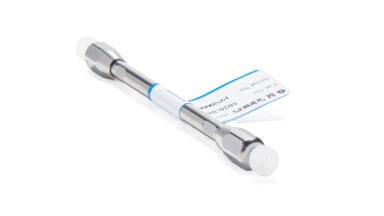
Introduced by Markes last year, TubeTAGâ„¢ is a patented electronic labelling system, based on RFID technology, for thermal desorption sample tubes. It stores and transfers valuable data reliably and without transcription errors. TubeTAG is designed to track tube-related information and field sampling data as TD tubes move from laboratory to field and within a laboratory during a monitoring project. It allows users to check tube ID numbers, confirm sorbent packing and log
field sampling data at all stages of a monitoring project. The technology is highly robust and very cost effective. Tagged tubes can withstand stringent desorption conditions (e.g. 400°C) for extended periods without any reduction in performance. Tests have shown them to be reusable for over 1000 thermal cycles, making the technology economically viable to all TD users.
The availability of tag read/write technology integrated with automated thermal desorption complements and extends the advantages offered by TubeTAG. Markes ULTRA 2 TD autosamplers are compatible with tagged tubes
allowing a tag to remain with an individual sample tube throughout its life. Moreover, those configured with the tag read/write option allow
tube- and sample-related information to be read and automatically entered into the analytical sequence table. Post-run, each tag can also be updated; incrementing the number of thermal cycles, clearing previous sampling information, amending the tube status to `analysed` and logging the details of any anomalies detected during analysis. This latest innovation from Markes represents a real breakthrough in
analytical thermal desorption. It makes it possible and practical to track the history of every individual TD sorbent tube throughout its life; knowing exactly what sorbent combination is in every tube, when it was last packed and whether it is prone to leak test failures.

 Product directory