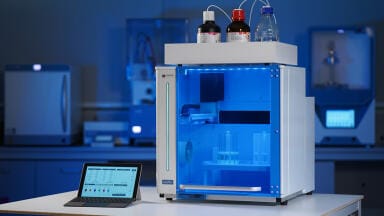
The NH4D sc ISE ammonium probe from Hach Lange, with new CARTRICAL technology, is clearly superior to comparable products. All sensors are integrated in the compact CARTRICAL cartridge. NH4D sc is ideal for use in aeration tanks and is a cost effective solution even for small plants.
The CARTRICAL sensor cartridge is designed for long-term calibration-free use. It is also drift stable, thanks to the rugged integrated pHD reference element (differential electrode). Cross-sensitivities between ammonium and potassium are automatically compensated for. Solids do not interfere with the measurement. NH4D sc carries out continuous direct measurements without any need for sample preparation.
The CARTRICAL sensor cartridge, which is more favourably priced than individual electrodes, ensures error-free handling. Just remove the old cartridge, plug in the new one, and enter the code. As all the sensors are changed together, accuracy is assured.
The NH4D sc ISE probe is controlled by the proven SC controllers. Depending on the model, up to eight different sensors can be connected to one controller. Integration into existing BUS systems and the networking of several controllers is also possible




 Product directory