Laboratory products
Published over 9 years ago. See the latest and most current information on Laboratory products.
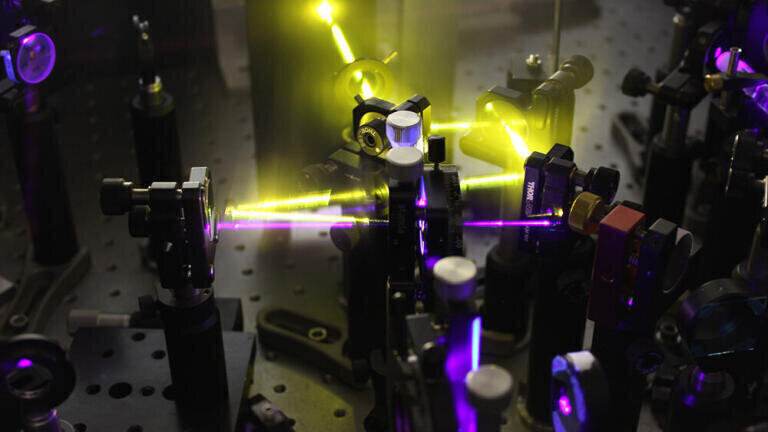
Romil solvents are helping researchers at the Cavendish Laboratory, the University of Cambridge’s Department of Physics, to develop novel quantum dots which could be used in the next generation of solar panels. James Xiao, a PhD student in the laboratory, explained: “We’re currently working on quantum dots which emit light in the infrared range, with the aim of significantly increasing the efficiency of photovoltaic cells.”
“We synthesise the quantum dots entirely in-house, which is a fairly labour-intensive process and involves several dissolution/precipitation steps, so requires large quantities of various solvents. We have struggled in the past to get some of the solvents we require, particularly anhydrous solvents; they have either very long lead times or very high prices. We only recently discovered that Romil offers many of these solvents at the same or better purity, and at a much better price. It’s also nice to use a local company, as delivery times are faster, and they can just pop in and talk through any issues we have, which we obviously don’t get with other suppliers.”
Discover the world of Romil for yourself at www.romil.com.
When it works well, it's pure chemistry. And when it's pure chemistry, it's Romil.
ILM 51.6 Sept 2026




 Product directory
























.jpg)