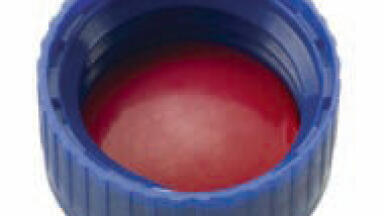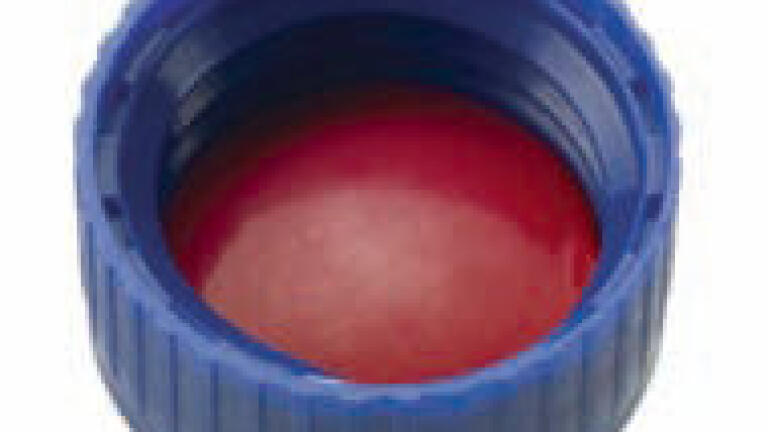
Septa
Published over 17 years ago. See the latest and most current information on Septa.
In HPLC often slitted or crossslitted Silicone/PTFE Septa are used, in order to offer a penetration aid for the fairly thick and dull needles used in the HPLC instruments. While the instrument needle requires the slitted septa, the user may run into the risk of concentration changes due to the evaporation of solvents. The risk increases with the volatility of the solvent used and
especially in cases of e.g. Hexane this problem may end in none-reproduceability of analysis results. Furthermore there is a risk that the volatile solvent may extract something out of the carrier material of the septa (i.e. mainly out of the silicone), as the chemically inert PTFE-lamination has been cut through as well as the Silicone layer with slitted or cross-slitted liners. Thus two risks
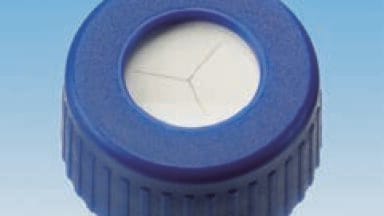
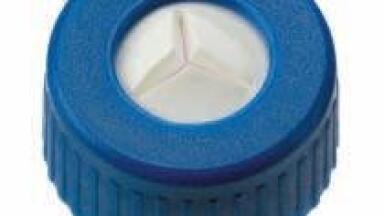
(concentration change + contamination through extraction) with a lot of impact to the analysis go along with slitted septa, even though the needle may require it. In order to avoid these risks, La-Pha-Pack has developped the so-called pre-cut septa.
Here the Silicone carrier material is cut through in Yform, however, the PTFE-lamination remains unhurt. As the Silicone part of the septa represents 95 per cent of the complete septa thickness, the needle can easily penetrate through the Y-slit for most of the septa’s thickness. Only the 0.05mm thick PTFE-lamination which is uncut, needs to be penetrated by the HPLC needle itself, but this goes without any problems even for these needles. The intact PTFE-lamination will also give 100 per cent protection to the sample with regard to any possible contamination until the needle pierces through it to pull out the sample for injection. The Y-form of the pre-cut was choosen, in order to give the needle a lot of target area for penetration, even if the needle doesn’t come down centrically. Besides that the Y-form of the pre-cut allows a better flow of air during sample pick up, in order to avoid a vacuum in the vial.
ILM 51.6 Sept 2026



 Product directory