Septa
Published over 18 years ago. See the latest and most current information on Septa.
MS applications require very clean vials and closures, as this method of analysis is very sensitive to any kind of contamination. Therefore it was common up to now to only use Silicone/PTFE septa in this field
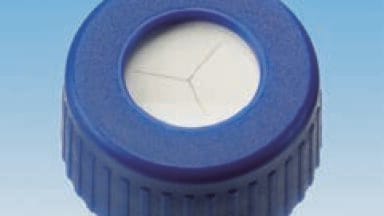
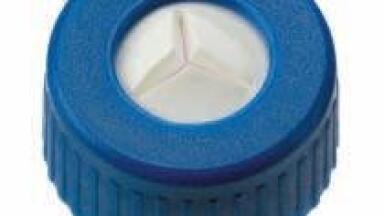
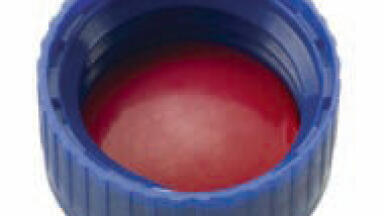
of chromatography as the purest available liner material. However, still most of the end-users experienced problems with even the highest grades of Silicone/PTFE septa due to ghost peaks arising from volatile siloxanes. Of course different treatments can reduce the level of these volatiles, but not eliminate the basic problem. La-Pha-Pack now has therefore developed a one component 9mm Short Thread Cap that doesn’t require any septa. This cap is inert and shows a similar chemical resistance like PTFE. Thus it can be used for sealing vials with all kinds of samples without loosing its inertness.
Furthermore the cap is made out of a special material that is pierceable with all common types of HPLC and GC needles, as it has a thinned penetration area with a diaphragm. Although it has no septa,
evaporation tests have shown that it is liquid and gas-tight. Each manufactured batch is LC/MS and GC/MS controlled and supplied with an appropriate certificate. The certificate clearly states instrument,
column and other method conditions being used for the test.
ILM 51.6 Sept 2026




 Product directory