Optical imaging
Your particle size distribution has changed. Is the difference a coarse fraction, a change in particle shape, or something about sample preparation? For a quality-control or development lab, the next step depends on the answer. A graph can show where a result differs; it does not, by itself, show what individual particles look like. That is the question behind the SYNC Series: what else can you learn from the sample you have already measured?
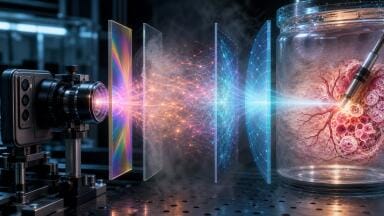
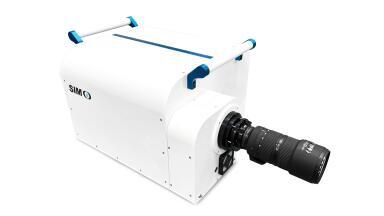
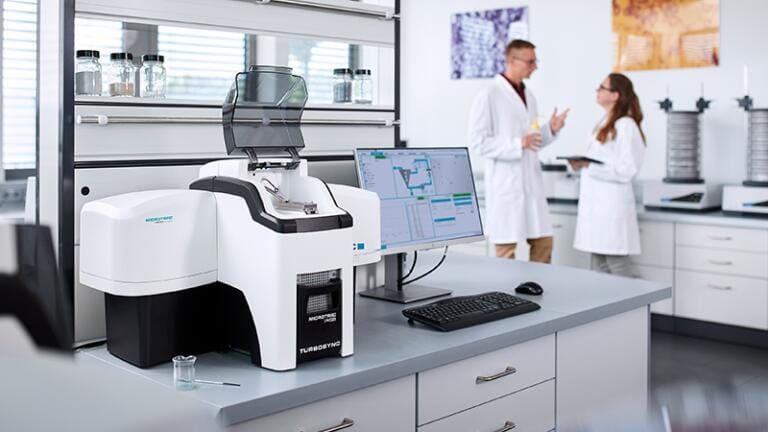
Laser diffraction measures the size distribution of dispersed particles. Dynamic image analysis makes individual particles visible and provides information about their dimensions and shape. When configured for imaging, MICROTRAC SYNC measures one sample with both techniques in the same cell and at the same time. You can examine a distribution and inspect the particles behind it without turning to a separate sample for the second view. The patented BLEND routine can combine the data in one distribution.
Those views answer different, related questions:
• See the size distribution. Laser diffraction shows the population across its measuring range. A shift in the distribution or an unexpected coarse fraction tells a lab which part of the result deserves attention.
• Inspect the particles. Dynamic image analysis provides particle images and more than 30 morphology parameters. Shape information can help the lab examine roundness, angularity and other characteristics relevant to its material.
• Check the measurement. Looking at particle images can also support a check on dispersion, including whether unusual structures or agglomerates are visible in the observed sample.
Take additive manufacturing powder. Small particles attached to larger particles are known as satellites; particles that differ from the expected shape can also warrant closer inspection. A size distribution remains essential, but images give the team a way to look at individual particles when the result raises a question. The same principle applies to abrasives, where an oversized fraction and angularity can matter to the application. The relevant criteria always come from the material and its specification, not from a universal definition of a good particle.
For routine work, the value is in the next decision. If a batch differs from previous measurements, the lab can review the distribution, inspect images where available and decide whether the sample, the preparation or the process needs further investigation. The two techniques do not replace a sound sampling plan or a validated method. They give the team more information to use within that method. The result can be discussed in specific terms: which size range changed, and what do the observed particles show?
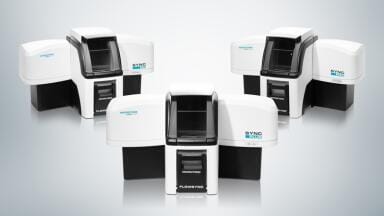
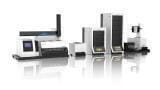
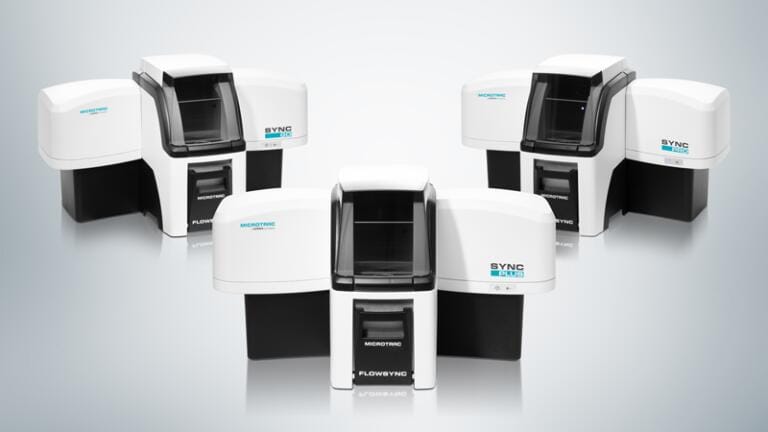
The setup can be matched to the work. SYNC GO, PLUS and PRO cover different particle size ranges; wet and dry dispersion modules support different materials. Artificial intelligence (AI)-supported analysis functions are available across all three variants. Imaging, sample handling and automation should be considered alongside the size range, so the instrument fits the samples arriving at the lab. An operator measuring a small number of wet samples has different workflow needs from a team running a full tray of routine samples.
It also helps to separate what each result can establish. A size distribution describes the dispersed particle population; a morphology measurement describes the particles seen by the camera. A shape observation may suggest what to examine next, but the lab still needs criteria for its material and a method for preparing representative samples. With both views available, a team can ask a more precise follow-up question and decide which measurement or process step should be checked first.
Start with the result your lab must act on. Do you need a reliable size distribution, a closer look at particle shape or a way to check a result that does not look right? SYNC lets you build the measurement around that question.
The first question in choosing a particle analyser is not which model has the longest feature list. It is what your lab needs to measure. Consider the particle size range, the material’s behaviour in wet or dry dispersion, how much sample is available and how many measurements must fit into a working day. Those choices determine whether the result is useful in the workflow you actually run. MICROTRAC offers three SYNC configurations so a lab can select the range and handling that fit its work.
The models differ in measuring range and optical setup:
• SYNC GO: for wet and dry measurement from 0.1 to 2,000 µm. It uses three red lasers and can be paired with manual sample delivery for routine work.
• SYNC PLUS: for dry measurement from 0.1 to 4,000 µm and wet measurement from 0.02 to 2,800 µm. Its three red lasers extend the available range, with automated wet handling available through FLOWSYNC.
• SYNC PRO: for dry measurement from 0.1 to 4,000 µm and wet measurement from 0.01 to 2,800 µm. It uses one red and two blue lasers for applications that call for the lower wet range.
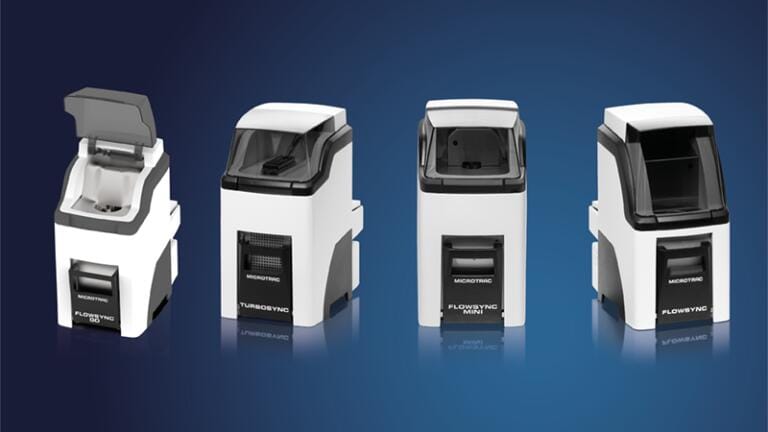
A range on a specification sheet is only one part of the decision. The sample needs to reach the measuring cell in a suitable condition. FLOWSYNC GO supports manual wet dispersion, FLOWSYNC provides automated wet handling and TURBOSYNC is designed for dry powders. SYNC’s wet and dry modules can be exchanged. A lab that alternates between liquid suspensions and dry material can plan a method around both, while still assessing which dispersion route is appropriate for each sample
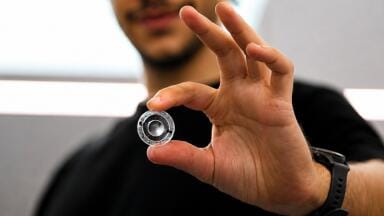
Sample quantity and throughput can matter just as much. The Small Volume Cell has a volume of 8 mL for work with limited material. For repeated measurements, an Autosampler used with FLOWSYNC can hold up to 64 vials; measurement sequences are controlled in DIMENSIONS LS. Those options address different bottlenecks. A development team may need to conserve a scarce formulation, while a routine lab may need consistent sample handling across a sequence. Selecting accessories should begin with that actual workload rather than a general wish for more automation.
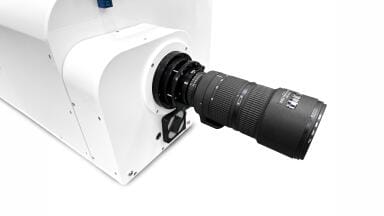
Imaging is another question to settle early. Laser diffraction supplies the distribution. When a SYNC setup includes dynamic image analysis, particle images and morphology information can help the team examine shape, a coarse fraction or dispersion. The patented BLEND routine can combine the two datasets in one distribution. AI-supported analysis functions are available across GO, PLUS and PRO, so the choice of measuring range does not by itself exclude those functions. Which imaging and handling configuration to use depends on the measurements the lab wants to make.
Think about who will run the method as well. A team moving between wet and dry samples needs a clear preparation procedure for each material. A lab using the Autosampler needs a sequence that matches its sample identification and handling. These are practical method decisions, not optional details after the instrument is installed. They determine whether the chosen configuration fits the working day as well as the sample specification.
A practical shortlist can start with four questions: What is the expected particle size range? Should the material be measured wet, dry or both? How much sample can be used? How many samples must the team process? Add a fifth if shape or an unexpected result needs closer inspection: will particle images help you make the next decision? With those answers, a SYNC configuration becomes easier to assess against the laboratory’s existing methods and product specifications.
Bring a representative sample and a clear measurement question to the discussion. The MICROTRAC team can help you identify a suitable SYNC model and dispersion workflow.
ILM 51.6 Sept 2026




 Product directory