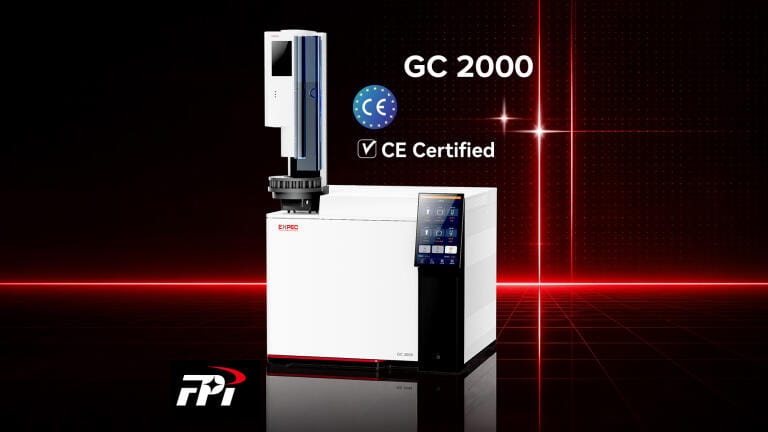

Gas chromatography
Gas chromatography laboratories can face difficult combinations of demands. They may have to identify compounds at trace levels, or separate them from complex sample matrices, and then process the results rapidly to support routine decisions. The challenge looks different in an air monitoring laboratory than it does in a food testing facility, but both depend on an instrument configuration suited to the samples and compounds under investigation.
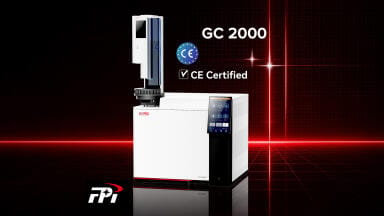
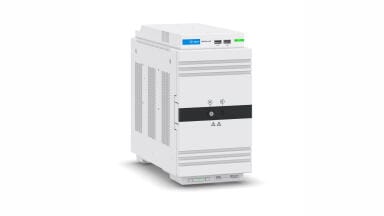
In this article – EXPEC Technology which is a subsidiary of FPI – explores how its GC 2000 gas chromatograph can be configured for four applications. The first concerns non-methane hydrocarbons in ambient air and emissions from stationary sources. A single flame ionisation detector measures total hydrocarbons and methane in sequence, while automatic flushing helps to limit carryover between analyses.
The article then turns to volatile organic compounds in ambient air. It describes a workflow that combines preconcentration, dual-column separation, and two forms of detection to analyse 116 compounds without cryogenic oven cooling. This may be of particular interest to laboratories that need to assess compounds with varied boiling points and chemical properties.
Two further examples address pesticide residues that may be found in food. One uses parallel detector channels and an automated sampler for tests on fruit and vegetables. The other examines how an inlet designed to reduce matrix effects can support the analysis of difficult food samples, with tandem mass spectrometry available for more complex work.
For readers who select, operate or assess gas chromatography systems, the article offers a practical look at how sampling, separation and detection choices can be matched to distinct analytical tasks.
You can read more about FPI’s gas chromatography solutions here.
ILM 51.6 Sept 2026




 Product directory