
Gas chromatography
For decades, nitrites have done an important job in food. In cured and processed meats they control the growth of Clostridium botulinum, fix colour, and add flavour. They are also the precursor that drives nitrosamine formation.
Regulators have now acted on that risk. In October 2025, the EU lowered the permitted levels of nitrites and nitrates in processed meats, with the explicit aim of reducing nitrosamine formation. General meat products dropped from 150 mg/kg to 80. The European Food Safety Authority had already concluded, in its 2023 opinion on ten carcinogenic nitrosamines in food, that exposure raises a health concern, with meat and meat products identified as the largest single contributor.
For food manufacturers, this creates a narrow path to walk. Add enough nitrite to keep food safe. Keep it low enough to hold nitrosamines down. Proving you have struck that balance means testing, and testing for nitrosamines in a food matrix is not simple. Meat, fish, cheese, and beer all carry complex backgrounds that can mask the very compounds you are looking for.
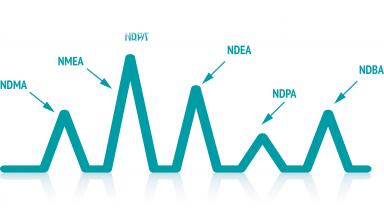
A nitrosamine-specific detector is designed for exactly this. The Thermal Energy Analyser (TEA) responds only to the nitrogen-oxide bond found in every nitrosamine. Compounds without that bond produce no signal, so a busy food matrix does not bury the result. Coupled to a gas chromatograph, it separates individual nitrosamines and detects each as it elutes.
It also detects nitrosamines you were not expecting. Because the TEA responds to the bond rather than the molecule, an unexpected compound still produces a distinct peak, even without a reference standard to match it. In food, formation depends on ingredients, processing, and storage, so an unexpected result is always possible.
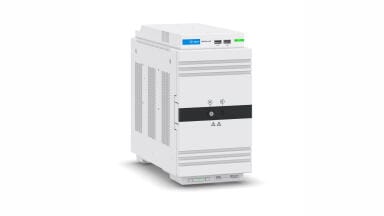
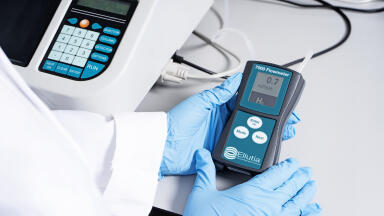
The TEA detects volatile and semi-volatile nitrosamines with high selectivity. It connects to most GCs, so a food laboratory can add nitrosamine capability to a gas chromatograph it already owns, rather than buying a separate instrument. And if you would like to see the results on your own samples first, we can run them for you.
Contact Ellutia to find out how nitrosamine detection could work in your laboratory.
More information online
ILM 51.6 Sept 2026



 Product directory


.jpg)
.jpg)















.jpg)
