Gas chromatography
Ask a chromatographer what affects their results and they will list the obvious things. The column. The temperature programme. The sample preparation. Gas flow tends to come further down the list, if it comes up at all. Yet flow affects all of it, and it influences every separation that runs.
Carrier gas flow rate determines how long a compound spends on the column. Change the flow and you change the retention time. Change it enough and peaks shift, resolution suffers, and a method that was reproducible stops being reproducible. The detector gases matter too, affecting sensitivity and baseline stability. Split injections add another layer, where the split ratio is set by the relationship between the column flow and the split flow.
The difficulty is that flow problems are quiet. A blocked line, a worn seal, a regulator that has drifted, none of these announce themselves. They show up as small inconsistencies that are easy to blame on something else. An analyst can spend a morning questioning a column or a sample when the real cause is a flow rate that is no longer what the instrument claims it is.
This is why measuring flow directly matters, rather than trusting the set value on the GC. The number the instrument displays is what it was told to deliver, not necessarily what is reaching the column. Electronic pneumatic control has made GCs far more stable, but components age, fittings loosen, and the only way to know what is actually flowing is to measure it. A regular flow check is one of the simplest pieces of preventative maintenance a GC lab can do, and one of the most overlooked.
There is a documentation angle as well. For any laboratory working to a quality standard, a flow measurement traceable to a recognised reference is not just good practice, it is evidence. Being able to show that your flows were verified, and verified against something defensible, turns a routine check into part of your audit trail.
None of this requires a complicated setup. A good handheld flowmeter measures flow in seconds, and a traceable one gives you a number you can record with confidence.
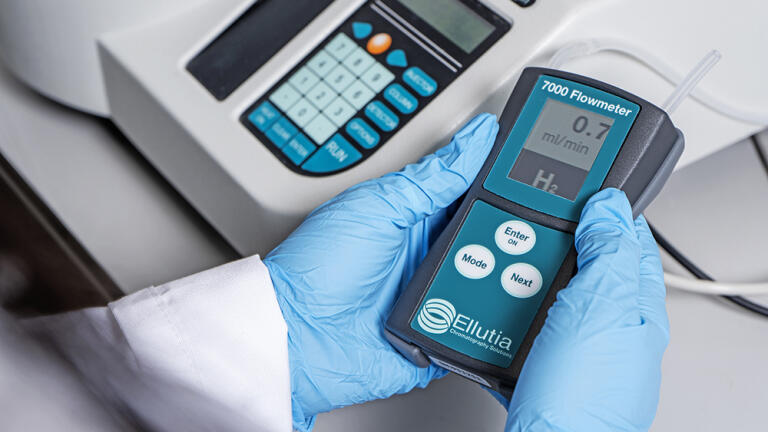
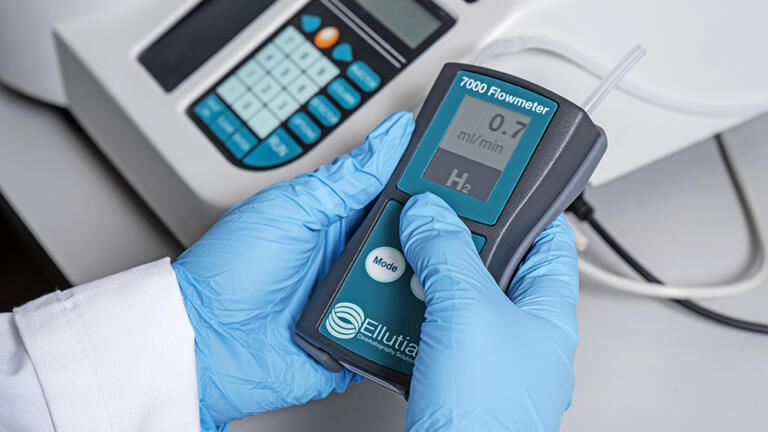
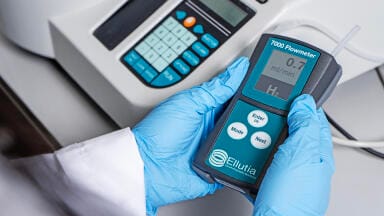
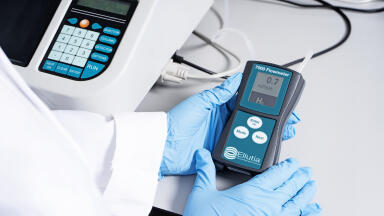
This is where the Ellutia 7000 GC Flowmeter fits. It is a pocket-sized, UK-built instrument that measures eight common GC gases, calculates linear velocity from your column diameter, and handles split flow measurement directly. Its calibration is traceable to UKAS standards, so the reading is one you can record and defend. It is the kind of tool that earns its place in the drawer beside the instrument, ready whenever a flow needs checking.
For a limited time it is available with £200 off and free shipping, using code LABMATE. If regular flow measurement is not yet part of your routine, it is an easy way to make it one. Find it here.
ILM 51.6 Sept 2026


 Product directory


.jpg)
.jpg)















.jpg)
