News
Researchers have identified a previously unknown gene that confers resistance to polymyxins – a last-resort class of antibiotics – in bacteria from heavy metal-contaminated water in New South Wales, Australia
A previously unknown gene that confers resistance to polymyxins – a last-resort class of antibiotics – has been found in heavy metal-contaminated freshwater sediment in Australia, revealing a potential environmental reservoir of drug resistance.
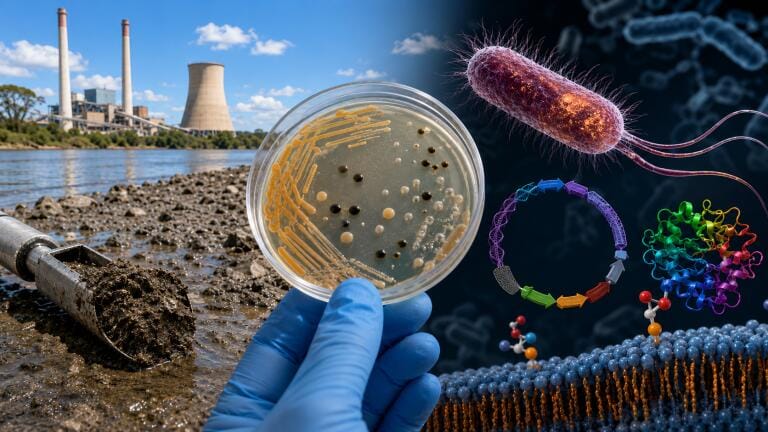
Researchers from Macquarie University and the University of Sydney, both located in Sydney, New South Wales (NSW), Australia, have identified the gene in the environmental bacterium Pigmentiphaga litoralis, isolated from sediment near the Eraring Power Station coal ash basin on the Central Coast of NSW, north of Sydney.
The study is the first description of a mobile colistin resistance – named ‘mcr-12’ – a gene family from an environmental source outside clinical, food or livestock settings. It is also the first such family identified in a bacterium outside the class Gammaproteobacteria, and the first to be found in the Southern Hemisphere.
Polymyxins, comprising polymyxin B and polymyxin E (commonly called ‘colistin’) have returned to clinical use because many Gram-negative infections no longer respond to other antibiotics, though toxicity concerns restrict their use to the most serious cases. The mcr genes are of concern because they sit on mobile genetic elements that can pass between bacteria in some cases. The first, mcr-1, was reported in Escherichia coli from Chinese pig farms in 2015, overturning the assumption that polymyxin resistance was largely non-transferable. Surveillance since has focused mainly on clinical, livestock and food settings.
“Polymyxin resistance genes are typically associated with settings where there has been direct antibiotic exposure, so this discovery challenges our previous assumptions,” said Dr Brodie Gillieatt, of Macquarie University, and the study’s lead author.
The gene sits on a previously uncharacterised plasmid, pPLE30.2. Removing the plasmid from P. litoralis increased its susceptibility to polymyxin B 32-fold which restored mcr-12* returned resistance, confirming the gene was responsible. Further analysis showed MCR-12* acts as a phosphoethanolamine transferase, modifying lipid A in the bacterial outer membrane in a way that weakens polymyxin binding.
When introduced experimentally into other species, mcr-12 reduced susceptibility to polymyxin B in Pseudomonas aeruginosa and Acinetobacter baumannii, two pathogens linked to difficult hospital infections. Its effect was more limited in Enterobacteriaceae such as E. coli, Klebsiella pneumoniae and Enterobacter cloacae, although the enzyme could still modify lipid A in E. coli. The mechanism therefore functions across distinct bacterial groups but its effect depends on the host.
“The gene has not yet spread to major human pathogens. Detecting it now gives researchers and public health officials a chance to monitor its spread before it becomes a widespread clinical problem,” said Professor Amy K. Cain, senior author and Professor of Microbiology at Macquarie University.
Natural transfer of mcr-12 was not demonstrated. Laboratory attempts to move the plasmid through conjugation were unsuccessful and genomic analysis suggested it probably cannot mobilise independently, though the authors said a helper plasmid could potentially do so.
A further concern is the plasmid’s proximity to genes conferring resistance to arsenic, copper, cadmium, zinc and cobalt. The researchers proposed that metal exposure could favour bacteria retaining the plasmid even without antibiotic pressure, a process known as co-selection that could help preserve resistance genes through environmental contamination alone.
“It highlights the role of environmental pollution in antibiotic resistance, meaning environmental management may also play a role in slowing the spread,” said Gillieatt.
“These types of resistance genes are likely circulating in wider environmental reservoirs, and we simply have not invested in their detection until now. We need broader surveillance,” he said.
The findings support a One Health approach, recognising the link between human, animal and environmental health, since surveillance which is focused only on patients, hospitals and livestock may risk missing other resistant genes before they reach clinically important bacteria.
The researchers now plan to map the distribution of mcr-12 and determine whether any mechanism could allow it to mobilise, alongside broader analysis of contaminated waterways for related resistance genes.
* Note: mcr-12 refers to the gene whereas MCR-12 refers to the protein encoded by the gene.
For further reading please visit: 10.1038/s41467-026-75587-4
ILM 51.6 Sept 2026



 Product directory




























.jpg)
