News
The US$100 million facility in Tenth of Ramadan City is the first fully integrated plant in Egypt and the Middle East to produce biologic medicines and biosimilars from genetically engineered cells through to finished pharmaceutical products
Egypt’s Deputy Prime Minister for Human Development and Minister of Health and Population, Dr. Khaled Abdel Ghaffar, has inaugurated the EIPICO 3 pharmaceutical plant in Tenth of Ramadan City, strengthening the country’s capacity to domestically produce advanced biological medicines.
The facility is operated by the Egyptian International Pharmaceutical Industries Company (EIPICO) which is part of the Arab Company for Drug Industries and Medical Appliances (ACDIMA) Group.
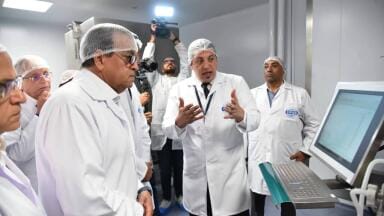
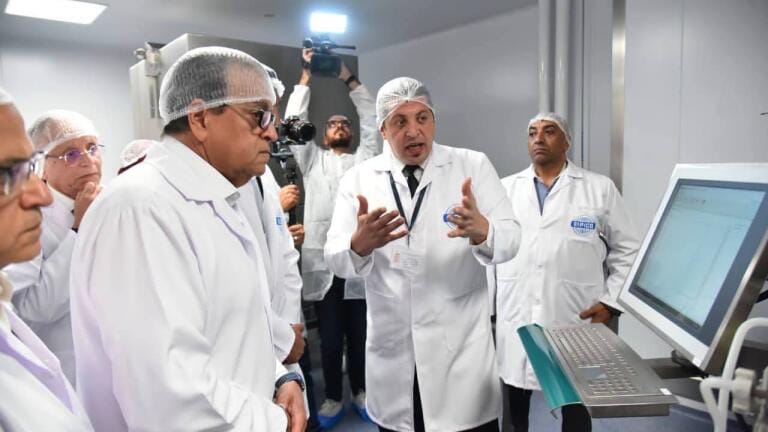
Mr. Khaled Hashem, minister of industry; Dr. Ahmed El-Sobky, chairman of the general authority for healthcare; and Dr. Olfat Ghorab, chairwoman of ACDIMA, all attended the inauguration. Dr. Ahmed Kelani, chairman and managing director of EIPICO Pharmaceuticals, briefed the minister on the plant’s design, production systems and operational capabilities.
Constructed on a site of 10,500 square metres, EIPICO 3 represents an investment of more than US$100 million. The plant is described as the first facility of its kind in Egypt and the Middle East to manufacture both biologic medicines and biosimilars through a fully integrated production process.
Biologic medicines are complex treatments produced from living cells rather than through conventional chemical synthesis. Biosimilars are medicines developed to be highly similar to approved biological products, with no clinically meaningful differences in quality, safety or efficacy. Their domestic production could help Egypt to improve access to advanced treatments and reduce its reliance on imported medicines.
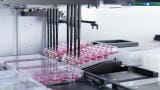
At EIPICO 3, the production process extends from genetically engineered cells through the cultivation and purification stages to formulation, sterile filling, packaging and completion of the final pharmaceutical product.
The facility adopted a ‘modular construction concept’ in collaboration with the Swedish pharmaceutical engineering company Pharmadule. Under this approach, specialist production units were manufactured, assembled and tested outside of Egypt before their transportation to site for installation. This method was intended to ensure that the plant’s research and production areas complied with international quality requirements.
ILM 51.6 Sept 2026


 Product directory