Research news
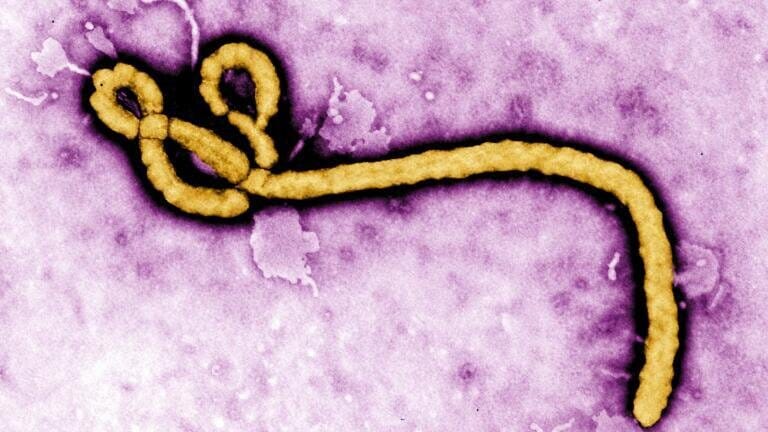
Researchers have developed a rapid approach to validate diagnostic tests for Bundibugyo virus and found evidence that an existing Zaire ebolavirus vaccine could provide cross-protection, offering potential tools to strengthen responses to the 2026 outbreak
The current outbreak of Bundibugyo virus (BDBV) in the Democratic Republic of the Congo has highlighted the difficulties that health authorities face when a rare and dangerous pathogen emerges for which dedicated diagnostic tests, vaccines and treatments are unavailable or at best limited.
Two studies led by researchers from the German Center for Infection Research (DZIF) at Charité – Universitätsmedizin Berlin and the German Primate Center – Leibniz Institute for Primate Research in Göttingen – including international collaborators – have examined different aspects of the response. The research assessed how diagnostic tests could be evaluated rapidly and whether an established Ebola vaccine might offer some protection against BDBV.
During the COVID-19 pandemic, researchers at Charité led by Professor Christian Drosten, a DZIF scientist, rapidly developed a polymerase chain reaction (PCR) assay for Sars-CoV-2 virus. Its validated design was made publicly available which allowed manufacturers and laboratories to reproduce it and helped to expand testing capacity.
European Union legislation has since introduced more stringent requirements for diagnostic devices. Although intended to ensure test performance, these requirements can present difficulties during outbreaks when validated diagnostics are required rapidly and appropriate reference materials are scarce.
The 2026 BDBV outbreak provided an opportunity to address this problem. BDBV belongs to the Ebolavirus genus and can cause severe Ebola virus disease but there is no vaccine or therapeutic treatment specifically licensed against it.
On 20 May 2026, the Charité hospital admitted a patient from the USA who had contracted BDBV in the Democratic Republic of the Congo. Researchers obtained viral genetic material from a throat swab and established a reference standard against which candidate diagnostic assays could be evaluated.
The team assembled an international network of nine laboratories that included DZIF members, the German National University Medicine Network (NUM), European research consortia, university hospitals and biosafety level four laboratories – the highest laboratory containment level. The network assessed four candidate PCR tests from two manufacturers.
Within two weeks, the laboratories completed analytical and clinical evaluations, with no evidence of cross-reactivity. The results demonstrated that a decentralised network could rapidly generate robust test-performance data to support regulatory assessment and deployment during an infectious disease emergency.
The researchers also highlighted the importance of collaboration between publicly funded laboratories and diagnostic manufacturers. Rare pathogens provide relatively little commercial incentive to develop tests that might be required only occasionally, so public investment would be required to maintain preparedness for high-consequence diseases.
A second study, led by DZIF scientist Professor Stefan Pöhlmann at the German Primate Center, examined the biological characteristics of the 2026 BDBV strain and whether vaccination against Zaire ebolavirus might offer cross-protection.
Researchers focused on the viral glycoprotein, a surface protein that allows ebolaviruses to enter host cells and represents an important target for neutralising antibodies. Because authentic BDBV requires biosafety level four containment, they used pseudovirus particles that carried glycoproteins from BDBV strains associated with outbreaks in 2007–08, 2012 and 2026.
The experiments found no evidence that the 2026 glycoprotein allowed more efficient entry into human cells than those from earlier strains.
Researchers also examined serum from ten healthy volunteers who had received the licensed recombinant vesicular stomatitis virus-Zaire ebolavirus vaccine, known as rVSV-ZEBOV. Samples were assessed before vaccination and at 28 and 180 days afterwards.
After vaccination, antibodies could neutralise pseudoviruses that carried glycoproteins from all three BDBV strains. BDBV-specific neutralising activity was detected in six of the ten vaccine recipients at both post-vaccination time points, although activity was approximately 3.5 to 3.6 times lower than against Zaire ebolavirus.
The results provide evidence that antibodies elicited by the licensed vaccine can recognise and inhibit BDBV in laboratory models. However, the researchers cautioned that the experiments did not demonstrate protection against BDBV infection or disease in people because the study used pseudoviruses and measured neutralisation in vitro.
Taken together, the studies demonstrate how diagnostic science, virology and immunology can provide complementary tools during an infectious disease outbreak. International laboratory networks, accessible reference materials and regulatory mechanisms established before an emergency could help to reduce the interval between identification of an emerging pathogen and access to reliable diagnostics and potential preventive measures.
For further reading please visit: 10.1016/s1473-3099(26)00465-2
ILM 51.6 Sept 2026



 Product directory


.jpg)
















,-photo-Karin-Allander.jpg)







.jpg)