Clinical, medical and diagnostics
A study of more than 35,000 adults has found that an early detection blood test could identify signals from 17 broad cancer types including several for which no routine screening programme exists
A blood test designed to detect multiple forms of cancer has identified cancer signals across 17 broad cancer types in a large prospective study. The cancers identified included ovarian, lung, breast and colorectal cancers, as well as many forms of the disease for which no recommended screening test exists.
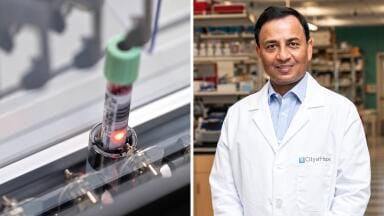
Pathfinder 2 was a prospective, interventional study that enrolled 35,878 adults aged 50 or older. The Mayo Clinic, Rochester, Minnesota, USA, was among the institutions that took part and Dr. Karthik Giridhar, a medical oncologist, served as a study investigator and senior author.
The multicancer early detection test (MCED) analysed small fragments of DNA that are released by cells into the bloodstream. Researchers examined biological patterns within these fragments to identify signals that are known to be associated with cancer.
When the test detected a cancer signal, it also predicted the part of the body from which the signal was most likely to have originated. This prediction is intended to help physicians select appropriate follow-up examinations, diagnostic scans, laboratory assessments or tissue biopsies.
Of the 32,007 participants included in the study’s performance analysis, 287 received a positive MCED test result. Physicians subsequently diagnosed cancer in 173 of these participants.
The test achieved a positive predictive value of 60.3 per cent. This meant that approximately six in every ten participants with a positive result were subsequently found to have cancer. Its specificity was 99.64 per cent which indicated that it correctly produced a negative result for the great majority of participants who did not have cancer.
Among participants whose positive result was confirmed as accurate, the test included the cancer’s actual site of origin within its two most likely predictions in 91.3 per cent of cases. Accurate identification of the probable origin could allow clinicians to direct subsequent diagnostic assessment towards the most relevant organ or tissue.
“One of the challenges in cancer screening is that most cancers do not have an established screening test,” said Giridhar.
“This study helps us better understand how a multicancer blood test might complement existing screening approaches by identifying cancer signals that otherwise may not be detected through routine screening,” he added.
The researchers found that 72.8 per cent of the cancers detected by the MCED test belonged to types for which the US’ Preventive Services Task Force had issued no Grade A or Grade B screening recommendation. The task force assigns these grades to preventive services when evidence supports their routine provision.
Among the 151 participants who had at least one previously undiagnosed primary cancer detected by the test, 53 per cent had stage I or stage II disease. A total of 70.9 per cent had cancer at stage I, II or III.
Dr Giridhar said that multicancer blood tests could not yet replace established methods of cancer screening. Instead, they could supplement existing approaches and help researchers and clinicians to understand how blood-based detection might identify cancers that current programmes do not routinely cover.
However, the findings require cautious interpretation, given Pathfinder 2 was a single-arm study meaning that it did not incorporate a comparator group. Its endpoints were descriptive, and the researchers did not conduct formal hypothesis tests to determine whether the observed outcomes differed significantly from those of an alternative approach.
The authors said that randomised trials and longer follow-up would be necessary to establish whether MCED assessment provided meaningful clinical benefits in routine practice. Such research would need to examine whether use of the test improved patient outcomes, reduced diagnosis of certain cancers only once they had reached advanced stages and produced benefits that outweighed potential harms from false-positive results or additional diagnostic procedures.
The study also assessed an earlier version of the test. A commercially available version has since replaced it, so the reported performance measures may not correspond precisely to those of the version now available.
GRAIL Inc designed and funded the study, with the company taking part in the analysis and interpretation of the data and helping to prepare the paper’s manuscript. Dr Giridhar reported a consultancy and advisory relationships with GRAIL, and other organisations, as well as travel expenses paid by GRAIL.
For further reading please visit: 10.1038/s41591-026-04618-w
ILM 51.6 Sept 2026





 Product directory