DNA / RNA
A review has charted the development of messenger RNA lipid nanoparticle technology as a potential platform for cancer treatment, autoimmune disorders, rare genetic diseases and tissue repair
A recent review has assessed messenger RNA lipid nanoparticle technology and its potential to support therapies far beyond use in vaccines.
The peer-reviewed article has traced the development of messenger RNA (mRNA) lipid nanoparticles (LNPs) from their established role in vaccine technology to their proposed use as a programmable therapeutic platform.
The review, ‘The evolving landscape of mRNA-LNP medicine: advances, challenges and future perspectives’ was written by Yi Song, Zhangchi Dongye, Yuzhang Wu and Jian Li.
The authors, based at the Chongqing International Institute for Immunology and the Institute of Immunology at the Third Military Medical University, Chongqing, China, distinguished clinical achievements from preclinical strategies across infectious diseases, cancer, autoimmune disorders, rare genetic conditions and tissue repair.
mRNA carries temporary instructions that direct a cell to produce a particular protein. Unlike treatments that introduce a permanent genetic alteration, an mRNA medicine acts for a limited period before natural processes break down the molecule.
The LNPs protect the fragile mRNA and helps it to enter cells. Its composition can influence which tissues receive the cargo, how efficiently cells absorb it and how the immune system responds. The review presented mRNA as the programmable instruction and the LNP as the vehicle that helps to determine cellular entry and biodistribution.
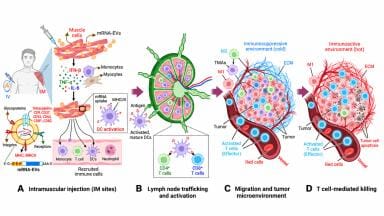
This shared framework has already supported development of vaccines – notably the BioNTech and Moderna vaccines rapidly deployed during the COVID-19 pandemic – but could have wider therapeutic uses. These include mRNA-encoded antibodies, personalised cancer vaccines, treatments designed to induce immune tolerance, temporary replacement of missing proteins and gene-editing systems delivered directly into the body.
One prominent preclinical strategy has sought to produce chimeric antigen receptor (CAR)-engineered immune cells within a patient. A CAR is an artificial receptor that allows an immune cell to recognise a selected target, such as a protein on a cancer cell.
Conventional chimeric antigen receptor T cell (CAR T) therapy requires clinicians to collect T cells from a patient, modify and expand them in a specialist facility, before then returning them to the patient. The process takes considerable time and requires substantial manufacturing capacity.
The alternative approach used targeted LNPs to carry CAR-encoding mRNA directly to selected immune cells, including T cells or macrophages. After a cell absorbed the particle and released its cargo from an intracellular compartment called an endosome, it translated the mRNA into CAR protein. The receptor then appeared on the cell surface and allowed the temporarily reprogrammed cell to recognise its target.
Because mRNA does not persist indefinitely, this method would create transient CAR-engineered cells rather than make a permanent alteration. If clinical studies establish its safety and effectiveness, the approach could reduce the need to modify cells outside the body, thereby shortening production times and improving access to treatments in the clinic. However, the strategy remains at an early stage of development and cannot yet replace established CAR T manufacturing.
The review identified three obstacles to wider clinical adoption. The first concerned delivery beyond the liver. Standard LNP formulations tend to accumulate in the liver, which restricts access to other important sites. More precise formulations will be necessary to reach tissues such as the brain, bone marrow and lungs without undue exposure elsewhere.
A second challenge concerned the safety of repeating doses. Some LNP components can stimulate immune responses which may alter the effectiveness or tolerability of future further administrations. Therapies for chronic diseases may require frequent treatment, so developers will need to seek to control, or minimise, immune responses to be able to achieve preservation of efficient delivery.
The third obstacle involved manufacture and quality control, particularly for personalised cancer treatments. Each patient-specific formulation may require an individual sequence, rapid production and rigorous assessment. These demands can add time, cost and logistical complexity.
The authors examined high-throughput assessment of LNP candidates in living systems, methods to target particular tissues and cell types, and artificial intelligence to refine mRNA sequences and untranslated regions, which help to regulate the stability and translation of an mRNA molecule.
They also considered formats that could extend protein production. Self-amplifying RNA can copy itself temporarily within a cell, while circular RNA has a closed structure that may resist degradation more effectively than conventional linear RNA. Both require further evaluation for safety, consistency and clinical benefit.
The review concluded that no single design of mRNA-LNP would suit all disease. Success will depend on the balance between dose, duration of protein expression, immune activity, delivery precision and practical manufacture.
For further reading please visit: 10.1016/j.medp.2026.100154
ILM 51.6 Sept 2026


 Product directory


.jpg)