DNA / RNA
Researchers have found that polyamines, some of the most abundant molecules in living cells, act as safety lockers for iron – a discovery that could present pathways towards novel cancer treatments and offer clues to early-onset Parkinson’s disease
Iron is essential to life. Cells need it to produce energy, to carry oxygen throughout the body, and to power countless chemical reactions that sustain living tissue. However, when too much iron is left free within a cell, it can trigger destructive reactions that break down DNA proteins and even cell membranes.
Dr. Ankur Jain, a member of the Whitehead Institute, Cambridge, Massachusetts, USA, together with former postdoctoral researcher Dr. Whitney Henry and graduate student Pushkal Sharma, has now discovered that cells rely on an unexpected protector against this threat in the shape of the polyamines.
The researchers’ have detailed their findings which reveal that polyamines act like storage lockers for iron, holding the metal safely in a non-reactive state until the cell needs to draw upon it. The discovery solves a decades-old mystery as to why cells maintain such extraordinarily high levels of polyamines and it uncovers a previously unknown defence mechanism that protects cells from toxic iron overload.
The work could also help scientists to develop better cancer treatments by allowing iron overload to trigger the death of cancer cells. Further, it may offer clues about diseases such as early-onset Parkinson’s disease where mutations can affect polyamine levels within neurons.
The Jain Lab has been particularly interested in how RNA folds, misfolds and, on occasion, clumps together within cells, and first began to study polyamines because these molecules bind to RNA and help to shape its structure. The researchers suspected that polyamines must perform other functions inside cells, given that they are among the most abundant small molecules found there, and present in levels comparable to those of adenosine triphosphate, the primary cellular energy source.
“We’ve known that without polyamines, cells stop growing and dividing,” said Jain, who is also an associate professor of biology at the Massachusetts Institute of Technology.
“But their best-known function only requires a small fraction of the polyamine levels cells actually have,” he said.
To uncover the hidden function of polyamines inside cells, the researchers used a large-scale genetic approach that allowed them to screen the entire genome at once, rather than to test genes one by one, in order to establish which cellular processes are affected when polyamine levels are altered within cells.
The screening phase revealed that when cells have reduced levels of polyamines, a protein called glutathione peroxidase 4 (GPX4) becomes essential for survival. GPX4 is known to prevent the harmful chemical reactions that damage the fatty molecules making up cell membranes.
The team also found that cells with lower polyamine levels contain higher amounts of another protein that acts as an iron sponge, keeping the metal in a mineralised form. Together, these findings led the researchers to hypothesise that polyamines might help to keep iron in a safe, non-reactive state within cells.
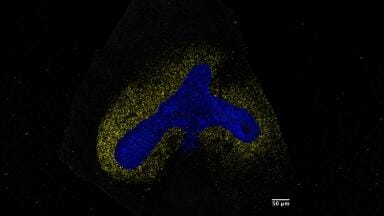
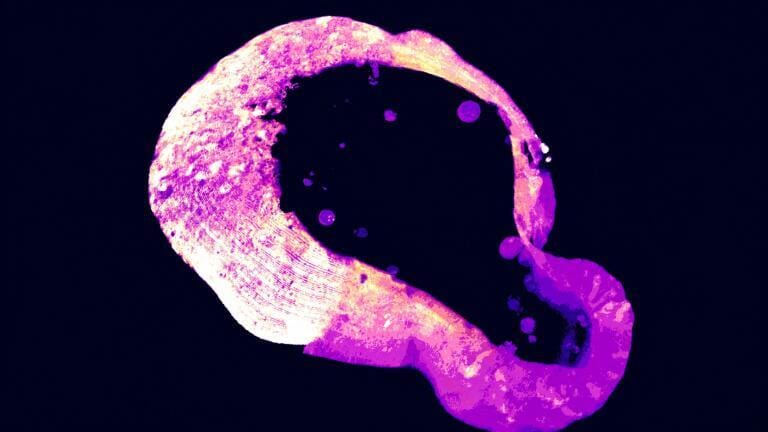
To test this idea, they developed a novel fluorescent sensor that allowed them to measure chemically reactive iron inside living cells. The sensor causes living cells to glow according to the amount of chemically reactive iron they contain, enabling researchers to track any changes in real time under a microscope.
The team paired the novel iron sensor with another sensor they had previously developed to measure polyamine levels within cells. By employing the two simultaneously, they observed the striking pattern of intra-cellular polyamine levels falling coinciding with the amount of chemically reactive iron rising, offering fresh evidence that polyamines play a key role in preventing build-up of iron inside cells.
Beyond answering a fundamental biological question, the findings could have implications for cancer treatment. Cancer cells often rely on high polyamine levels to support their rapid growth and division. However, cancer drugs designed to lower polyamine levels in order to halt cell division have so far had limited success.
“We saw that when polyamine levels fall, cells rely on GPX4 to protect themselves from iron toxicity,” said Sharma, who is also the first author of the study.
“This could mean that combining drugs that lower polyamine levels with those that block GPX4 might be more effective at killing cancer cells than targeting either pathway alone,” he added.
The discovery may also have implications beyond cancer. Mutations in genes that help to move polyamines around cells have been linked to a rare form of early-onset Parkinson’s disease, and scientists have long observed unusually high levels of iron in the brains of patients with Parkinson’s disease.
While it remains unclear whether excess iron contributes directly to the death of neurons in Parkinson’s, the discovery that polyamines help to buffer reactive iron inside cells offers a possible explanation for this link and opens up novel future investigative directions.
The researchers expect the novel iron sensor to prove a valuable tool for other scientists, too. By allowing them to track chemically reactive iron inside living cells, it could power further discoveries in the fields of ageing, cancer and neurodegeneration.
“There are a lot of promising future directions for this work,” said Jain.
“It’s exciting to think about how these tools and findings could help to answer further questions about disease pathways and potentially help to design better therapies,” he concluded.
Whitehead Institute is an independent, non-profit, biomedical research institute founded in 1982 advancing research in cancer, developmental biology, genetics, genomics and related fields. Led by 24 principal investigators and a global community of trainees and scholars, Whitehead Institute maintains a teaching affiliation with the Massachusetts Institute of Technology.
For further reading please visit: Polyamines buffer labile iron to suppress ferroptosis
ILM 51.6 Sept 2026




 Product directory