DNA / RNA
A neural-network model has identified gene-activity signatures that reveal the signals received by cells during embryo development, with potential applications in regenerative medicine and organoid production
An artificial intelligence model has allowed researchers to reconstruct the molecular signals that help cells to acquire specialised identities during embryonic development. The approach could support the production of specific cell types for regenerative medicine, disease research and organoid development.
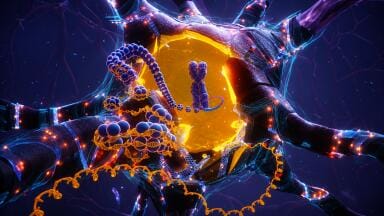
As an embryo develops, stem cells acquire distinct identities and organise into tissues and organs. A cell’s fate depends partly on which genes are active but cells do not make these decisions alone. They exchange chemical messages through signalling pathways that provide information about location, developmental stage and the type of cell that each should become.
Scientists have long sought to reconstruct these signalling histories. The task has proved difficult because researchers have generally considered responses to a pathway to be highly dependent on cell type. This would require them to test every pathway in every cell population and at multiple developmental stages.
Researchers at the Whitehead Institute for Biomedical Research and the Massachusetts Institute of Technology (MIT), Cambridge, Massachusetts, USA, have now found that signalling pathways leave characteristic patterns across the transcriptome, the complete set of RNA molecules produced from active genes. These signatures remained sufficiently consistent for a machine-learning model to recognise them in cell types absent from its training data.
Its neural-network model – called IRIS – assessed patterns distributed across thousands of genes. Neither the paper nor the accompanying institutional report provided an expanded form of the name.
The researchers trained IRIS with data from mouse and human pluripotent stem cells exposed to combinations of six developmental pathways:
WNT is the accepted name for a family of signalling proteins and is not routinely expanded.
The team then applied IRIS to single-cell gene-expression data from mouse embryos during gastrulation, a pivotal stage at which cells establish the principal embryonic layers. The model inferred five signalling pathways and their 32 possible combinations across approximately 40 cell populations. It recovered established patterns associated with the development of the heart, gut, muscles and nervous system.
IRIS does not directly record the signals received by a cell. Instead, it infers the most likely signalling states and sequences from the traces that those signals leave in gene activity.
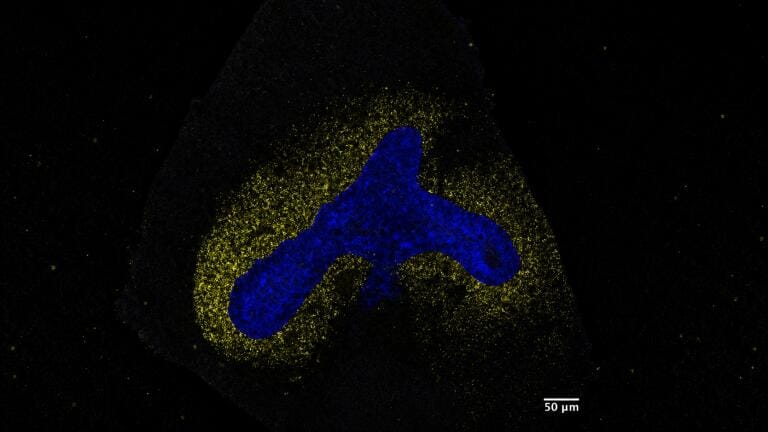
The researchers also used the model to study respiratory mesenchyme, an embryonic tissue that supports lung formation. IRIS predicted that WNT and bone morphogenetic protein pathways were particularly active in these cells. Experiments with mouse foregut tissue confirmed that WNT activation expanded the expression of respiratory mesenchyme markers, whereas WNT inhibition eliminated expression of one key marker.
The team subsequently modified a seven-day human embryonic stem-cell protocol to provide WNT stimulation earlier and for longer. The revised method increased the efficiency with which cells acquired respiratory mesenchyme characteristics.
“In these ways, IRIS is helping us decode the language cells use to talk to each other at a much faster rate than we could realistically achieve through experiments,” said MIT doctoral candidate Nicholas T Hutchins said.
More accurate control of stem-cell fate could improve organoids which are miniature three-dimensional tissue models. More representative lung organoids could help researchers to investigate asthma, lung cancer and pulmonary fibrosis, test potential therapies and explore treatments to repair damaged tissue.
For further reading please visit: 10.1038/s41592-026-03213-8
ILM 51.6 Sept 2026





 Product directory