News
A Scottish–German research partnership has secured additional funding after an experimental blood test identified likely causes of sepsis in a patient whose blood cultures remained negative
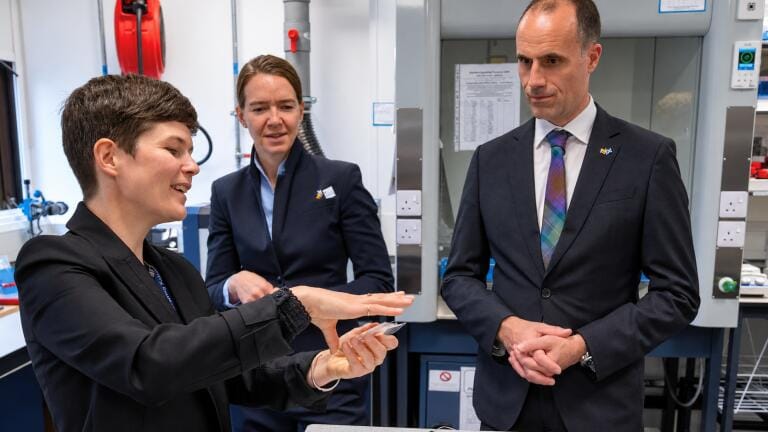
A project to improve the identification of infection-causing pathogens in patients with sepsis has received €300,000 from the Ministry of Science, Further Education and Health of Rhineland-Palatinate, one of Germany’s federal states. The award will support the next phase of a collaboration between a research team at Heriot-Watt University in Edinburgh, UK and critical care clinicians in Mainz, Germany.
The project – Genomics in Sepsis Intensive Care (GeSIC) – centres on a blood-based test that searches for fragments of microbial DNA. Its researchers aim to establish whether the approach could help clinicians identify the cause of an infection when conventional tests take longer to produce a result or, worse, fail to detect a pathogen. The next phase of the research project is expected to begin in January 2027.
Sepsis occurs when the body’s response to an infection damages its own tissues and organs. It can progress to a state of systemic shock and organ failure which means that its prompt recognition and the rapid commencement of treatment is essential. According to the UK Sepsis Trust, sepsis affects an estimated 245,000 people in the UK each year and is associated with 48,000 deaths. Across Europe, more than 3.4 million people develop sepsis annually and around 700,000 die, according to the European Sepsis Alliance underlining the urgent need for a method of effective, rapid and crucially earlier testing.
To select the most appropriate treatment, clinicians need to establish what has caused the infection. Blood cultures can identify microorganisms that grow from a patient’s sample but results may take several days and cultures in the initial stage of disease onset may even remain negative.
However, a DNA-based approach seeks out evidence of a pathogen in a patient’s blood without first requiring it to grow it independently in the laboratory. Any result must still be interpreted alongside the patient’s symptoms, other test results and clinical history.
The partnership’s preliminary evidence includes a case report published in BMJ Case Reports. The patient underwent emergency surgery after a urinary pouch ruptured and they subsequently developed sepsis. Blood cultures taken from the patient remained negative throughout their hospital stay.
Researchers analysed a blood plasma sample with their experimental method and identified DNA from Klebsiella and Pseudomonas, two groups of bacteria associated with infection. Cultures from drainage fluid and urine later supported those findings. The workflow under consideration in the research programme took around six hours to complete its test. Conventional cultures took several days to confirm the presence of the pathogen organisms.
It should be noted that the time ‘difference’ has an important qualification. The sequencing result was obtained and assessed retrospectively as part of a research protocol. And it was unavailable to the clinical team when treatment decisions were being made and did not alter the patient’s care.
What the case showed was that the method could have provided earlier (complimentary) information in this instance but it does not establish that its use would improve outcomes across patients with sepsis.
The method is called iSEP-SEQ, short for ‘Integrated workflow for sepsis and infectious diseases diagnosis with a microbial cell-free DNA sequencing approach’. Cell-free DNA are fragments that have been released into the bloodstream. By extracting and analysing microbial fragments from plasma, the researchers seek to identify pathogens that a blood culture may miss. Further work will be needed to assess how reliably the workflow performs in clinical practice and whether results can reach clinicians in a timeframe which will be beneficial to inform patient care in the clinic.
GeSIC combines the engineering expertise of Professor Maïwenn Kersaudy-Kerhoas’ team at Heriot-Watt University’s School of Engineering and Physical Sciences with the intensive care expertise of University Medical Center Mainz – Johannes Gutenberg University Mainz is the university partner.
“The fast identification of pathogens remains one of the most complex challenges facing healthcare systems around the world,” said Professor Kersaudy-Kerhoas, who is also co-academic lead of Heriot-Watt University’s Global Research Institute in Health and Care Technologies. She said the grant award would allow the teams to build on their existing collaboration with clinical validation at the centre of the next research phase.
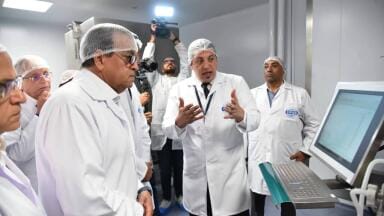
“Early and accurate diagnosis is essential to ensuring timely, targeted treatment and improving survival,” said Clemens Hoch, Rhineland-Palatinate’s minister for science, further education and health when he visited Heriot-Watt’s Edinburgh campus in September. He added that the partners hoped to produce evidence that could inform clinical practice and benefit patients.
For now, the published finding remains a single-patient research result. The funded phase will help determine whether the test can provide dependable, timely information alongside established diagnostics in the wider care of patients with sepsis.
For further reading please visit: 10.1136/bcr-2025-267878
ILM 51.6 Sept 2026



 Product directory
























.jpg)
