Research news
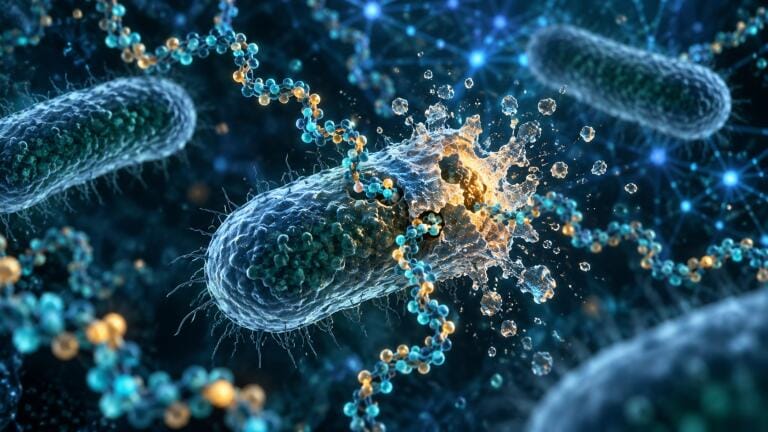
Researchers have used artificial intelligence (AI) to identify potent antimicrobial polymers that mimic the bacteria-killing action of natural peptides. The approach could support a novel class of durable, affordable antibiotics that are less susceptible to microbial resistance
Blood, sweat, cells and tears all contain peptides which are short chains of amino acids with many biological functions. Some act as part of the body’s natural defences and can destroy bacteria on contact.
Bacteria have found it difficult to develop resistance to many antimicrobial peptides because the molecules attack the physical structure of a microbial cell rather than interfere with one biochemical process. Yet peptides can degrade rapidly, cost considerable sums to manufacture and prove difficult to distribute in places with limited medical resources.
Researchers at Stanford School of Engineering, California, USA, have now used AI to search for polymers that reproduce the antimicrobial properties of peptides without sharing their disadvantages. The AI system examined a virtual library of 1.7 million possible polymers and identified several candidates that proved highly effective against bacteria in laboratory tests.
The work suggests that relatively inexpensive and stable polymers could provide antibiotics that remain effective when conventional drugs encounter resistance.
The World Health Organization (WHO) reported that bacterial antimicrobial resistance had been associated with an estimated 4.71 million deaths worldwide in 2021, of which approximately 1.14 million were directly attributable to resistance.
“Antimicrobial peptides are chemically able to get very close to and disrupt the cell membrane [so] killing the bacteria,” explained Dr. Shoshana Williams, a former Stanford Engineering graduate researcher who has since become a postdoctoral scholar at the University of California, San Francisco School of Medicine.
“Importantly, they don’t need to get inside the cell to work like a drugs typically would,” she said.
Many conventional antibiotics act upon a particular bacterial enzyme, protein or metabolic pathway. A bacterium can sometimes evade such a drug through a relatively small genetic change. Antimicrobial peptides instead damage the bacterial membrane. Resistance could require the microorganism to alter fundamental properties of its membrane or surface charge.
“The peptides permeabilize the microbes … they literally rip holes in the cell membrane to kill them,” said Dr. Eric Appel, a Stanford professor of materials science and engineering and the study’s senior author.
“It’s much harder for a bacterium to change the entire lipid structure of its membrane or the electrical charge of its surface than to learn to reject a chemical drug,” he added.
The researchers searched for polymers with comparable chemical characteristics. These long chains of repeated molecular units can be easier and less expensive to produce than peptides and can also resist degradation.
Scientists have assembled substantial datasets for antimicrobial peptides but far less information exists about antimicrobial polymers. The team therefore trained its computational models with peptide data before it applied that knowledge to the polymer candidates.
Several models assessed the candidates independently. The team selected 20 polymers that produced the greatest disagreement, synthesised them, tested their antimicrobial properties and returned the results to the models. This additional evidence helped the system to distinguish promising structures from ineffective ones.
The improved system reduced the library to 10 leading candidates. Researchers synthesised each polymer and tested it against Escherichia coli, a Gram-negative bacterium. All 10 performed substantially better than expected.
“These 10 candidates are among the most potent antimicrobial polymers ever reported,” Williams said.
One candidate appeared to disrupt the bacterial membrane and proved particularly effective against biofilms. These protective microbial communities can shield bacteria from antibiotics and the immune system which their makes associated infections prove difficult to eradicate.
The team also reported activity against Gram-positive bacteria, including Staphylococcus aureus – an opportunistic bacterium categorised by the WHO as a high-priority pathogen. Its broader ambition is to design polymers that attack particular disease-causing microbes while leaving human cells and beneficial bacteria unharmed.
Extensive toxicology studies, animal research and clinical trials would be required before any candidate could become a medicine. Nevertheless, the study has demonstrated a practical method to examine millions of molecules through relatively few physical experiments. If further research supports the findings, antimicrobial polymers could complement existing antibiotics or provide treatments for infections that no longer respond to them.
For further reading please visit: 10.1016/j.matt.2026.103026
ILM 51.6 Sept 2026



 Product directory


.jpg)
















,-photo-Karin-Allander.jpg)