
Research news
A mouse model study has linked the immune-regulating protein PD-L2 to the persistence of senescent cells and by blocking the protein reduced their accumulation and improved measures of glucose metabolism and strength
Researchers led by Cedars-Sinai Health Sciences University, Los Angeles, California, USA, have identified a protein that may allow senescent cells to evade the immune system and persist in ageing tissues. The findings point to programmed cell death ligand 2 (PD-L2) as a potential target for treatments intended to clear these cells.
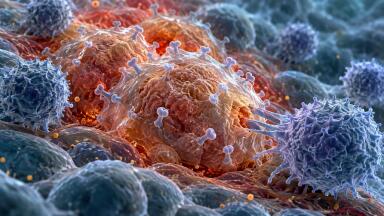
Cells can enter senescence after damage or other forms of stress. The cells stop dividing but remain alive and some promote inflammation or disrupt nearby cells. Their accumulation has been associated with age-related loss of tissue function. The immune system can remove senescent cells, although some appear to escape clearance.
The investigators examined whether PD-L2 helps those cells persist. In laboratory mice, the removal or blocking of the protein reduced measures of senescent-cell accumulation and the inflammatory markers associated with those cells. The mouse models also showed improved glucose metabolism and greater grip strength.
“Our findings suggest that PD-L2 may help aging cells stay in the body when they would normally be removed by the immune system,” said Dr. Selim Chaib, research assistant professor of medicine at Cedars-Sinai and a first and co-corresponding author of the study.
The team also found that senescent human cells produced more PD-L2 than younger cells and that levels of the protein increased with age in some human tissues. These observations support further investigation of PD-L2 as a possible marker of senescent cells. Researchers will need to establish whether a blood measurement can reliably indicate their presence in tissues.
“If we can find a way to block this protein, we may be able to help the immune system get rid of these cells,” said Dr. James Kirkland, director of the Center for Advanced Gerotherapeutics at Cedars-Sinai and senior author of the study. He added that this might eventually improve health problems associated with ageing.
Further research must establish whether PD-L2 blockade can clear senescent cells safely in people and whether any such effect improves health. The present evidence comes from laboratory and animal experiments, alongside observations in human cells and tissues. The results so far suggest that PD-L2 has a role in the effects observed in the animals but they do not yet establish that blocking it would benefit patients in clinic.
For further reading please visit: 10.1016/j.cmet.2026.08.014
ILM 51.6 Sept 2026




 Product directory

















,-photo-Karin-Allander.jpg)





.jpg)