Clinical
A peach-flavoured prototype detected acetaminophen – paracetamol – in saliva from six adults in less than two minutes but large scale studies are needed to validate the test
A candy-coated lollipop could offer a comfortable way to collect saliva and measure acetaminophen, according to researchers. In an initial study, the Lollylab prototype detected the common over-the-counter pain medication in saliva from six adults in less than two minutes.
Acetaminophen – also known as paracetamol – is found in many pain, cold and flu medicines. However, taking more than the recommended dose can cause serious harm, particularly with damage to the liver. Because saliva concentrations can reflect blood concentrations, Dr. Sina Khazaee Nejad, Dr. Maral Mousavi and colleagues of the University of Southern California, Los Angeles, California, USA, designed a device to collect and analyse saliva at the point of care.
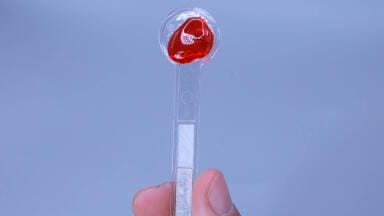
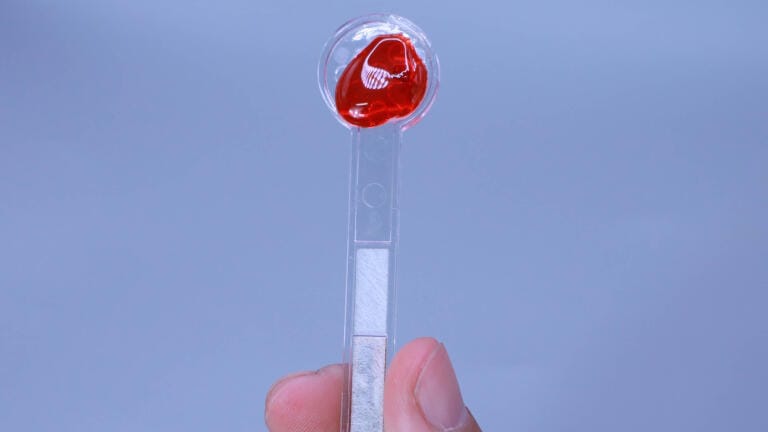
The prototype consists of two joined plastic pieces coated with a red, peach-flavoured edible shell. Saliva passes through a paper-lined stem to a graphene sensor, where changes in electrical current indicate acetaminophen levels. The coating did not interfere with the measurements. The researchers tested the device with artificial saliva and with samples from six adults, before and an hour after each participant took a 650 milligram dose.
Participants found the lollipop easier and more comfortable to use than conventional saliva swabs. The team was inspired by CandyCollect, a lollipop-like saliva collection system whose samples are analysed elsewhere. Lollylab combines collection and measurement in one device.
“By turning a familiar object like a lollipop into both a saliva collection device and a sensor, Lollylab can collect the sample and perform the measurement directly at the point of care,” said first author Nejad.
Further work will compare measurements with larger participant groups, including children, and assess whether the platform can detect other substances, such as stress markers. The authors said some had filed a provisional patent. The prototype has not yet been validated for clinical use.
The prototype contains two plastic components with rounded ends and narrow stems, joined so saliva can enter through small openings. A layer of glass-fibre paper guides the sample towards the sensor. The edible shell stimulates saliva production and gives the device its peach flavour. The graphene sensor detects acetaminophen through a change in electrical current, avoiding the need to send a sample to a separate laboratory.
In the initial test, participants used the device before and after taking a standard adult dose. Their saliva measurements changed in line with the presence of the medicine, and the device returned a result in under two minutes. The small study was designed as a proof of concept, so it does not establish how accurately Lollylab measures a wide range of concentrations or performs in children and patients.
The researchers plan to compare its measurements with established methods in a larger group and to assess other saliva targets, including naturally occurring stress markers. Their longer-term aim is a platform that can measure several biomarkers alongside medicines.
For further reading please visit: 10.1021/acssensors.6c00691
ILM 51.6 Sept 2026
 Product directory