Mass spectrometry & spectroscopy
A portable mass-spectrometry platform has identified ten alkaloids in traditional Chinese herbal preparations and exposed substantial differences between commercial products
Researchers in Beijing have developed a rapid mass-spectrometry method to screen processed herbal medicines for alkaloids that conventional quality checks may overlook.
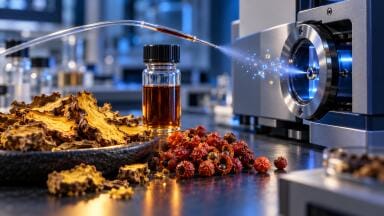
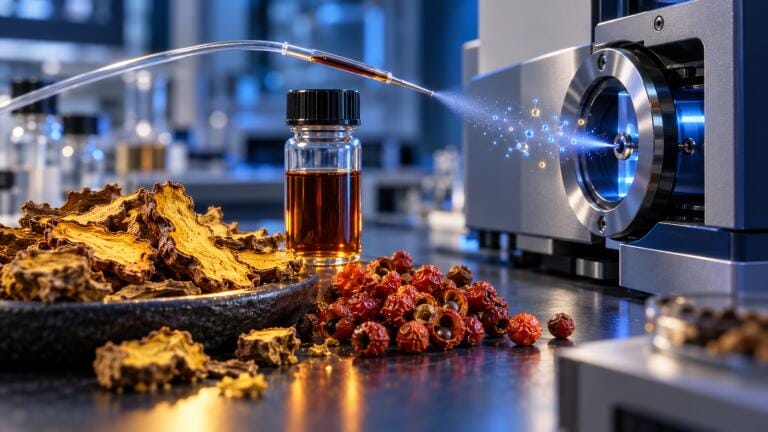
The method has combined selective solvent extraction, disposable microsampling and a miniature mass spectrometer to examine Yuhuanglian, a preparation made by processing Coptis chinensis with a decoction of Euodia rutaecarpa. It has also been tested with related commercial formulations prescribed in traditional Chinese medicine for gastrointestinal disorders.
Dr. Baokun Yang, Dr. Wei Xu and Dr. Yanbing Zhai of the School of Medical Science and Engineering at Beijing Institute of Technology led the analytical development with Yun Wang of the State Key Laboratory for Quality Ensurance and Sustainable Use of Dao-Di Herbs at the China Academy of Chinese Medical Sciences. Both organisations are based in Beijing, China. Dr. Jie Hong and Dr. Heyuan Jia of G-Nephrite (Beijing) Intelligent Technology also contributed to the research.
The researchers argued that existing authentication methods can provide an incomplete assessment because they often concentrate on chemical markers from Coptis chinensis. Such tests may confirm the presence of one constituent herb without adequately assessing compounds derived from Euodia rutaecarpa.
This omission could make it more difficult to verify that processing has taken place correctly or to recognise differences relevant to efficacy and toxicity. A product might therefore satisfy a narrow marker-based specification despite an unrepresentative overall chemical profile.
To address this problem, the team modified a capillary-in-capillary electrospray ionisation source and connected it to a miniature mass spectrometer. Electrospray ionisation converts molecules in a liquid sample into gas-phase ions so that the mass spectrometer can separate and identify them according to their mass-to-charge ratios.
The revised source incorporated a disposable microsampling tube, which reduced the need for an elaborate transfer procedure and supported rapid analysis. The team also established an in-house tandem mass spectrometry database for ten important alkaloids. Tandem mass spectrometry first selects an ion and then fragments it to produce a characteristic pattern, which can provide more reliable identification than the mass of an intact ion alone.
Sample preparation proved important to the method’s performance. The researchers used ethyl acetate to extract the target compounds before they diluted the extract with a 7:3 methanol-to-water mixture. This selective process substantially increased sensitivity towards markers derived from Euodia rutaecarpa, which might otherwise have produced weak signals within the combined herbal matrix.
Tests of analytical repeatability produced relative standard deviations below 8 per cent for all ten alkaloids. The researchers then applied the platform to 12 commercial preparations and found considerable differences in their alkaloid profiles. Variation occurred between manufacturers and among products attributed to the same manufacturer.
These results suggest that a simple pass or fail test based on a restricted group of Coptis chinensis markers may fail to represent the composition of the complete preparation. A broader mass-spectral profile could help laboratories to confirm the presence of both herbal components and identify products that merit further investigation.
The miniature instrument may also offer practical advantages outside centralised analytical facilities. Full-sized liquid chromatography–mass spectrometry systems provide powerful separation and quantitative capabilities, but they require substantial laboratory infrastructure, trained operators and controlled workflows. A compact direct-analysis system could support preliminary checks closer to manufacturing, distribution or regulatory inspection sites.
The reported method remains a targeted screening tool rather than a replacement for comprehensive laboratory analysis. It covered ten alkaloids and 12 commercial preparations, so further validation will be required across more batches, manufacturers and product formats. Matrix effects, instrument-to-instrument transfer, database compatibility and long-term source stability will also influence routine use.
Direct mass spectrometry provides less chromatographic resolution than a validated liquid chromatography method, while the reported work does not establish a complete quantitative specification for safety or therapeutic consistency. Suspect samples would therefore still require confirmatory analysis with reference standards and fully validated laboratory procedures.
Nevertheless, the research has demonstrated how miniature mass spectrometry could extend herbal-medicine surveillance beyond a small number of convenient markers. By examining compounds associated with both components of a processed herb pair, the approach could provide laboratories and regulators with a more representative first view of product identity and consistency.
For further reading please visit: 10.1007/s00216-026-06881-9
ILM 51.6 Sept 2026

 Product directory