Mass spectrometry & spectroscopy
A scientific perspective has set out how liquid chromatography, high-resolution mass spectrometry and artificial intelligence could work together to identify chemical exposures and predict their effects on human health
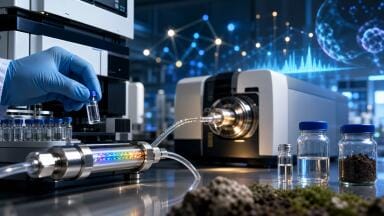
Liquid chromatography coupled with high-resolution mass spectrometry (LC-HRMS) has given scientists the capacity to detect thousands of chemical signals in environmental samples and the human body. Researchers have now proposed that artificial intelligence (AI) could help to interpret this wealth of chromatographic data and identify the exposures most likely to disrupt biological systems or contribute to disease.
The review examined how chromatography, mass spectrometry, toxicology databases and biological response data could support ‘functional chemical exposomics’. The approach would extend the purpose of chemical analysis beyond the detection and identification of compounds to predict what those compounds might do within cells, tissues and organs.
As a perspective article, the paper did not report on any of their own original experimental results. Instead, the authors, Dr. Hemi Luan and Dr. Tiangang Luan, reviewed developments in chemical exposomics and proposed a framework through which AI could transform analytical measurements into evidence that could support health risk assessments.
“The future of exposomics is not only about discovering what chemicals are present but also [about] predicting what those chemicals may do inside biological systems,” said corresponding author Dr. Hemi Luan of Guangdong University of Technology, Guangdong Province, China.
“AI can help researchers focus limited experimental resources on the exposures most relevant to human health,” he added.
Exposomics is the study of the complete range of environmental exposures experienced throughout a person’s lifetime. The exposome can include pollutants, pesticides, industrial chemicals, medicines, dietary compounds and substances from household or consumer products. Many of these chemicals, together with their transformation products and metabolites, can be present in highly complex mixtures.
Chromatography provides a critical separation stage in the analysis of such mixtures with the retention time providing one piece of evidence about individual chemical’s identities. Then a mass spectrometer can measure characteristics such as the mass-to-charge ratios of the substance’s ions, its isotopic pattern and the fragments produced when those ions break apart.
This combination allows LC-HRMS to detect a far wider range of compounds than a method that measures an undivided sample. Chromatographic separation also reduces the risk that signals from several substances will obscure one another before mass-spectrometric analysis.
Nevertheless, environmental and biological samples can contain so many chemicals that some compounds still emerge from a chromatographic column at similar times. This process – co-elution – can produce overlapping signals that are difficult to distinguish. Differences between analytical batches, background noise and low-intensity peaks can create further complications.
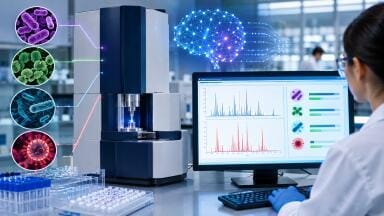
The authors described how AI and machine learning could assist with chromatographic peak detection, signal deconvolution, quality control and compound annotation. Deconvolution allows researchers to separate overlapping signals computationally, while annotation compares analytical evidence with libraries and predicted chemical structures to propose the identity of a compound.
AI could also help scientists to recognise genuine chromatographic peaks, exclude signals that fail to meet quality requirements and correct systematic differences between batches of samples. These functions could improve the consistency of large exposomics studies, in which laboratories might need to analyse hundreds or thousands of samples.
A detected chromatographic peak does not necessarily reveal a compound’s identity, however. Even when scientists can identify a chemical, they might have little information about its toxicological properties or biological importance. The authors argued that the capacity to generate analytical data has begun to exceed researchers’ ability to interpret those data for health risk assessment.
The authors proposed that AI should progress from a chemical ‘discovery engine’ to a ‘functional prediction engine’. Under this framework, a chromatographic feature detected through LC-HRMS could be assessed alongside evidence about chemical structure, predicted toxicity, molecular interactions and changes in gene activity, proteins and metabolites.
The system could assign each chemical a biological functional activity risk score. This score would not prove that a substance causes harm. It could instead act as a scientific triage mechanism to identify chromatographic signals and chemical candidates that warrant laboratory tests, epidemiological investigation or regulatory assessment.
Experimental confirmation will continue to be essential. Researchers will need to test prioritised chemicals through targeted chromatographic analysis and experiments with cells, organoids or, where appropriate, animal models. Organoids are simplified, laboratory-grown structures that reproduce selected features of human organs and allow scientists to examine biological responses under controlled conditions.
The authors concluded that closer collaboration among analytical chemists, toxicologists, epidemiologists, bioinformaticians and computer scientists could transform exposomics from an inventory of chemical peaks into a predictive and preventive resource.
For further reading please visit: 10.66178/aie-0026-0008
ILM 51.6 Sept 2026




 Product directory