Mass spectrometry & spectroscopy
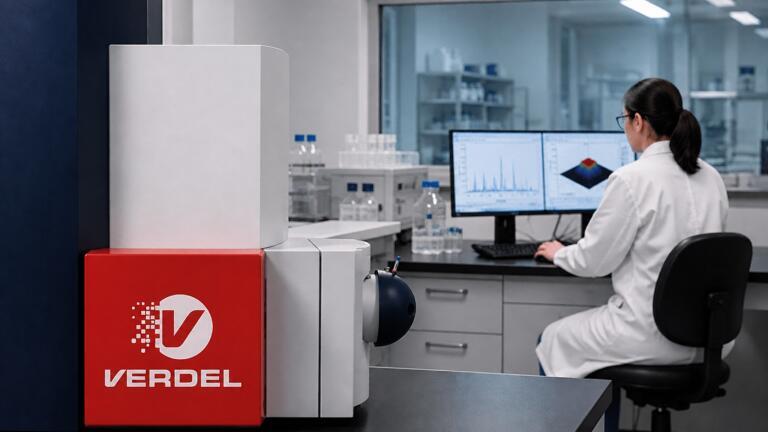
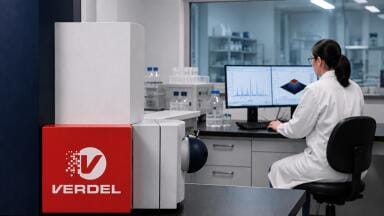
Researchers at the University of Warwick and its spin-out company Verdel Instruments have demonstrated two-dimensional mass spectrometry on a commercially available benchtop instrument
Researchers at the University of Warwick and its spin-out company Verdel Instruments have successfully demonstrated two-dimensional mass spectrometry (2DMS) on a benchtop instrument, a development that could make the powerful analytical technique more practical and affordable for routine laboratory use.
Modern mass spectrometry workflows typically rely on several stages to reduce the complexity of a sample before measurement. Chromatography separates its components; acquisition methods filter the resulting signals and data-processing pipelines simplify the results. Although these steps are often essential, each can come at a cost because potentially valuable information may be lost without the analyst knowing what has been excluded.
“The field has long recognised the power of 2DMS but the technique has simply not been widely accessible because only the best-funded centres could afford the specialist hardware.
“Our technology makes 2DMS possible on benchtop instruments. Laboratories can now gain access to this powerful technique,” said Tim Wilson, chief executive officer of Verdel Instruments.
In a recent paper the joint team presented what it described as the first demonstration of 2DMS on a commercially available quadrupole time-of-flight instrument. The researchers adapted the instrument with an upgrade kit and named the resulting technique quadrupole two-dimensional mass spectrometry (Q-2DMS).
The study showed that Q-2DMS could obtain high-resolution tandem mass spectrometry data from complex mixtures without the need for chromatographic separation or mass filtering. This capability could allow laboratories to retain information that conventional workflows may discard before analysis.
Mass spectrometry identifies compounds through measurements of ions according to their mass-to-charge ratios. In Q-2DMS, each analyte receives a distinct frequency signature that corresponds to its mass-to-charge ratio. When the analytes break apart inside the instrument, the resulting fragment ions retain the signature of their parent analyte.
A mathematical decoding process can then establish which fragments originated from each analyte. A collection of signals that might otherwise prove too congested to interpret becomes an ordered series of mass spectra comparable with those obtained through conventional separation and filtering methods. Crucially, the Q-2DMS results can retain additional information that those established approaches may lose.
The researchers reported that Q-2DMS preserved up to ten times more usable spectral information during the analysis of closely related or near-isobaric compounds. Near-isobaric compounds have very similar masses and can therefore be particularly difficult to distinguish with conventional analytical methods.
The technique could support research and laboratory work across healthcare, environmental safety, drug control and pharmaceutical development. For example, in healthcare, it could help scientists to identify unexpected drug metabolites more rapidly, which could contribute to more personalised treatment.
“Years of world-leading research have led to the launch of Q-2DMS by the University of Warwick’s Verdel Instruments. The technology combines high-resolution, easy-to-use readouts with a complete time stamp for each sample, so researchers can revisit the data later without the original sample which may have degraded,” said Dr Shum Prakash, business development manager at Warwick Innovations.
The capacity to revisit an analysis could prove valuable when samples are scarce, unstable or impossible to replace. Instead of relying entirely on material that remains available after the initial experiment, researchers could return to the recorded data to explore questions that arose later.
“What excites us most is what we do not yet know. By making this technique accessible, we are enabling scientists worldwide to ask questions they could not ask before and to find answers [to questions] they were not necessarily [asking],” said Dr. Peter O’Connor, professor of chemistry at the University of Warwick and senior author of the paper.
Founded in 1965, the University of Warwick is a research and education institution with facilities in the UK and at international satellite hubs. Its community of staff, students and alumni supports interdisciplinary research, industry partnerships and educational programmes.
Verdel Instruments is an award-winning mass spectrometry company that specialises in two-dimensional mass spectrometry. Founded in 2019 as a spin-out from the University of Warwick’s Fourier transform ion cyclotron resonance mass spectrometry laboratory, the company emerged from research led by Professor O’Connor with support from Warwick Innovations, the University’s technology transfer office. Verdel Instruments is based at Milton Park in Oxfordshire.
For further reading please visit: 10.1021/acs.analchem.6c00486
ILM 51.6 Sept 2026



 Product directory






















.jpg)
