Mass spectrometry & spectroscopy
A wide-ranging review has found that rapid mass spectrometry could support the authentication, safety assessment and process control of traditional Chinese medicine products
Direct mass spectrometry could help laboratories to assess traditional Chinese medicine products more rapidly, but technical and regulatory obstacles continue to limit its use for precise measurement, according to a major review.
Traditional Chinese medicine (TCM) products can contain complex mixtures of compounds whose composition varies with plant species, geographical origin, harvest conditions, storage and preparation. Chemical profiles can also change when raw materials undergo processing or practitioners prepare herbs as decoctions, the concentrated liquids made by simmering plant materials.
These variables complicate authentication, quality control and safety assessment. Conventional workflows often use chromatography to separate mixtures before mass spectrometry identifies their constituents. The results can be detailed and reliable, but preparation and separation require time and specialist equipment.
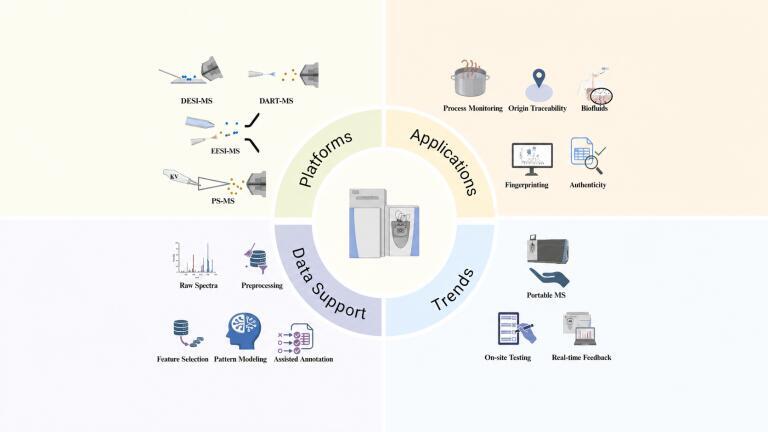
Kaiwen Zhang, Bin Li, Yanying Chen, Haoyu Mai and Chang-jiang-sheng Lai, whose team included researchers from Tianjin University of Commerce in China, reviewed more than a decade of research into whether direct mass spectrometry could complement established techniques. They examined platforms, analytical principles, applications to different chemical classes and possible roles in quality assessment.
Mass spectrometry converts molecules into charged particles – ions – which the instrumentation detects according to their mass-to-charge ratios. Direct techniques analyse material with little or no chromatographic preparation. Some use ambient ionisation which permits examination under ordinary atmospheric conditions rather than in a conventional enclosed ion source under vacuum.
The review found that direct analysis could provide chemical information within minutes. It can generate fingerprints of compounds in herbal products, detect changes during preparation and reveal the spatial distribution of substances in plant tissues. These characteristic signal patterns allow laboratories to distinguish related herbs, identify possible adulteration, assess geographical origin and compare production batches, even when they do not identify or measure every compound.
Rapid fingerprint analysis, authentication and process monitoring were the most mature applications. These could benefit manufacturers that must examine many samples quickly. Studies showed how direct mass spectrometry could track chemical transformations throughout decoction preparation, revealing when heat alters or breaks down constituents.
Research into toxic alkaloids in Aconitum species provided an important example. These plants contain potent compounds that require careful processing. Direct mass spectrometry has followed changes in their alkaloids during decoction preparation and shown signals decline over time. Such measurements could help researchers to define suitable preparation conditions, although a weaker signal alone does not prove safety. Assessment still requires validated quantitative methods, toxicological evidence and control of the full production process.
The technique was particularly effective for alkaloids. Flavonoids were also suitable for structural comparison and semi-quantitative analysis. Carbohydrates and polysaccharides remained harder to examine because their properties hinder efficient ionisation, separation and confident identification.
Absolute quantification is a major limitation given regulators and quality-control laboratories often need the exact concentration of an active, toxic or contaminating substance. A fingerprint may show that a signal is present or samples differ but it cannot automatically measure concentration accurately.
Matrix effects can also suppress or enhance signals from target compounds. Differences in equipment, operating conditions, calibration, sample presentation and data analysis further hinder reproducibility. Without agreed procedures and reference materials, laboratories may obtain dissimilar results from comparable samples, restricting the method's regulatory use.
The authors concluded that progress depends less on additional ionisation methods than on the standardisation and validation of existing techniques. Common protocols, reference standards, quantitative correction methods and multi-laboratory tests are needed. Dedicated, well-annotated spectral databases for TCM compounds would also help researchers to identify signals and compare results.
Portable mass spectrometers could support testing at manufacturing sites, warehouses, markets or import points, but would still need validated workflows, quality controls and trained operators. Artificial intelligence could assist with sample classification, adulteration detection and recognition of subtle profile differences, although its reliability would depend on the quality and diversity of its development data.
Rapid screening, authentication, origin assessment and process monitoring appear closest to routine use. Absolute quantification, interlaboratory comparison, pharmacokinetic research and regulatory-grade analysis require further refinement.
Direct mass spectrometry could ultimately form part of an evidence platform that connects chemical composition with product quality and safety. It cannot establish clinical effectiveness, which requires pharmacological, toxicological and clinical evidence.
For now, its speed makes it a promising complement to conventional analysis, but its progress from screening tool to dependable regulatory platform will require rigorous validation, shared standards and reproducible results across instruments, laboratories and product types.
For further reading please visit: 10.1016/j.bioana.2026.05.001
ILM 51.6 Sept 2026




 Product directory