Laboratory products
Anton Paar’s portable density meter combines ATEX- and IECEx-certified intrinsic safety with automatic petroleum calculations and digital documentation for fuel quality checks in hazardous areas.
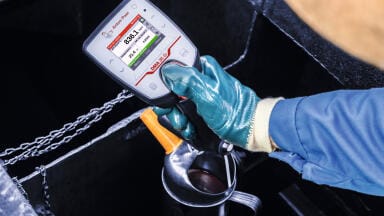
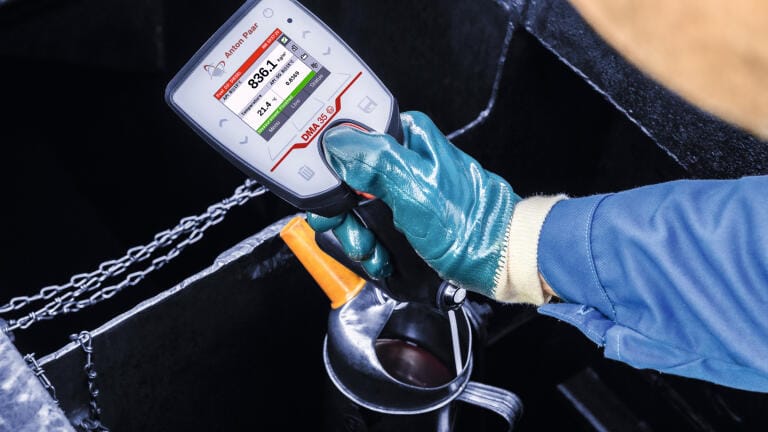
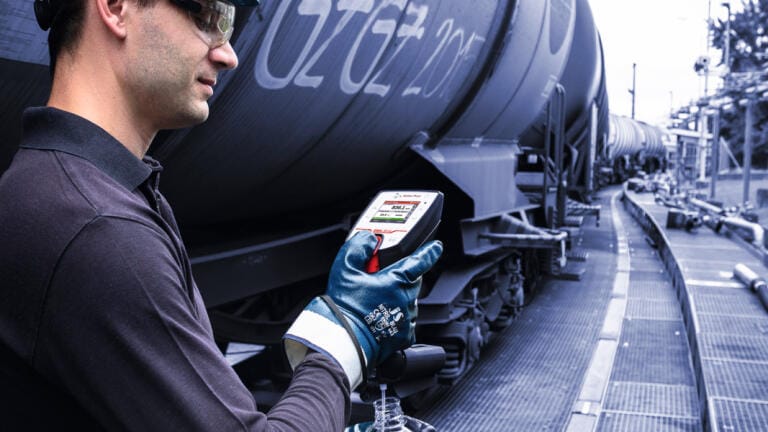
Fuel quality checks are often required where petroleum products and aviation fuels are stored, transferred, or dispensed. At tank terminals, airport fuel farms, aircraft refueling points, and marine facilities, flammable vapors can make the use of general-purpose equipment unsuitable. DMA 35 Ex Petrol enables operators to measure density directly at the sampling point using an intrinsically safe portable instrument.
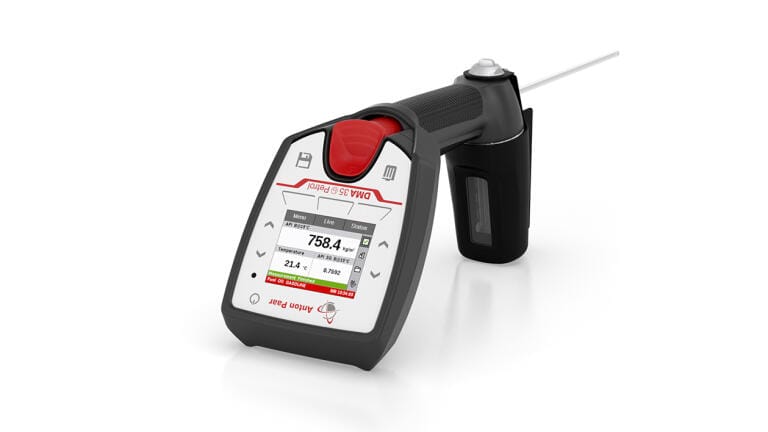
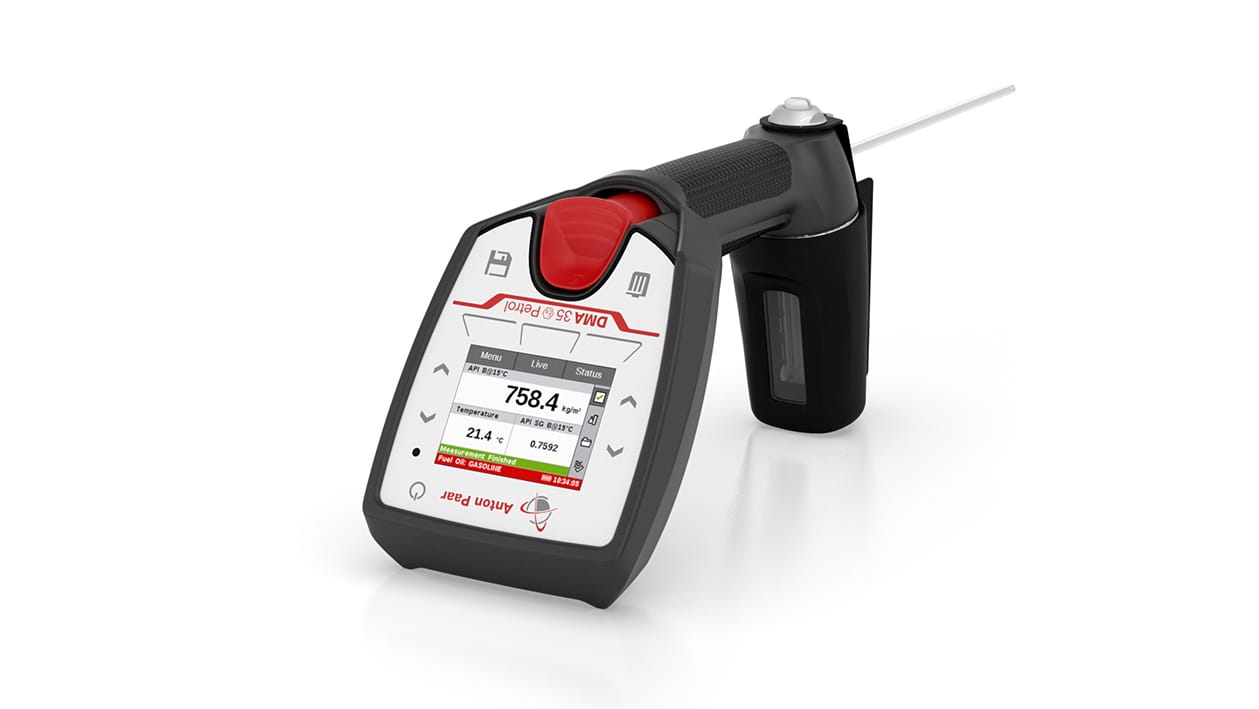 The instrument’s ATEX- and IECEx-certified design, petroleum-resistant materials, and rugged housing support field measurements in hazardous areas. A sample volume of approximately 2 mL is sufficient to determine density, specific gravity, or API gravity within seconds. DMA 35 Ex Petrol also complies with ASTM D7777 and IP 559.
“Fuel quality checks often need to happen exactly where the fuel is handled – not later in a laboratory,” says Barbara Klug-Santner, Product Manager for DMA 35 Ex Petrol at Anton Paar. “DMA 35 Ex Petrol gives operators an intrinsically safe way to obtain a reliable, immediately usable result directly at the sampling point. By combining measurement, automatic conversion, and digital documentation in one portable instrument, we make routine fuel checks faster and simpler while reducing manual steps and potential sources of error.”
Conventional hydrometer testing may require several instruments for different API gravity ranges. Operators must also read the meniscus, record temperature, consult correction tables, and convert results to the required reference temperature. DMA 35 Ex Petrol covers the API gravity ranges typically used in petroleum testing with one device and automatically calculates values such as API gravity at 60 °F according to the selected method.
Compared with a conventional hydrometer workflow, an operational result can be available in approximately 30 seconds rather than several minutes. The instrument stores measurement results with a timestamp and sample identification, allowing digital transfer for reporting and archiving. This reduces the need for handwritten records and manual transcription.
The combination of intrinsic safety, automatic calculations, a small sample volume, and digital records supports consistent on-site checks before fuel is transferred into storage tanks, aircraft, or marine fuel systems.
LMUK 51.7 Nov 2026


 Product directory