Autoclaves
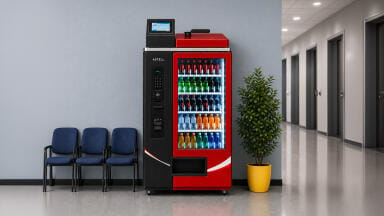
Open a can or bottle of your favourite soft drink anywhere in the world and you expect it to taste exactly as it did last time. That reliability isn’t an accident. Behind every batch sits a quality-control microbiology lab whose job is to confirm that nothing is growing where it shouldn’t be, whether in the incoming water, the syrup, the filling line or the finished product.
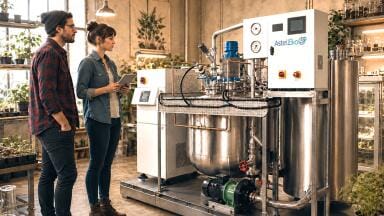
Astell has been supplying steam sterilisation equipment since 1884, and over that time have worked with many QC teams whose autoclaves rarely get noticed yet underpin important release decisions. One recent installation at a global soft-drinks bottler, whose identity remains confidential, shows how much a compact machine can be asked to do.
When people picture industrial sterilisation, they often imagine large, production-scale chambers. Beverage QC labs rarely need that. What they need is a dependable autoclave that fits the room, is easy for a small team to run, and keeps pace with testing around production schedules.
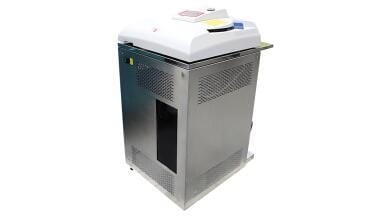
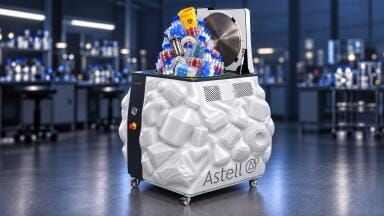
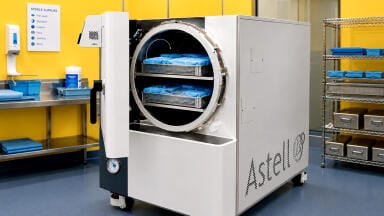
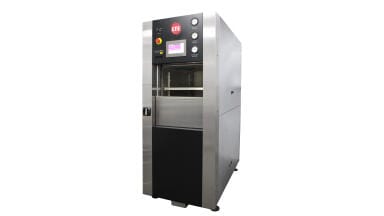
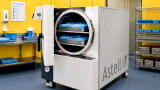
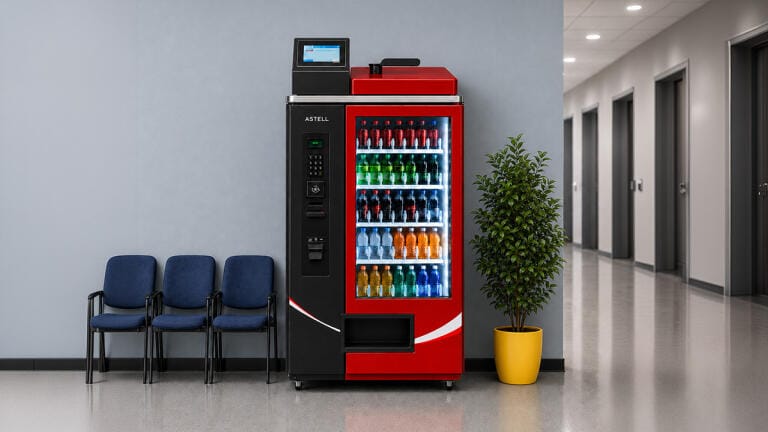
For this bottler, the answer was a 95-litre top-loading autoclave. That capacity comfortably handles routine media, sample bottles and glassware without taking up more bench or floor space than necessary. In a busy QC lab, simple operation and predictable turnaround often count for more than chamber volume. Explore Astell’s autoclave range.
In beverage QC, the autoclave typically has three jobs:
Day to day, that means Duran bottles of prepared media and liquid samples in various sizes, petri dishes and plates, and assorted glassware. A typical routine might run prepared media at 121 °C for 15 minutes on a liquids cycle, then process contaminated plates, samples and cultures separately on a discard cycle later in the day.
Keeping these workflows separate protects the integrity of the media and makes sure waste is made safe before it leaves the lab. The ideal specification depends on how many loads the team runs each day and how quickly the chamber needs to be ready for the next one. That’s where cooling options come in, since they help match cycle times to the pace of testing.
In regulated beverage environments, it isn’t enough for an autoclave simply to work. Some producers have their QC autoclaves validated on installation and re-validated at regular intervals, so the lab can show documented evidence that its sterilisation is effective, not just assume it. For a machine that supports product release, that evidence can matter as much as the cycle itself.
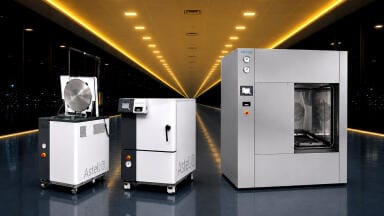
Astell helps beverage producers choose the right autoclave size, cycles and cooling options for routine QC, without overcomplicating the lab. If you have a bottling, beverage or product-quality requirement, or any other autoclave question, Astell will be glad to discuss it.
With hundreds of autoclave models, highly customisable builds, flexible installation options and an expert team of in-house service engineers, Astell has the experience to help with your steam sterilisation challenges. Contact Astell today or email [email protected].
LMUK 51.7 Nov 2026


 Product directory