Autoclaves
Buying an autoclave has more in common with buying a cupboard than a piece of scientific instrumentation: Will it fit in the room? Can I get it through the door? Can I fit everything I need into it, and get things in and out easily?
Format and capacity are usually the first specification decisions a lab makes, but they are rarely abstract choices. The access route, floor space, floor loading, number of users, container sizes and daily workload all shape which answer is right – and the wrong choice on paper can turn into a genuine installation problem once the machine actually arrives.
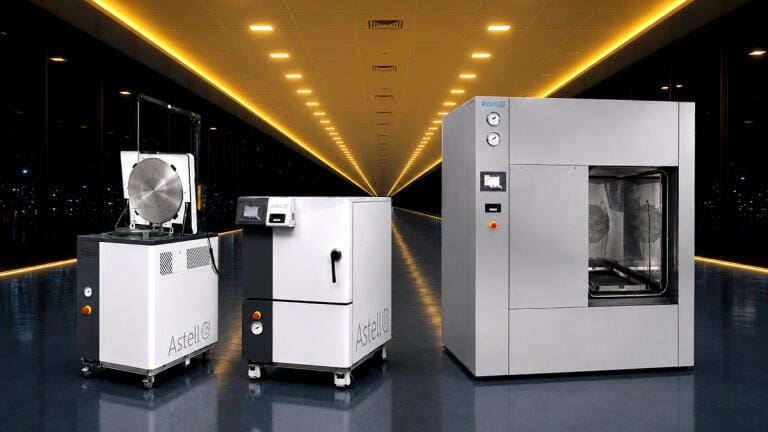
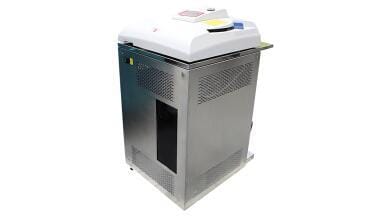
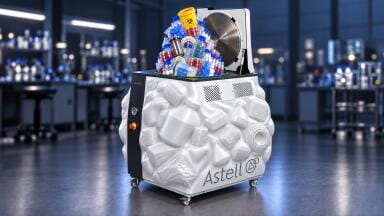
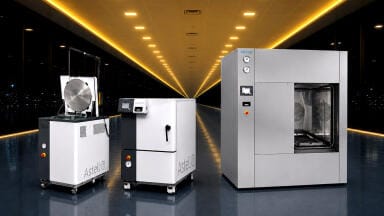
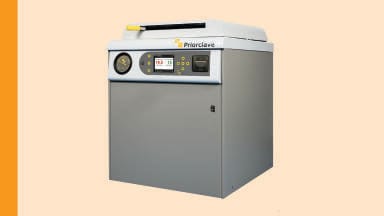
Top-loading autoclaves are compact and space-efficient because they load from above rather than needing full-height access for a swing-out door. That makes them a natural fit for tight bench runs, crowded prep rooms, and replacement projects where an existing room layout cannot easily change. The cost of such a space-saving design is a greater loading height, for which an automated hoist can help ease the manual loading.
This format turns up across a wide range of laboratory settings – quality-control microbiology in food and drink production, diagnostic laboratories, and personal-care product testing among them. The common thread is not the industry; it is the need for a modest footprint that can still support a full day's real laboratory work.
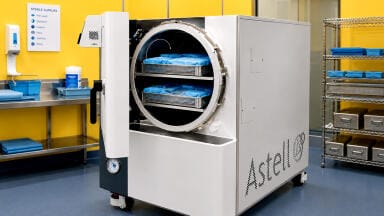
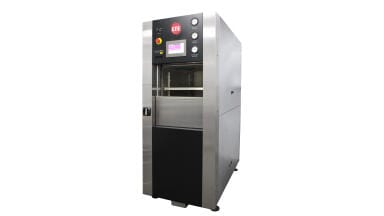
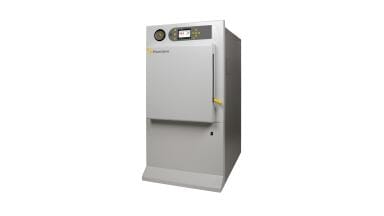
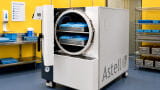
Front-loading autoclaves place the chamber at a comfortable working height and suit routine, multi-user operation where floor space is not at a premium. They tend to be the better fit for steady mixed workloads, higher throughput, or teams loading and unloading through the day – public-health, pharmaceutical and busy academic laboratories among them – provided the room and access route can actually take one.
A bigger chamber earns its place when throughput, not chamber temperature, becomes the limiting factor. High-volume food and dairy testing is a good example: a lab processing enough media, glassware and discard material in a day can turn an undersized autoclave into the bottleneck that slows product release.
The rule of thumb is to size for the busiest realistic day, not the average one. A chamber that copes comfortably on a quiet Tuesday can still fall short when production, testing and rework collide.
Format and capacity questions get much easier to answer once four things are settled: the loads that will actually go through the chamber, the number of cycles needed per day, the container sizes in use, and the physical route the autoclave will take on delivery – doorway width, corridor turns, and where services need to sit.
Working these out early avoids a familiar failure mode: specifying the “ideal” autoclave on paper, then discovering on delivery day that it will not go through the door – or that a smaller, better-suited format would have kept up with the lab's day just as well, with far less disruption to fit it in. Getting format and capacity right at the specification stage, rather than correcting it after delivery, is usually what separates a straightforward installation from an expensive one.
Astell has manufactured autoclaves since 1884, with over 140 years of expertise in matching machines and options to laboratory workflows. The range spans compact top-loading units, front-loading floor-standing autoclaves, and larger square-section chambers for high-throughput work, each available in a variety of capacities and configurations. Astell would be glad to help you specify the right format for your lab. Contact the team to discuss your requirements.
ILM 51.6 Sept 2026



 Product directory


.jpg)
.jpg)















.jpg)
