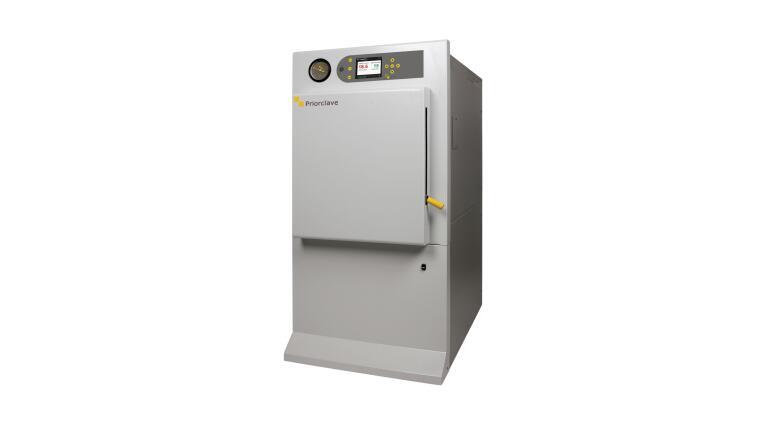
Autoclaves
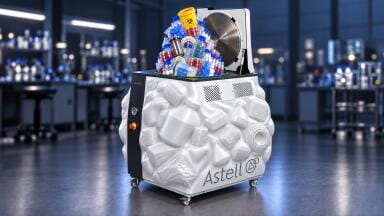
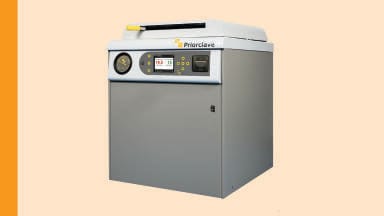
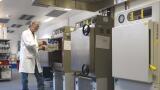
The humble ‘pressure cooker’-style vertical autoclave has long been a laboratory staple: basic, indestructible, reliable - and replaced as soon as budget allowed for a less frustrating programmable front-loading horizontal autoclave. But a new generation of vertical autoclaves is quietly reasserting itself in the lab. Top-loaders account for around 20% of all autoclave installations, and they’re gaining ground. According to industry analysts, sales of vertical autoclaves will exceed those of other configurations by 2030.
This isn’t just a matter of smaller or remote labs not being able to afford anything better. Fully featured modern vertical autoclaves are quickly becoming the configuration of choice in life sciences and academic labs.
Several factors are driving this trend. First, there’s the eternal struggle: every inch of benchtop and lab floor-space is hotly contested territory. Floor-standing vertical autoclaves free up bench space while offering larger chambers in a smaller footprint than comparable front-loaders.
Then there is the increase in life science labs worldwide, with a greater attention to efficiency and cost savings in those labs. In the big biotech research hubs - like Boston, San Francisco, Singapore, and the UK’s ‘Loxbridge’ Golden Triangle - lab space is priced at a premium. Meanwhile, government investment throughout Asia-Pacific and Latin America is funding ambitious new lab projects - but researchers still need to make every dollar count. Despite being vastly different settings, these labs all want streamlined ‘benchtop-adjacent’ workflows. A bench-height vertical autoclave is a perfect fit.
Finally, there’s the fact that these new labs are often dedicated to vaccine research, agricultural research, and biopharmaceuticals. All of these are heavy on liquid media prep and waste load processing, areas where vertical autoclaves can consistently outperform their horizontal cousins.
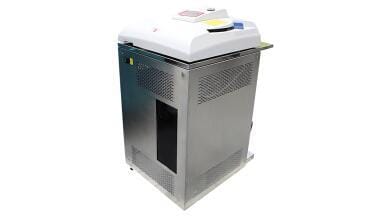
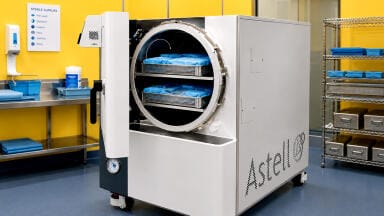
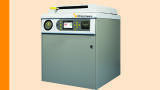
Historically, vertical autoclaves were simple ‘pressure cookers’: inexpensive and durable, but neither verifiable nor auditable, and requiring constant babysitting. Today, you can get a vertical top-loader with all the features of any front-loader while retaining all of the advantages of vertical design.
Now is the time to carefully assess why you are choosing the configuration you are: is it best for your work, or the result of an outdated idea of what’s available?
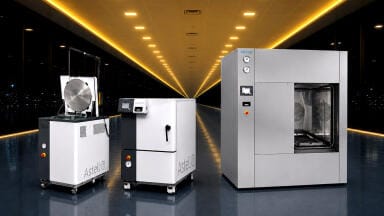
Priorclave has always prioritised supplying fully featured autoclaves in every configuration. We believe that choosing the right autoclave can always be based on your space requirements, workflow, load volumes, and sterilisation needs - not what options the manufacturer chose to make available in a given configuration.
Vertical autoclaves deliver more chamber capacity in a smaller footprint. They are especially good for sterilising taller items, like fermenters and bioreactors. A Priorclave 100L vertical autoclave will accommodate most 3L bioreactors and fermenters standing upright, full or empty. By comparison, to sterilise a similar-sized vessel in a horizontal front loader, you’d need a 300L or larger autoclave with a slant rack. You give up three times as much floorspace, and may still have issues if the vessel is holding fluid.
At Priorclave, every autoclave begins with a conversation, with the team helping you determine the right configuration of the right model for you. Once your lab autoclave is properly specified, that unit is hand built in Priorclave’s London factory.
Ready to discuss your equipment needs? Contact Priorclave today.
More information online
ILM 51.6 Sept 2026




 Product directory















.jpg)