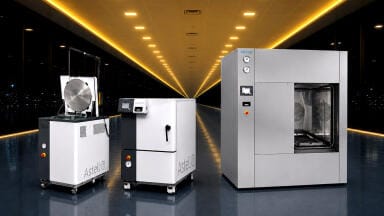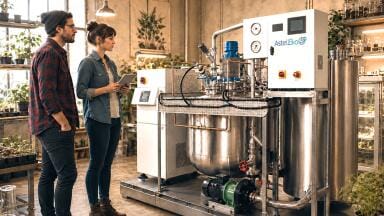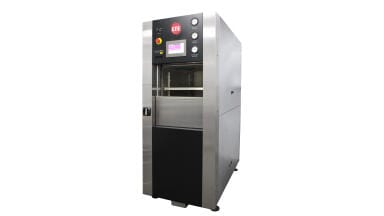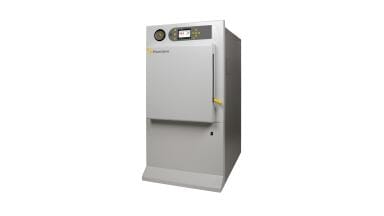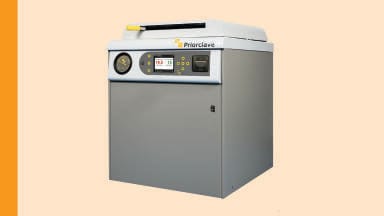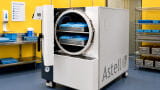
Autoclaves
When an autoclave becomes a bottleneck, the instinctive fix is to buy a second one. Sometimes that is right, but a second unit adds electrical demand, water, validation, servicing, maintenance and floor space — and may sit idle if the real problem was cycle length, not capacity. The good news is that cycle time can usually be cut without rushing sterilisation. The validated hold time stays fixed; the savings come from the stages around it. Here are six places to find them.
1. Air removal
Trapped air slows the chamber's climb to sterilising conditions, particularly in waste bins and wrapped loads where pockets of air sit between items. A simple or advanced vacuum strips that air out, so the load reaches temperature sooner.
2. Steam supply
An integral steam generator raises steam on demand rather than relying on chamber heaters or an external supply, which improves cycle times and removes a common source of waiting between runs.
3. Getting fluids to temperature accurately
Fluids heat slowly and unevenly, so a fixed timer either wastes time or risks under-processing. Load Sensed Process Timing controls the cycle from a probe in the centre of the load, beginning the hold only once the liquid itself has reached temperature.
4. Cooling
For most liquid loads, cooling is the longest single stage. A cooling fan or assisted air cooling strips heat from the chamber's outer surface, while water cooling coils or a cooling jacket circulate water against it for a substantial saving over passive cooling.
5. Faster, safer fluid cooling
Cooling fluids quickly risks boil-over and bottle breakage. An air ballast system controls the fall in chamber pressure during cooling to prevent this, working best alongside Load Sensed Process Timing. Combined on fluid loads, an internal chamber fan, air ballast and a cooling jacket can reduce cooling times by up to 70%.
6. Drying
Wrapped instruments and porous loads need to come out touch-dry. A heated jacket used with an advanced vacuum draws out moisture, avoiding a second handling step or a re-run.
Put together, these gains matter most in liquid-heavy, high-demand facilities where cooling dominates the cycle. There, faster recovery between runs can be the difference between needing one autoclave or two.
So before buying a second machine, it is worth asking whether the existing one is doing the job it could. Identify what is sterilised, how often, and which stage is slowest — then target that stage.
Astell has manufactured autoclaves since 1884, with over 140 years of expertise in matching machines and options to laboratory workflows. We would be glad to help you specify the right autoclave for your requirements.
ILM 51.6 Sept 2026




 Product directory


.jpg)