
Autoclaves
What I wanted for breakfast was a boiled egg, but I was in a hurry to write this article about load sensed process timing, so I had a fried egg instead. Eggs is eggs, as they say—but while the time it takes to boil an egg isn’t huge, it’s nearly ten times longer than frying one. That’s largely because you need to bring the water to the boil. Water, like most liquids, has a high specific heat capacity, meaning it takes longer to heat up and cool down. That’s why boiling an egg takes longer than frying it—and it’s also why you want load sensed process timing on your autoclave when sterilising liquids.
Autoclaving liquids takes much longer than almost any other standard load type because most liquids—especially those containing a lot of water—have a high specific heat capacity. During steam sterilisation, increasing the time that the load is held at sterilisation temperature by even a few percent can help ensure that all areas of the load have maintained the required temperature for long enough to achieve sterilisation.
For loads with relatively low heat capacity that are impermeable and only require surface sterilisation—such as glassware—the time required to heat and sterilise is comparatively short. Liquids, however, must be sterilised throughout, as biological contaminants can exist anywhere within them. This means they take significantly longer to heat and sterilise. As a result, adding even a small percentage to the process time translates into a much larger increase in actual time.
Load Sensed Process Timing equips an autoclave with a probe that can be placed inside the liquid load. This probe measures the temperature within the liquid itself, allowing the autoclave control system to accurately determine when the load has reached sterilisation temperature—and to ensure it has been maintained for the required duration.
This increased accuracy reduces the need for large safety margins, allowing each cycle to be optimised. The result is shorter overall processing times, reduced thermal stress on the load, and improved energy efficiency.
The probe also enables additional capabilities, such as high-speed liquid cooling when used in conjunction with air ballasting. When cooled quickly, autoclave chamber pressure drops, causing the liquid to boil due to lower pressure environment. Maintaining overpressure with pumped air while measuring the liquid temperature allows boiling to be mitigated. This is especially important when fast-cooling methods such as chamber vessel cooling jackets and in-chamber fans are employed, as these significantly accelerate the rate of temperature drop and therefore increase the risk of boiling without adequate overpressure.
Load Sensed Process Timing optimises the liquid sterilisation process regardless of the specific hardware fitted to the autoclave. In almost all cases, the sterilisation of liquids is significantly improved by its use, ensuring maximum efficiency from your autoclave.
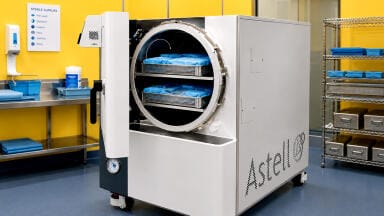
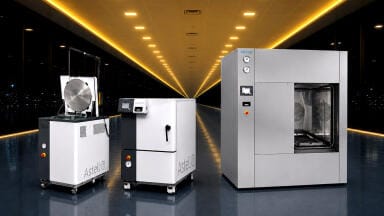
Recognising its importance, Load Sensed Process Timing is available as an option on all Astell autoclaves. Each Astell probe features a metal-clad armoured cable, protecting it from the rigours of daily use and ensuring reliable operation. Astell Load Sensed Process Timing gives you better liquid autoclaving with more reliable hardware – as sure as eggs is eggs.
Contact Astell to learn more about Load Sensed Process Timing and the autoclaves it can be fitted to.
ILM 51.6 Sept 2026


 Product directory


.jpg)
.jpg)














.jpg)
