Autoclaves
In most laboratories, a delayed or compromised result is an inconvenience. In a clinical diagnostics laboratory, it can affect a patient’s care. That reality shapes every process that supports testing, including some that rarely get much attention, such as preparing sterile media and safely decontaminating infectious material once testing is complete.
Both tasks usually fall to the same piece of equipment: the autoclave.
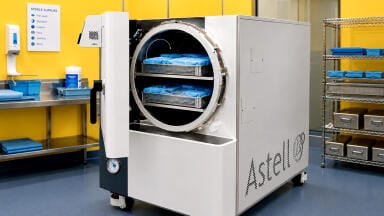
A diagnostics lab’s autoclave is effectively working in two directions at once. On the clean side, culture media, plates and glassware need to be sterile before they are used, because contamination at this stage can undermine a result before testing has even begun. On the waste side, used cultures, plates and contaminated consumables have to be made safe before they leave the laboratory.
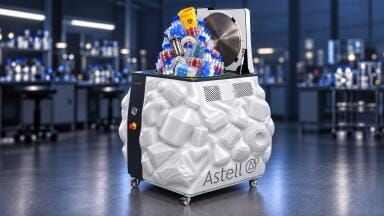
In many labs, the waste stream is the larger of the two and the more safety-critical. Material that may contain pathogenic organisms can’t simply be bagged and removed. It has to be reliably decontaminated, every time, by a process the team can trust.
Space is rarely in good supply in diagnostic laboratories. Benches, analysers and storage all compete for the same floor, and the autoclave has to fit into an already busy routine without getting in the way.
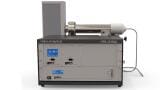
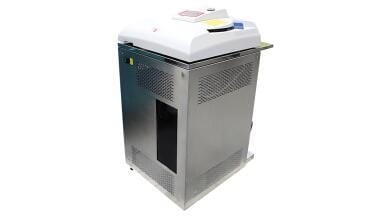
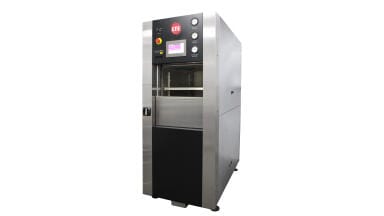
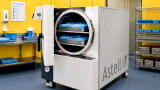
This was the situation in one anonymised installation, where a clinical diagnostics laboratory chose a 135-litre top-loading autoclave. The top-loading format gives useful working capacity without taking up the floor space of a larger front-loading machine, which is a sensible compromise for a lab that needs genuine daily throughput in a tight footprint.
Fitting the room is only part of it, though. The machine also has to handle the lab’s day-to-day volume, run reliably for the people using it, and decontaminate consistently when the waste involved is biohazardous.
The two sides of the workload usually need different cycles. A typical arrangement might use a 121 °C, 15-minute cycle for suitable culture media, while contaminated diagnostic waste goes through a separate discard cycle held at 121 °C or above before it leaves the lab.
These figures are a starting point rather than a prescription. Load type, container size and packing density all affect how quickly heat gets through a load, so final cycle parameters should always be set by the site’s own procedures and risk assessments, and validated for the loads actually being processed.
For a diagnostics team, it comes down to reliability and repeatability. The autoclave has to produce clean material that won’t compromise testing and make biohazardous waste safe, consistently and without fuss. Get either wrong and the cost goes well beyond lost time.
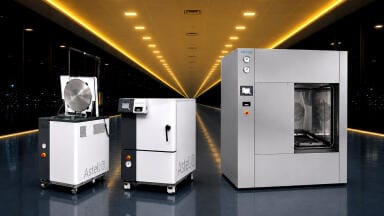
Astell has been helping laboratories achieve effective steam sterilisation since 1884. With hundreds of autoclave models, highly customisable builds, flexible installation options and an expert team of in-house service engineers, Astell can help diagnostics, clinical and microbiology labs specify a machine that suits both clean preparation and safe decontamination.
If you have a similar requirement, or any other autoclave-related question, contact Astell today.
LMUK 51.7 Nov 2026


 Product directory