Laboratory products
A decade ago, MOSH and MOAH were topics discussed mainly by packaging specialists and contaminant chemists. Today, they have become one of the most significant analytical and regulatory challenges facing the food and beverage industry.
Unlike many contaminants that can be measured as individual compounds, MOSH and MOAH consist of highly complex mixtures containing thousands of hydrocarbons. This complexity makes them exceptionally difficult to analyse, interpret, and control, placing them at the intersection of toxicology, food chemistry, regulation, and advanced separation science.
While both MOSH and MOAH largely originate from petroleum-derived materials, their toxicological significance differs considerably. MOSH primarily comprises linear and branched alkanes and cycloalkanes, while MOAH contains aromatic hydrocarbons, including compounds with multiple aromatic rings. Although both groups originate largely from petroleum-derived materials, their toxicological profiles differ substantially.
Historically, concern surrounding MOSH and MOAH focused on migration from recycled cardboard packaging into foods such as cereals, rice, and pasta. However, research has shown that contamination can occur throughout the entire food supply chain, including raw materials, processing equipment, up to transportation. As a result, the industry now views MOSH and MOAH as a broader supply chain challenge rather than simply a packaging issue.
A major development came with EFSA’s updated 2023 assessment. Following a comprehensive review of scientific data, EFSA concluded that current dietary exposure to MOSH is not considered a health concern for consumers. However, MOAH remains under close scrutiny, particularly fractions containing three or more aromatic rings, which may be associated with genotoxicity and carcinogenicity. Consequently, regulatory focus is increasingly shifting toward MOAH monitoring and control.
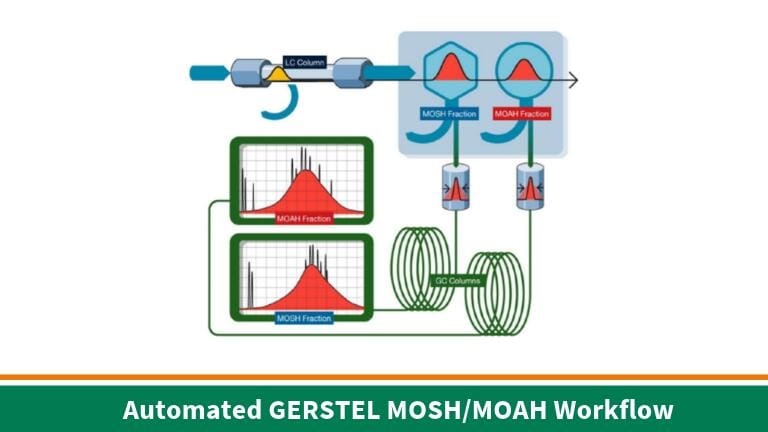
From an analytical perspective, MOSH and MOAH present a unique challenge. Rather than producing clearly defined chromatographic peaks, they often appear as broad unresolved hydrocarbon “humps.” Laboratories must therefore quantify entire hydrocarbon fractions instead of individual compounds.
These challenges are especially relevant for flavour, fragrance, edible oil, and essential oil manufacturers. Naturally occurring compounds such as terpenes, sesquiterpenes, and aromatic constituents can overlap with MOSH and MOAH regions, creating the potential for false positives and making confirmatory analytical techniques increasingly important.
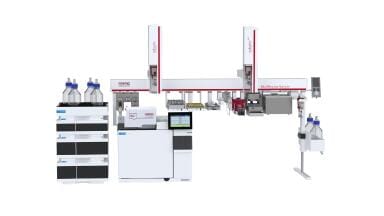
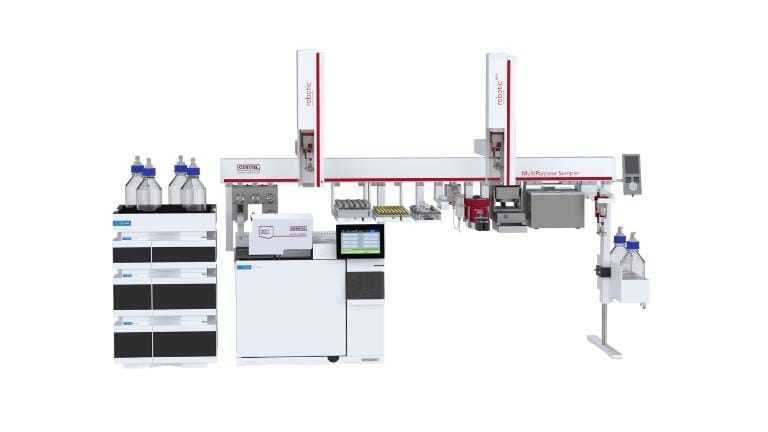
To address these challenges, analytical technologies continue to evolve. Online LC-GC-FID remains the widely accepted workflow for routine MOSH/MOAH analysis. Automated solutions, such as the GERSTEL MOSH/MOAH workflow, help improve throughput, reproducibility, and compliance while simplifying routine laboratory operations.
At the same time, advanced technologies including GC×GC-FID, GC×GC-MS, high-resolution MS, and emerging SFC approaches are providing greater confidence when distinguishing genuine contamination from naturally occurring matrix components.
As legislation continues to develop, organisations will increasingly need to demonstrate effective contamination control rather than simply detect contamination.
Navigating MOSH and MOAH requirements demands both analytical expertise and the right technology. At Da Vinci Laboratory Solutions UK & Ireland, we support laboratories and manufacturers with advanced chromatography solutions, application expertise, and automated workflows for MOSH/MOAH analysis.
LMUK 51.7 Nov 2026



 Product directory