Research news
A laboratory study found that violet-blue light inactivated all 64 tested Campylobacter strains, including antibiotic-resistant strains but trials on contaminated chicken are still needed
A laboratory study found that violet-blue light inactivated all 64 tested Campylobacter strains, including antibiotic-resistant strains, but trials on contaminated chicken are still needed.
Violet-blue light inactivated all 64 Campylobacter strains collected from poultry in the UK tested by researchers from the University of Reading and the Animal and Plant Health Agency. The results suggest that the treatment could help reduce contamination during poultry processing, although its performance on naturally contaminated chicken still needs to be tested.
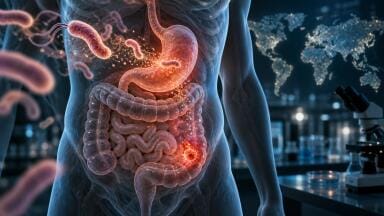
Campylobacter is a leading cause of food poisoning and is found on about three-quarters of raw chicken sold in the UK with cross-contamination during food preparation is a major route of infection. The bacteria can cause stomach cramps, fever, nausea and diarrhoea.
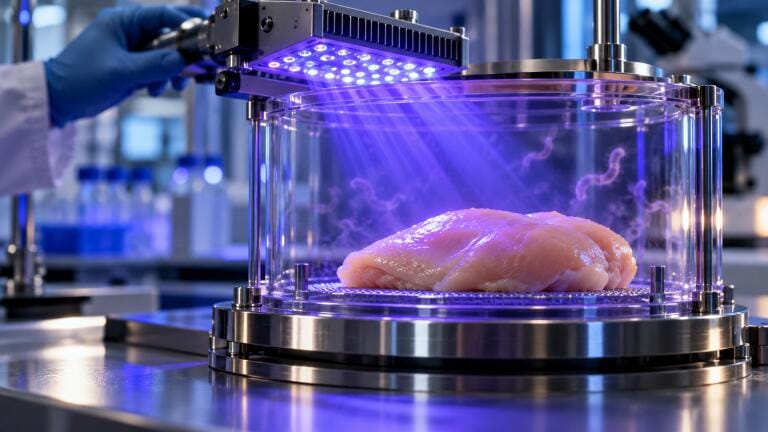
The technique, called violet-blue photodynamic inactivation, uses visible light to prompt molecules inside bacterial cells to produce reactive oxygen species that damage the bacteria. It requires no added chemical and does not involve direct contact with the food. The researchers tested strains collected from UK poultry, including strains with different antibiotic-resistance profiles. Antibiotic-resistant strains were inactivated as effectively as susceptible ones.
Repeated exposure did not increase one strain’s tolerance to the treatment more than 15 laboratory rounds. The team also estimated that a 100-fold reduction in contamination on chicken carcasses could lower the share of highly contaminated carcasses reaching shops from about one in 10 to one in 50. This estimate depends on the treatment achieving that reduction under processing conditions.
“While further evaluation using contaminated meat samples is required, the simplicity and adaptability of this technology suggest that it could be implemented at various stages of the food production process,” said Dr. Samuel Connelly of the Animal and Plant Health Agency, who co-led the study.
The researchers said low-power light-emitting diodes could offer a practical option for poultry producers. Further trials on contaminated carcasses in commercial settings are needed before the approach can be assessed for wider use.
In the UK, Campylobacter causes hundreds of thousands of food-poisoning cases each year, with an estimated annual cost of £700 million in healthcare and lost productivity. Cooking kills the bacteria, but people can become ill if juices from raw poultry contaminate hands, utensils or ready-to-eat food. A treatment applied during processing could therefore complement careful handling and cooking at home.
The study builds on earlier work by the same group, which found that blue-light treatment could act against specific bacterial strains and might offer an alternative to chlorine treatment. The latest work tested 64 strains and found that the effect was consistent across species and antibiotic-resistance profiles. The treatment also remained effective after repeated laboratory exposure, although a single-strain laboratory experiment cannot rule out every possible resistance mechanism.
The Animal and Plant Health Agency’s surveillance programme supplied strains that represented bacteria circulating in UK poultry, rather than laboratory strains alone. The researchers said the next stage is to test naturally contaminated carcasses under processing conditions. The estimate of fewer highly contaminated products reaching shops assumes that the laboratory reduction can be achieved at scale.
The research was conducted with poultry strains supplied through the agency’s surveillance programme, which allowed the team to test variation found in the food chain. The researchers said the result was encouraging because it covered multiple Campylobacter species and antibiotic-resistance profiles, rather than a small set of laboratory isolates. Their next work will test the treatment on naturally contaminated meat and examine how exposure time and other processing conditions affect the reduction.
The study did not compare safety or quality outcomes in treated poultry products. Its findings concern bacterial inactivation under the experimental conditions and do not remove the need to prevent cross-contamination or cook chicken thoroughly.
For further reading please visit: 10.1099/mic.0.001769
ILM 51.6 Sept 2026

 Product directory