News
A S$6 million research platform will unite clinical, pathology and data science expertise to investigate human tissue disease and support more precise diagnostic tests and therapies.
The SingHealth Duke-NUS Academic Medical Centre (AMC) has launched a research platform to investigate how diseases develop, why patients respond differently to treatment and how those insights could inform more precise diagnostics and therapies.
The Spatial Profiling and Disease Exploration (SPADE) platform has been supported by a S$6 million grant from the SingHealth Joint Office of Academic Medicine.
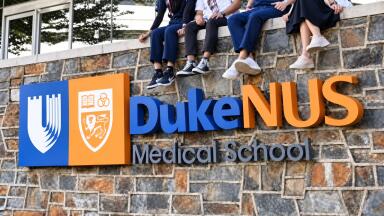
The National Cancer Centre Singapore (NCCS) is leading the initiative, with Singapore General Hospital (SGH) and Duke-NUS Medical School working as co-leads. The medical school’s name refers to the famous American Duke University in North Carolina as well as Singapore’s National University.
SPADE combines SingHealth’s clinical and pathology expertise with Duke-NUS capabilities in biomedical research, computational biology, data science and artificial intelligence (AI). Shared equipment, high-performance computing and AI-based analysis will help researchers interpret complex tissue data and identify promising targets for laboratory-developed diagnostic tests.
Spatial profiling allows scientists to examine cells, genes and proteins within their tissue environment. Their location and relationships with neighbouring cells provide context that can help explain disease progression and treatment response.
The translation of these findings into clinical applications requires expertise across disciplines, from tissue preparation and molecular analysis to the interpretation of results in relation to patient care.
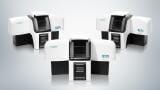
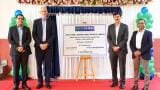
At the launch, NCCS signed a research collaboration agreement with biotechnology company 10x Genomics, which specialises in single-cell and spatial biology. SPADE’s first industry partnership will provide spatial profiling technology and technical support, and support novel workflows and research applications.
“Human tissue is extraordinarily complex, and for a long time we lacked the tools to fully make sense of why diseases behave the way they do, or why the same treatment can work for one patient but not another,” said Assistant Professor Jason Chan, SPADE’s principal investigator and director of the Cancer Discovery Hub at NCCS.
He said the collaboration would enable researchers to examine individual cells and their surroundings to uncover how diseases progressed and responded to therapy.
“Duke-NUS brings deep capabilities in computational biology, data science and AI that are essential to making sense of the enormous amount of information generated by spatial profiling,” said Professor Enrico Petretto, a SPADE co-principal investigator and director of the Centre for Biomedical Data Science at Duke-NUS.
He said the platform would combine those capabilities with clinical and pathology expertise to translate molecular maps into insights relevant to diagnosis and treatment.
SPADE builds on research across the academic medical centre that has contributed to rare disease characterisation and cancer subtype identification.
Its longer-term ambitions include multiple diagnostic tests on a single tissue sample, potentially fewer repeated biopsies and a shorter interval between diagnosis and treatment. Researchers also hope to identify several drug targets within one sample to inform combination therapies and explain differences in individual treatment responses.
These potential applications require further development and clinical validation. Another objective is a spatial tissue atlas: a molecular map of human tissues that could help train AI models and support predictive simulations of disease behaviour.
“SingHealth is committed to delivering the best possible care to our patients,” said Professor Ng Wai Hoe, group chief executive officer of SingHealth. He said deeper knowledge of disease and treatment responses would help improve diagnostic and therapeutic precision.
“SPADE shows what the AMC can achieve when SingHealth’s clinical depth and patient insights are combined with Duke-NUS’ capabilities in biomedical science, computational biology and data analytics,” said Professor Patrick Tan, dean of Duke-NUS. He said shared technologies and patient-centred research questions could accelerate progress towards clinically useful diagnostics and treatments.
“Good science starts before the analysis, from how tissue samples are collected, prepared, and processed,” said Dr Timothy Tay, senior consultant in SGH’s Department of Anatomical Pathology and a SPADE co-principal investigator. He said SGH’s pathology expertise and laboratory capabilities would underpin robust, reliable research.
ILM 51.6 Sept 2026



 Product directory