Laboratory products
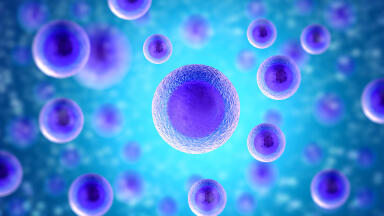
Successful cell culture begins with consistent care. Scientists learn how their cells behave, recognise when something looks wrong and adapt conditions for each cell line to support optimal growth. That dedication is difficult to scale. Cells require attention overnight and across long workflows, even as the number of plates and assays increases. The challenge is to preserve scientific expertise when routine work extends beyond one person’s hands and working day.
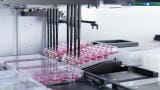
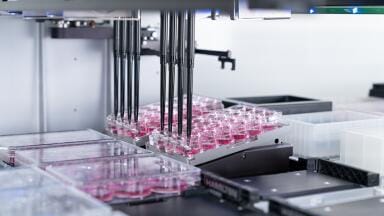
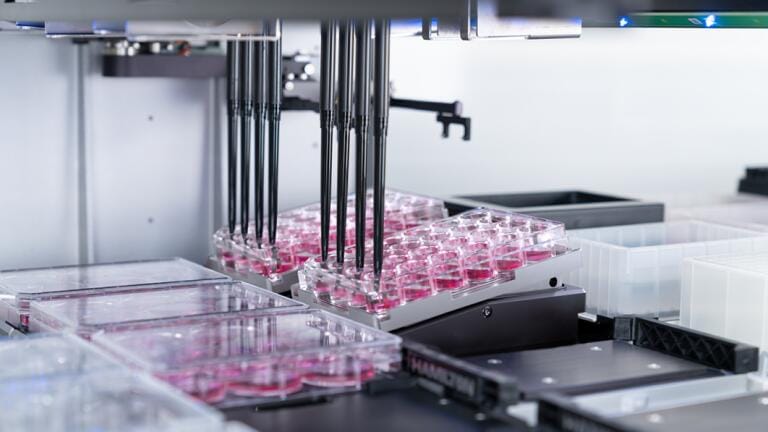
Cell biology automation should therefore do more than move liquids. A well-designed platform translates scientific decisions into controlled actions. It provides media at the intended time, controls relevant process conditions, records each process step and can integrate imaging to keep a watchful eye on the culture. In this way, automation becomes an extension of the scientist’s care, carrying out defined workflows with the same attention across plates, experiments and sites.
This approach becomes increasingly important as laboratories expand from conventional 2D cultures to longer-running assays and more complex 3D models. By combining biological understanding with controlled execution, automation can preserve care at scale while giving scientists more time to evaluate results, refine experiments and advance their research.
Learn more in Hamilton's on-demand webinar Toward More Reproducible Cell Biology: Improving Control in Cell Culture.
ILM 51.6 Sept 2026


 Product directory