Laboratory products
Your Kjeldahl analysis is complete, but the nitrogen and protein results don't look right. Was the sample properly prepared? Was digestion complete? Could something have gone wrong during distillation or titration?
Even small deviations in the analytical workflow can affect the final protein value. Here are six common issues and practical tips to help laboratories achieve reliable results.
Inconsistent nitrogen and protein results often originate before the analysis even begins. Food and feed samples can be highly heterogeneous, with uneven protein distribution, variable particle sizes or moisture content. Similar challenges arise in environmental matrices, such as soil, sludge, and sediments, where differences in organic matter distribution, particle size, and moisture content can significantly affect sample representativeness and the reliability of nitrogen determination.
Proper grinding, mixing and homogenisation are essential to ensure that each test portion represents the original material.
Practical tip: Analyse replicate test portions to assess sample preparation consistency before adjusting analytical parameters.
Sample quantity directly influences digestion efficiency and analytical accuracy. Excessive amounts can increase acid consumption, cause foaming and compromise decomposition. Conversely, insufficient sample quantities may produce nitrogen levels too low for reliable quantification.
Always consider the expected nitrogen concentration and matrix composition when selecting sample weight.
Practical tip: Estimate the expected nitrogen content and ensure the sample amount falls within the validated method's working range.
Dark solutions, visible residues or low nitrogen recovery may indicate incomplete digestion. However, simply increasing the temperature is not always the solution.
Efficient digestion depends on the right balance of sulphuric acid, catalysts, heating conditions and sample composition. Excessive heating or insufficient acid can compromise nitrogen recovery.
Practical tip: When analysing a new matrix, verify digestion efficiency using an appropriate reference material or recovery standard.
Even after successful digestion, nitrogen recovery can be affected by insufficient alkalisation, incomplete ammonia transfer, leaks or inefficient condensation.
Correct sodium hydroxide dosing, suitable distillation conditions and regular inspection of seals and connections are essential for reliable ammonia recovery.
Practical tip: Use an appropriate ammonium standard to check distillation performance independently of digestion.
Titration directly determines the nitrogen content used to calculate protein concentration. Incorrect titrant concentration, endpoint detection errors or inappropriate blank corrections can introduce significant inaccuracies.
Regular titrant verification, electrode maintenance and consistent blank measurements help ensure reliable quantification.
Practical tip: Monitor blank values over time. Unexpected increases or variability may reveal contamination or reagent preparation issues.
Kjeldahl measures nitrogen, not protein directly. Converting nitrogen into protein requires an appropriate factor, which varies according to the sample matrix.
While 6.25 is widely used, dairy products commonly use 6.38, and other matrices may require different factors. Non-protein nitrogen can also influence the reported crude protein value.
Practical tip: When comparing results, always verify that the appropriate nitrogen-to-protein conversion factor has been applied.
Reliable Kjeldahl analysis depends on more than following a procedure. Understanding the factors influencing each analytical step helps laboratories reduce variability, avoid unnecessary repetitions and improve confidence in their results.
The key takeaway? When results don't look right, identify the source of the problem before repeating the analysis.
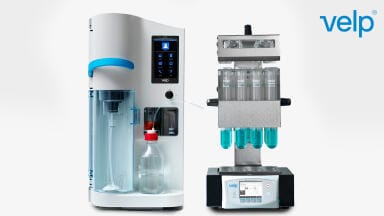
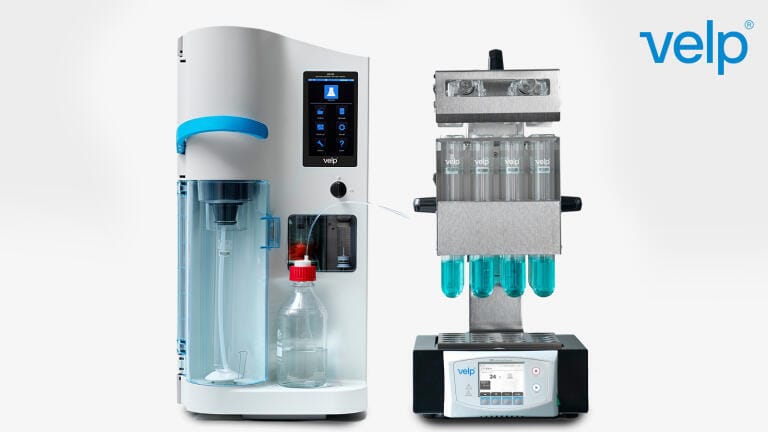
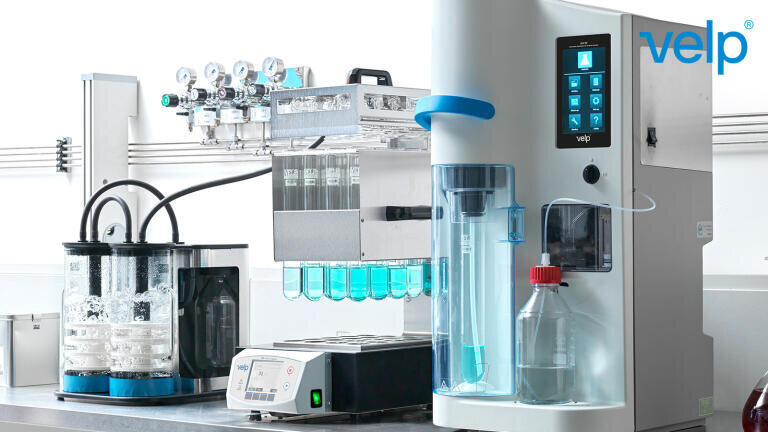
Achieving reliable protein results requires more than accurate instruments: it takes the right combination of equipment, reagents and analytical expertise. Velp supports laboratories throughout the entire Kjeldahl workflow, offering a comprehensive portfolio of digestion and distillation systems, complemented by a wide range of Kjeldahl catalyst tablets designed to meet different analytical needs and sample matrices. From sample digestion to final nitrogen determination, Velp provides integrated solutions to help laboratories optimise their workflows, improve reproducibility and achieve consistent, reliable results.
ILM 51.6 Sept 2026
 Product directory






,-Perfection-Under-Bench-Fridge-(mode.jpg)