ChemSynt 301 chemical synthesis reactor: Simplifying complex chemistry

Laboratory products

ChemSynt 301 chemical synthesis reactor: Simplifying complex chemistry

02 Sep, 2026

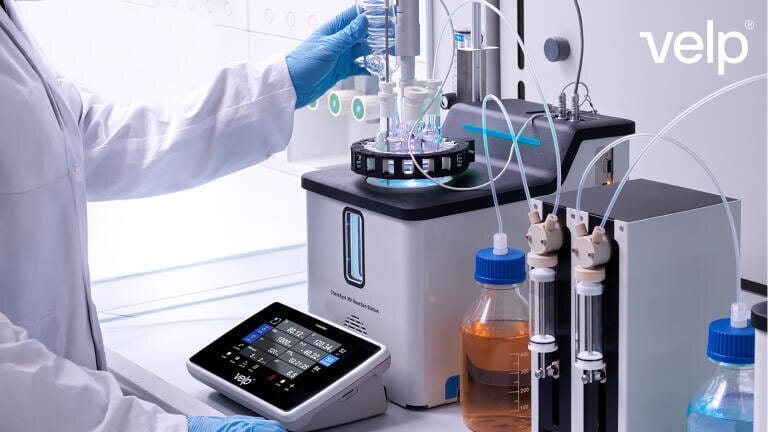
Velp presents a new modular reaction station designed to accelerate process development, optimise synthesis workflows, and support reliable scale-up studies by combining temperature control, stirring, automated dosing, pH management, and real-time data acquisition.

Control the Parameters That Shape Your Experiments

Developing a chemical process means testing conditions, comparing results, and understanding what drives reaction performance. Whether the objective is screening reaction conditions, defining the operating window, or preparing for scale-up, having control over reaction parameters is the starting point for generating reliable, reproducible data. 

Temperature, stirring, reagent dosing, and pH can all influence the outcome. Managing these parameters consistently is what turns individual experiments into reliable, comparable data.

In many laboratories, that control still depends on manual intervention: adjusting setpoints, dosing reagents, recording readings. Manual steps take time and introduce variability, which is exactly what process development aims to eliminate.

Automation That Makes Experiments More Consistent

With the new ChemSynt 301 Chemical Synthesis Reactor, Velp brings these functions together in one modular platform, helping researchers develop, optimise, and scale chemical processes with greater control and less manual intervention.

  • Control every variable: Programmable temperature, stirring, dosing, and pH profiles reduce manual variability and improve reproducibility. 
  • Understand every reaction: Continuous data logging with up to 1-second resolution captures process parameters throughout the experiment. 
  • Run experiments unattended: Automated control of dosing, stirring, and temperature allows experiments to run unattended. 
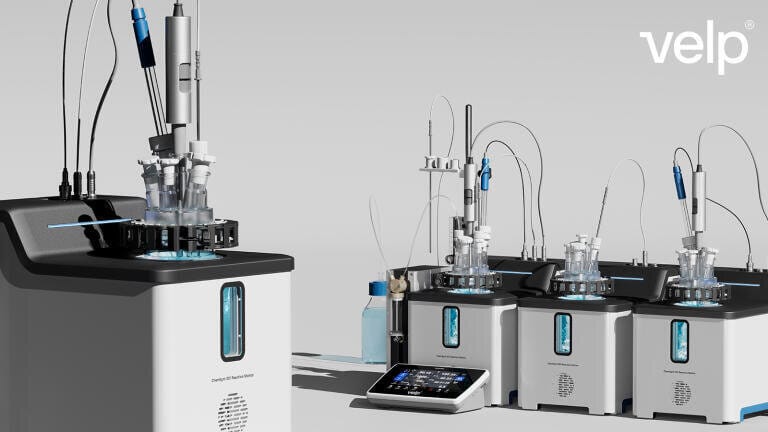
  • Adapt to every stage of development: The same platform accepts screening vials as well as 100 mL and 400 mL reactors. 
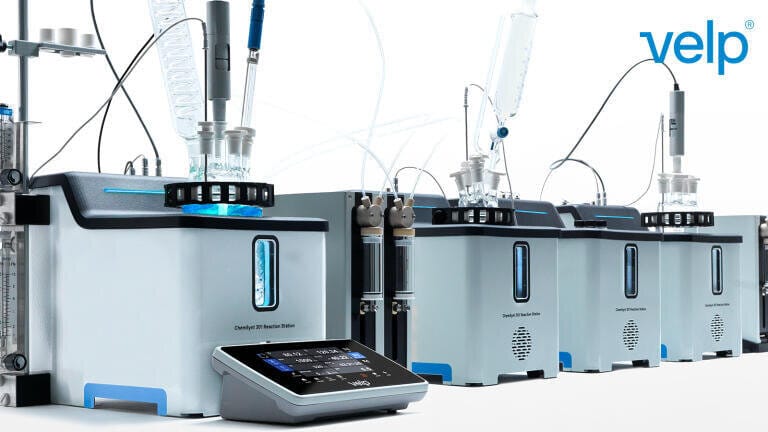
  • Scale with your workload: A single station can be expanded to up to four fully independent reaction stations running in parallel, allowing throughput to grow with workload. 

From Reaction Screening to Process Optimisation and Scale-Up

ChemSynt 301 supports the different stages of process development across chemical, pharmaceutical, and industrial R&D.

  • Reaction screening: Small-volume vials and parallel experiments allow multiple reaction conditions to be evaluated quickly, reducing reagent consumption and experimental costs.
  • Process definition & optimisation: Investigating the influence of temperature, stirring, dosing, and pH on reaction performance allows laboratories to compare conditions and define the operating window before moving to a larger scale. 
  • Scale-up studies: Larger reactors provide more representative conditions for developing and optimising reactions, helping assess process robustness before pilot- or production-scale development. 

By combining process control, automation, flexibility, and real-time data acquisition, ChemSynt 301 provides a complete environment for chemical process development: from the first screening experiment to the conditions that will define the final process. 

Which ChemSynt 301 Configuration Fits Your Needs?

One station or four? Screening vials or 400 mL reactors? The online configurator lets you build the setup that fits your chemistry and development objectives in just a few minutes. 

Configure your system!

Latest News

Lab Asia 33.4 - August 2026

Explore our Digital Edition

Discover the latest news and research

Digital edition

Explore Our Other Sites

Envirotech Online
Environmental sample extraction: moving beyond the limitations of EPA Method 3546
Explore more Arrow
Pollution Solutions Online
Leading UK biogas operator places first orders for new FlowSep technology
Explore more Arrow
Petro Online
What happens when a refinery suddenly stops?
Explore more Arrow
Chromatography Today
UHPLC–MS/MS methodology detects multiple algal toxins in fish plasma
Explore more Arrow