Sample preparation
Reproducibility remains one of the most important challenges facing Life Science laboratories today. While analytical instruments continue to evolve in terms of sensitivity, automation, and data quality, many laboratories still experience variability between operators, batches, and experimental runs. In many cases, the source of this variability originates long before the analysis itself begins.
Sample preparation is often considered a routine step, yet it can significantly influence the quality, consistency, and reliability of experimental results. Temperature, in particular, strongly influences many biological and biochemical workflows, directly affecting reaction kinetics, enzyme activity, molecular stability, and sample integrity.
Temperature-dependent processes are widely found throughout Life Science laboratories. Enzyme activation and inactivation, protein digestion, nucleic acid preparation, sample lysis, incubation procedures, media preparation, and the preparation of standards all require precise and controlled thermal conditions. Even relatively small temperature deviations can alter reaction outcomes, impacting both accuracy and reproducibility.
Despite its impact, temperature control during sample preparation is frequently underestimated. Laboratories often rely on a combination of water baths, heating plates, incubators, or legacy heating devices that may not always provide the level of thermal consistency required for modern applications.
Common challenges include:
Achieving a target temperature is only part of the equation. Equally relevant are temperature stability and temperature uniformity across all samples being processed. A nominal temperature setting does not necessarily guarantee that every sample experiences identical thermal conditions. Variations in heat transfer can lead to differences in incubation efficiency, reaction progress, or sample treatment, ultimately contributing to data variability.
For this reason, laboratories increasingly seek heating solutions capable of delivering stable and uniform thermal conditions throughout the entire incubation period. Consistent temperature distribution across multiple samples helps ensure that each sample receives the same thermal treatment, supporting more reliable and reproducible results.
Another challenge frequently encountered in Life Science laboratories is the need to manage multiple sample formats. A single workflow may involve PCR tubes, microcentrifuge tubes, conical centrifuge tubes, vials, cuvettes, or specialised reaction vessels. The use of multiple heating devices to accommodate different consumables can increase laboratory complexity, occupy valuable bench space, and introduce additional sources of variability.
Modern dry block systems have therefore become an increasingly attractive option for laboratories seeking to improve sample preparation consistency without sacrificing operational flexibility. Combining precise temperature control, uniform heat distribution, and adaptable block configurations, these platforms support a wide range of applications while helping scientists maintain confidence in the quality of their results.
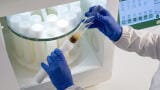
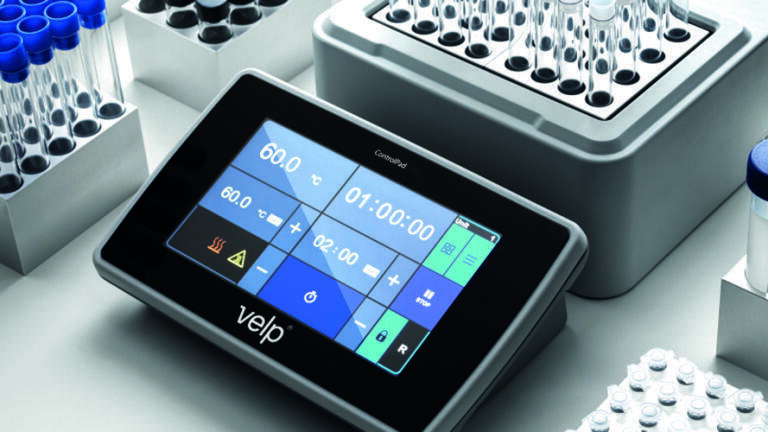
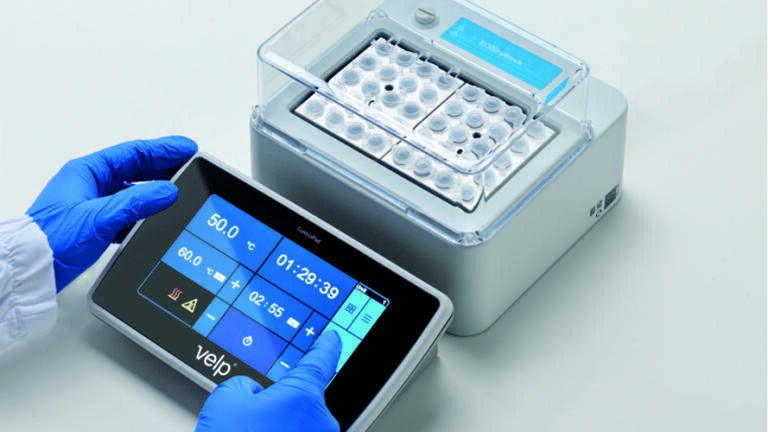
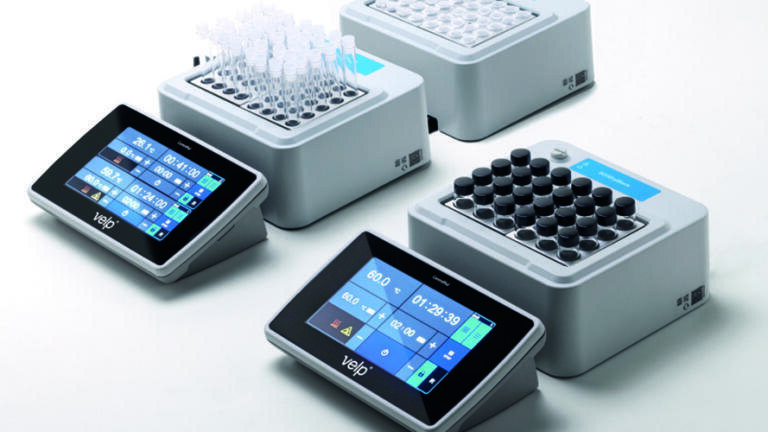
The Velp ECODryBlock offers a practical solution to this challenge. It has been designed to support the diverse needs of Life Science laboratories through a wide range of interchangeable aluminium blocks compatible with:
This flexibility allows researchers to use a single heating platform across multiple applications, simplifying workflows, reducing bench space requirements, and ensuring consistent temperature-controlled sample preparation.
Ultimately, the reliability of analytical data depends heavily on the quality of the preparation steps that precede measurement. By combining precise temperature control with the versatility required by modern laboratories, ECODryBlock helps scientists improve reproducibility, reduce variability, and confidently manage evolving experimental workflows.
With a wide selection of interchangeable aluminium blocks and precise temperature control up to 165 °C, ECODryBlock supports a broad range of Life Science applications, from sample preparation and incubation to enzyme-related workflows and molecular biology procedures.
Contact our experts to discover how ECODryBlock can help improve reproducibility, streamline temperature-controlled workflows, and adapt to the evolving needs of your laboratory!
ILM 51.6 Sept 2026




 Product directory