Sample preparation
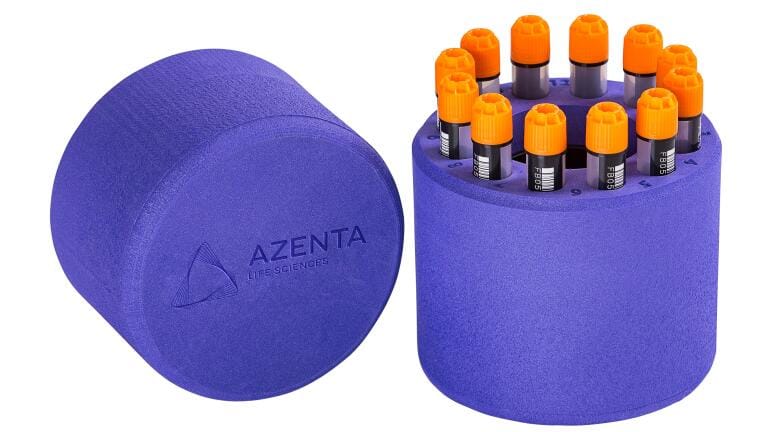
Azenta Life Sciences’ CoolCell™ Cell Freezing Containers provide a reliable alternative to traditional alcohol-based freezing methods, enabling laboratories to achieve reproducible controlled-rate cryopreservation without the need for isopropanol or programmable freezers.
As demand grows for cell therapies, regenerative medicine and biobanking, maintaining cell viability and consistency during storage has become increasingly important. Controlled-rate freezing helps protect sensitive biological materials by ensuring cells are cooled at a predictable rate, supporting reliable recovery and downstream applications.
CoolCell containers are designed to deliver a controlled cooling rate of approximately -1°C per minute in a standard -80°C freezer. Using a thermoconductive alloy core combined with a highly insulating outer housing, the technology regulates heat transfer to provide consistent freezing conditions across multiple samples.
“Every sample matters,” said Alexis MacLeod, Global Product Manager – Consumables & Instruments at Azenta Life Sciences. “CoolCell provides researchers with a simple and reliable approach to controlled-rate freezing without the need for alcohol-based systems or programmable freezers. By delivering consistent cooling performance while removing the need for isopropanol, CoolCell helps laboratories improve workflow efficiency and protect valuable cell samples.”
Validated across a range of cell types, including stem cells, primary cells, peripheral blood mononuclear cells (PBMCs), established cell lines, insect cells and yeast, CoolCell supports reproducible cryopreservation across research, biotechnology, pharmaceutical and clinical environments.
Unlike conventional alcohol-based freezing containers, CoolCell eliminates the need for regular isopropanol replacement, helping reduce maintenance requirements, consumable costs and laboratory waste. Its simple, ready-to-use design provides laboratories with a practical solution for consistent cell preservation while improving operational efficiency.
More information online
ILM 51.6 Sept 2026


 Product directory


.jpg)
.jpg)


















.jpg)
