Centrifuge
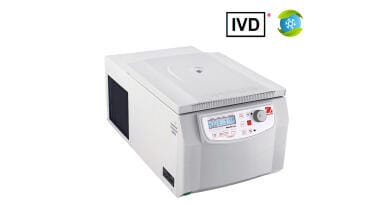
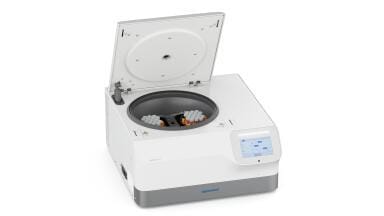
Eppendorf has launched the Centrifuge 5811 R, a refrigerated, multipurpose benchtop centrifuge designed to support a broad range of laboratory workflows. The instrument succeeds the Centrifuge 5810 R and retains much of its predecessor’s rotor compatibility, capacity, and operational flexibility.
The Centrifuge 5811 R combines a novel exterior design and refreshed user interface with revised refrigeration technology. Eppendorf said the instrument had been developed to provide efficient and repeatable operation for laboratories that use one centrifuge for several applications or sample formats.
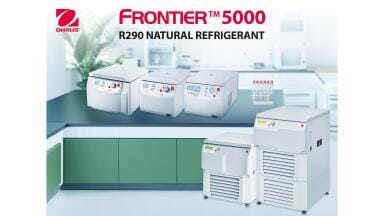
The system uses R290, the refrigerant designation for propane, instead of a conventional fluorinated refrigerant. According to Eppendorf, R290 has a global warming potential of 0.02 and an ozone depletion potential of zero. Global warming potential indicates how strongly a gas can contribute to climate change relative to carbon dioxide on a specified assessment scale, while ozone depletion potential measures its capacity to damage the stratospheric ozone layer.
The choice of refrigerant can therefore help laboratories to reduce the environmental impact associated with temperature-controlled centrifugation. The instrument also includes the company’s ECO shut-off function, an energy-efficient FastTemp temperature-control feature, and aerodynamically designed buckets intended to reduce power consumption during operation.
“The refrigerated Centrifuge 5811 R is a benchtop system for laboratories where one centrifuge must support many workflows across the working day. It can accommodate tubes in the morning, plates in the afternoon, and bottles for the next experiment.
“The instrument combines broad rotor flexibility, high capacity, and lower-impact cooling technology within a compact footprint that fits virtually any laboratory,” said Dr Tim Schommarzt, global marketing manager at the Eppendorf Group.
The Centrifuge 5811 R provides a maximum capacity of three litres and can achieve a relative centrifugal force of up to 20,913 × g at 14,000 revolutions per minute. Relative centrifugal force expresses the acceleration applied to a sample as a multiple of Earth’s gravitational acceleration. The precise force and sample capacity available for an individual procedure depend on the rotor, adapter and vessel configuration.
Laboratories can select from 15 rotors and a broad range of adapters for different vessel types and sample volumes. The portfolio includes swing-bucket and fixed-angle rotors, while support for mixed bucket configurations allows users to combine compatible formats within a single run. This flexibility can help laboratories to adapt the centrifuge when protocols, applications or vessel requirements change.
The instrument can support procedures that require scientists to harvest and process cells, bacteria, yeast, algae and other microorganisms. Other intended applications include nucleic acid purification, protein purification and the isolation of peripheral blood mononuclear cells.
Temperatures range from −9 °C to +40 °C allowing the centrifuge to protect temperature-sensitive samples before and during a run. The control panel includes a dedicated programme key and can store up to 35 user-defined programmes, which enables laboratories to recall validated settings and reproduce frequently used procedures with fewer manual adjustments.
Eppendorf has also designed the centrifuge with a low access height to make it easier to insert and remove rotors, buckets, and samples. Its Soft Touch Lid assists users when they close the instrument, while Eppendorf QuickLock® rotor lids and caps are intended to permit rapid and secure rotor preparation. The company said the centrifuge’s low operating noise could also help to maintain a quieter laboratory environment.
Compatibility with equipment already in use was another focus of the update. The Centrifuge 5811 R accepts 16 of the 17 rotors available for the Centrifuge 5810 R. Laboratories that replace the earlier model can therefore continue to use most of their existing rotor portfolios, subject to the manufacturer’s compatibility and safety guidance. This provision could reduce the need to purchase replacement accessories and simplify the introduction of the instrument into established workflows.
Eppendorf offers the Centrifuge 5811 R in several equipment bundles to address different laboratory requirements. The combination of rotor compatibility, vessel-format flexibility, refrigerated operation, and stored programmes is intended to make the system suitable for shared facilities and laboratories that conduct a varied programme of biological research.
More information on Eppendorf.
ILM 51.6 Sept 2026


 Product directory


.jpg)











.jpg)