Laboratory products
Choosing the right elemental analyser is rarely just about specifications. In CHNS-O analysis, one of the most underestimated factors is the relationship between sample matrix, sample preparation, and sample size. Whether working with heterogeneous waste materials, complex environmental matrices, biomass, food, high-moisture samples, or homogeneous pharmaceutical compounds, understanding when to use a micro or macro elemental analyser can significantly impact accuracy, reproducibility, and laboratory efficiency.
In elemental analysis, the distinction between micro and macro analysers goes beyond simply “small” or “large” samples. It reflects two different analytical approaches designed to address different matrix complexities and laboratory needs.
Micro elemental analysers are typically well suited for homogeneous samples, or for matrices that can be effectively homogenised during sample preparation. In these conditions, analysing only a few milligrams is often sufficient to achieve excellent reproducibility, high accuracy, and fast analysis times.
However, not all matrices can be homogenised with the same ease.
Some other complex matrices may remain intrinsically heterogeneous even after grinding, drying, or mixing procedures. Variations in particle distribution, moisture, fibres, oils, or inorganic content can make it difficult for a very small sample amount to fully represent the material being analysed.
In these situations, macro elemental analysers offer an important advantage. By increasing the sample amount, macro analysers improve representativeness and help reduce variability linked to matrix heterogeneity, providing greater confidence in routine analysis and quality control workflows.
Selecting the right elemental analyser begins well before the instrument is even switched on. It starts with a clear understanding of the sample: its matrix complexity, its homogeneity, and the level of representativeness the application demands.
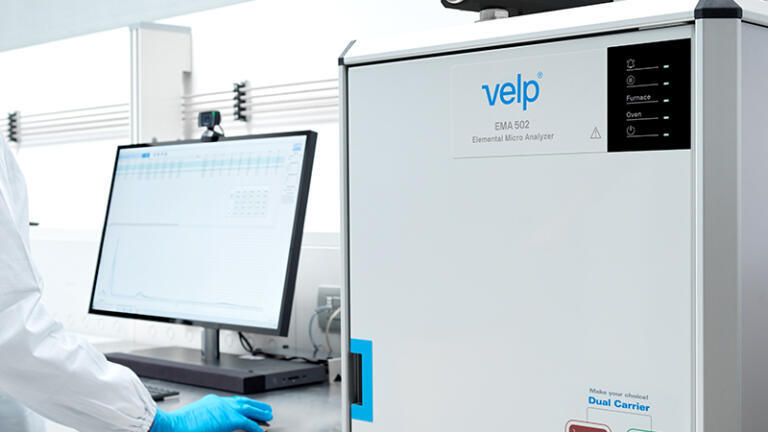
For homogeneous or effectively homogenisable matrices, such as pharmaceutical compounds, pure organic substances, or well-prepared solid and liquid samples, the Velp EMA 502 offers a precise and efficient micro CHNS-O solution. Milligram-scale sample amounts, combined with tin foil or capsule-based preparation, enable accurate combustion, excellent repeatability, and high-throughput routine analysis with minimal material consumption.
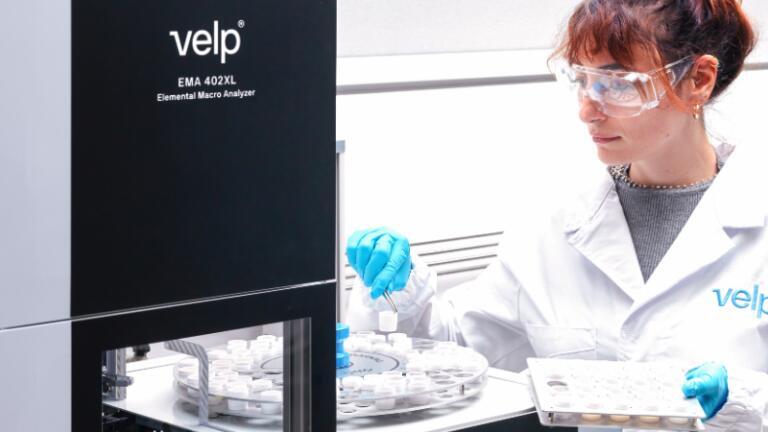
When the matrix is inherently heterogeneous, environmental samples, biomass, sludge, waste, coal or coke, the Velp EMA 402XL provides a macro CHNS approach designed to meet that challenge. Larger sample masses improve representativeness and reduce variability linked to matrix complexity, while reusable ceramic crucibles support cost-efficient, reliable routine workflows even on the most demanding samples.
There is no universally superior approach. The right choice is the one aligned with the sample, the analytical objective, and the confidence level required by the workflow.
Thanks to a complete portfolio of micro and macro elemental analysers and consumables, Velp provides reliable analytical workflows tailored to different operational and methodological requirements.
Contact us to identify the elemental analysis solution best suited to your laboratory and analytical needs.
ILM 51.6 Sept 2026


 Product directory


.jpg)
.jpg)










.jpg)
.jpg)
.jpg)
.jpg)