Laboratory products
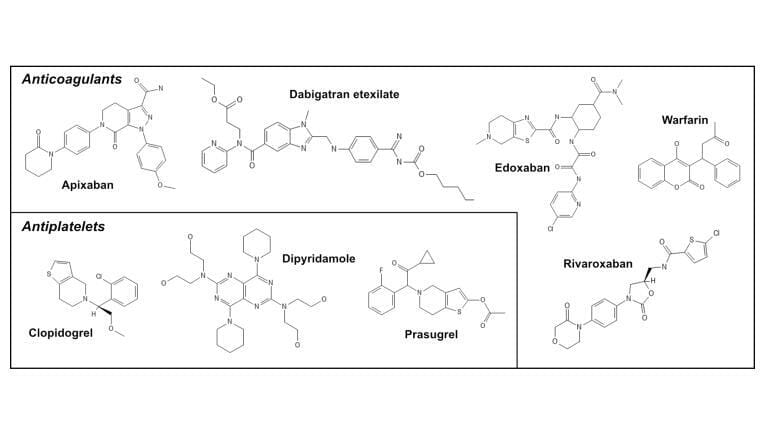
Antithrombotic medications (Figure 1) are pharmaceutical agents critical to modern cardiovascular healthcare1-3. Utilising SPE-LC-MS/MS provided a reliable, sensitive and selective clean-up for the simultaneous quantification of anticoagulants and antiplatelets in the plasma.
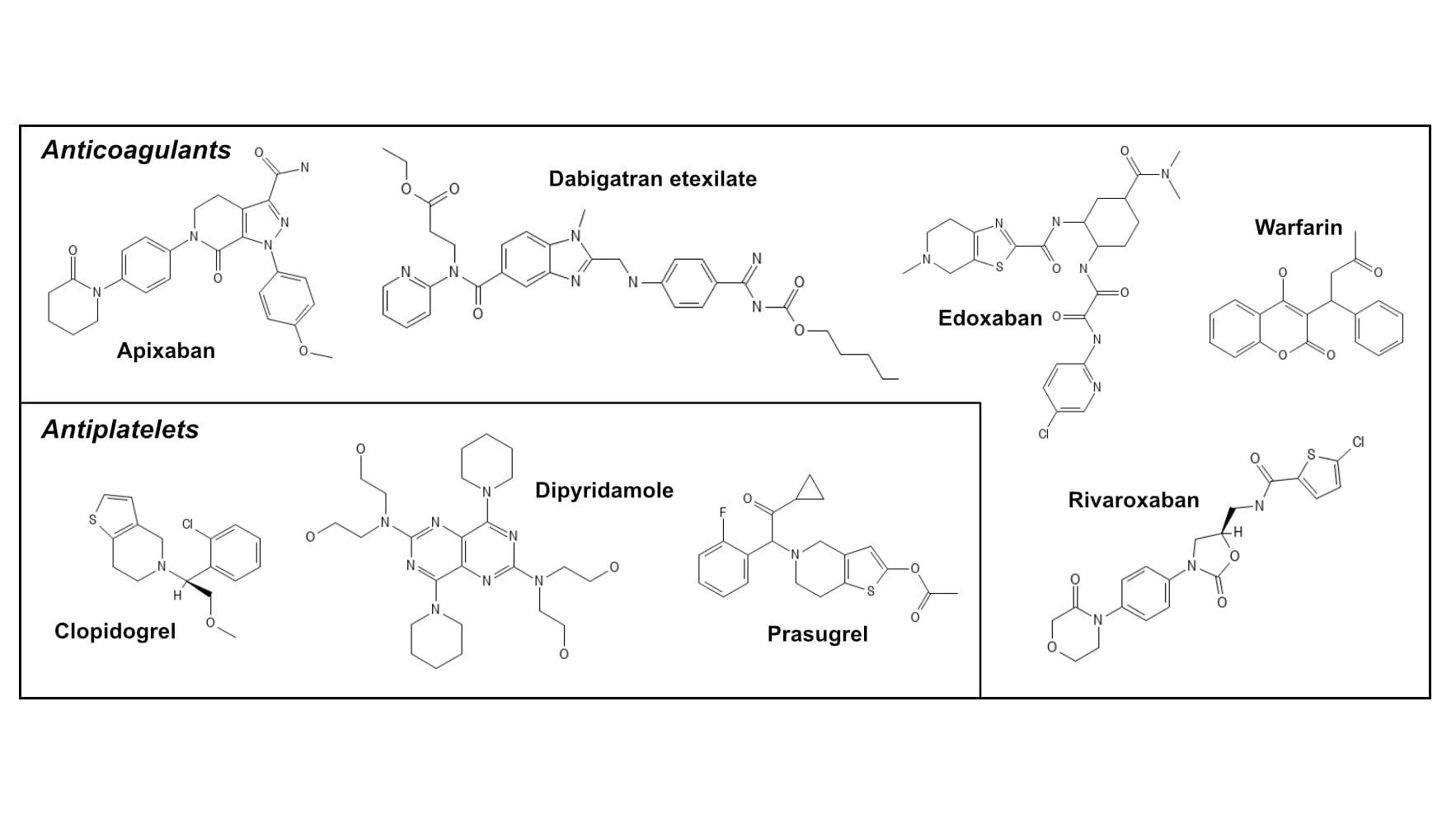
Figure 1 - Chemical structures of anticoagulants: apixaban, dabigatran etexilate, edoxaban, rivaroxaban and warfarin and antiplatelets: clopidogrel, dipyridamole and prasugrel
Analysis of antithrombotic medications is essential in the growing clinical sector where rapid, reliable and comprehensive measurements are required4. Furthermore, with the approval of specific reversal agents, such as idarucizumab for dabigatran5 and andexanet alfa for rivaroxaban6, determining the exact antithrombotic concentration within plasma has become imperative for safe and effective treatment.
Several coagulation-based, phenotypic and platelet function assays have been developed7, including diluted thrombin time, ecarin clotting time, and drug-specific anti-factor Xa assays8-10. However, these techniques lack the versatility to quantify multiple medications simultaneously and possess poor accuracy at low plasma concentrations11. Subsequently, LC-MS/MS methods emerged as the gold standard for the quantification of anticoagulants and antiplatelets in biological matrices12.
While several methods have been reported for separately quantifying anticoagulants and antiplatelets in plasma13, few methods combine quantification of both into a single method. Plasma represents a highly complex biological matrix containing proteins, phospholipids, salts, and endogenous metabolites14. These are capable of causing ion suppression, reduced sensitivity, and contamination of LC-MS ion sources15. Traditional approaches frequently employ protein precipitation or phospholipid removal sample preparation, which can leave behind interfering compounds, reducing sensitivity and method flexibility. SPE (solid phase extraction) provides a cleaner and targeted extract by effectively and selectively removing endogenous interferences whilst retaining the target analyte.
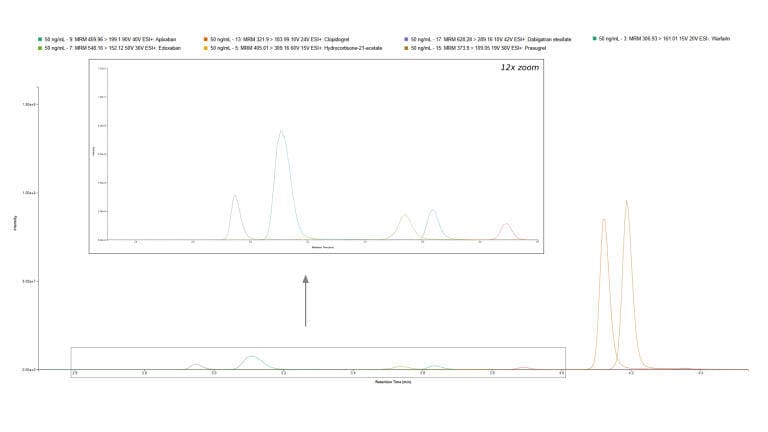
A sensitive SPE-LC-MS/MS method was developed and validated for the simultaneous quantification of major anticoagulant and antiplatelet medications in animal plasma (Figure 2).
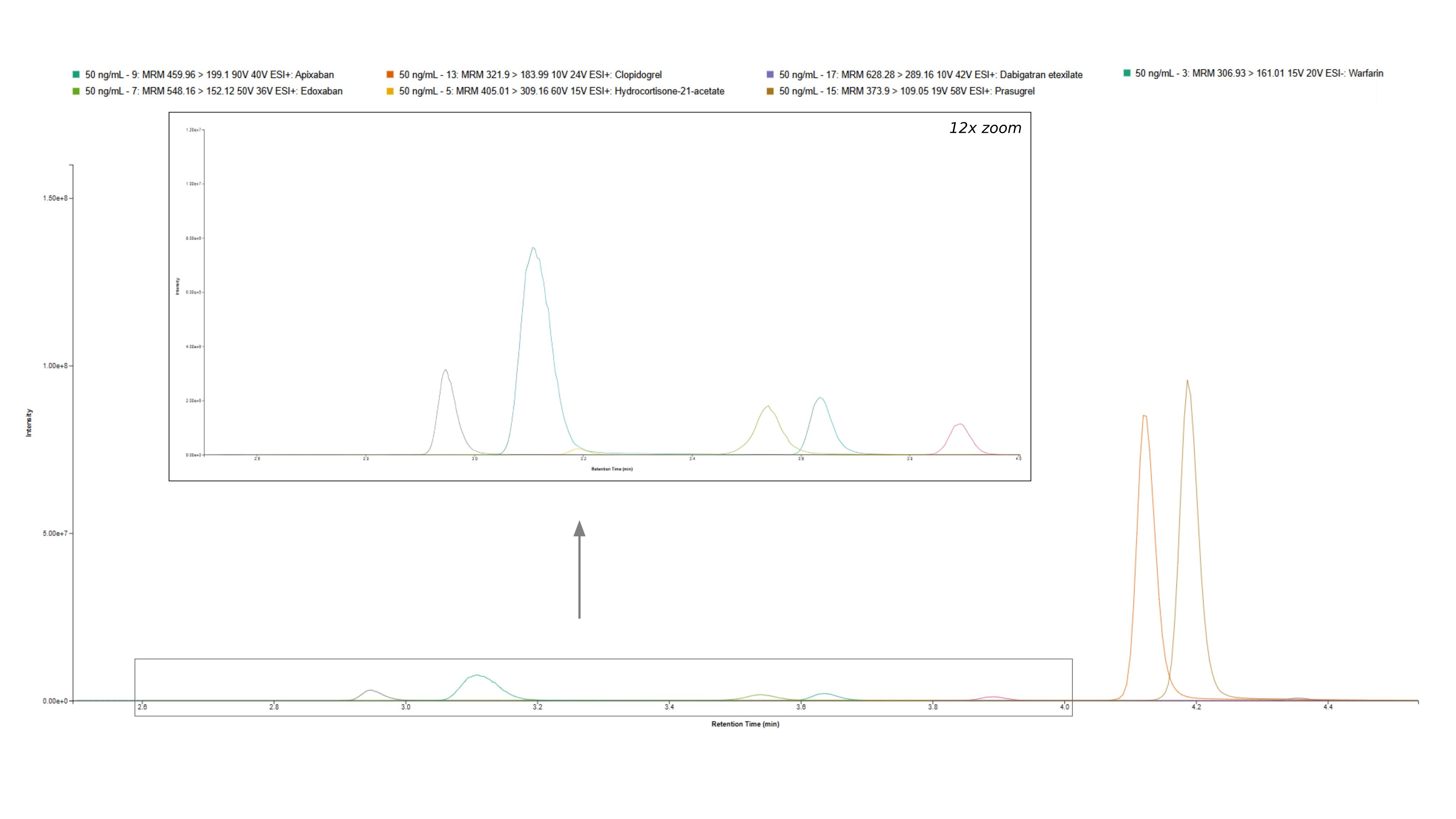
Figure 2 - Chromatographic separation of 50 ng/mL antithrombotic analyte QC sample using LC–MS/MS method.
The method demonstrated excellent linearity (R2 > 0.98), low MQLs (< 5.75 ng/mL) and good reproducibility (< 15% RSD) without clogging. The method was stress-tested using five different unfiltered animal plasmas (mouse, rat, rabbit, beagle, monkey) the results of which showed…
Read the full application note here - Cutting Through the Matrix
ILM 51.6 Sept 2026
 Product directory








,-Perfection-Under-Bench-Fridge-(mode.jpg)