Clinical, medical and diagnostics
An international study led by City of Hope cancer centre has found that the investigational Panxeon blood test could help to detect early-stage pancreatic cancer and advanced precancerous changes when potentially curative treatment remains possible
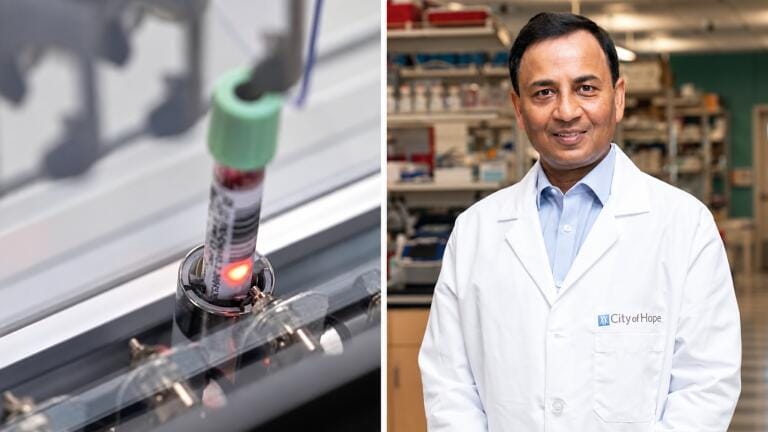
Researchers at City of Hope, Duarte, California, USA, have led the development of an investigational blood test that could detect pancreatic cancer at its earliest stages, when the disease is more treatable and potentially curable.
An international study has found that the liquid biopsy, called Panxeon, achieved high sensitivity for stage 1 and stage 2 pancreatic cancer while it maintained a comparatively low rate of false-positive results. It also identified high-grade dysplasia, an advanced precancerous condition of the pancreas.
Pancreatic cancer often causes few recognisable symptoms during its early stages. Many patients therefore receive a diagnosis only after the disease has spread, when surgery and other potentially curative treatments are less likely to remain viable.
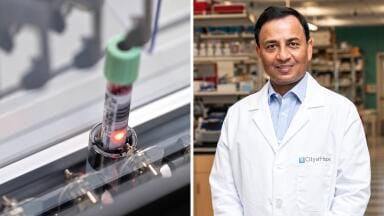
“Pancreatic cancer remains so deadly largely because we find it after the window for cure has begun to close,” said senior author Dr. Ajay Goel, an American Gastroenterological Association Fellow, and chair of the department of molecular diagnostics and experimental therapeutics at City of Hope.
“For patients, these findings represent progress towards finding pancreatic cancer before symptoms appear and while more treatment options remain available,” added Goel.
Only 14 per cent of patients survive for five years after a pancreatic cancer diagnosis with approximately 90 per cent receiving their diagnosis at an advanced stage.
Panxeon analyses a blood sample for three biological indicators:
An artificial intelligence model combines the measurements to produce a score that estimates a patient’s risk.
According to the researchers, Panxeon is the first investigational blood test to integrate these three classes of biomarker within one assessment.
The researchers assessed the test in nearly 1,800 participants across the USA, Europe and Asia. Panxeon correctly identified stage 1 and stage 2 pancreatic cancer in 87 per cent of cases. Its false-positive rate was three per cent among low-risk participants and 16 per cent among those at high risk.
The test is not intended to replace diagnostic imaging, tissue biopsy or other established examinations. Instead, it could identify people who require further evaluation.
Panxeon also detected high-grade dysplasia in more than 64 per cent of cases. This condition comprises severely abnormal cells that have not yet developed into invasive cancer and is sometimes described as ‘stage 0’ pancreatic cancer.
The finding could prove particularly valuable for patients with pancreatic cysts. Although many cysts remain benign, some can still progress to cancer. The test could help clinicians to determine which cysts require close surveillance or intervention.
The study included people with a family history of pancreatic cancer or an inherited genetic susceptibility, as well as patients with pancreatic cysts or chronic pancreatitis.
“Most biomarkers tell you one part of the story. Combining multiple biological signals gives us a clearer picture of what may be happening in the pancreas,” Goel explained.
People in these higher-risk groups often undergo imaging and other examinations, but current surveillance methods can be invasive, costly and only partly effective at the earliest stages. A reliable blood test could offer a less invasive way to determine who requires further assessment. Further prospective studies will be necessary before Panxeon can enter routine clinical practice.
“A stage shift is not just a statistic. The earlier we find pancreatic cancer, the greater the chance that meaningful intervention is still possible,” Goel said.
For further reading please visit: 10.1038/s41591-026-04625-x
ILM 51.6 Sept 2026





 Product directory