Gas chromatography
Most laboratories testing for nitrosamines have a method that works. Running GC-MS, they target the compounds they need to control, with established methods that deliver precise, reliable results. There is no problem to solve there. The method does its job.
But a targeted method has a defined scope. It looks for the compounds it was built to find, identifying each by its mass spectrometry. A nitrosamine outside that scope, one nobody thought to include, can pass through unseen. The method is not at fault. It is simply not looking for it.
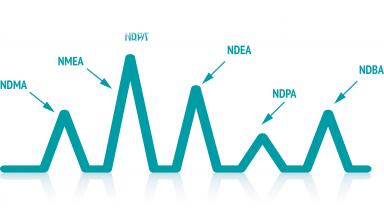
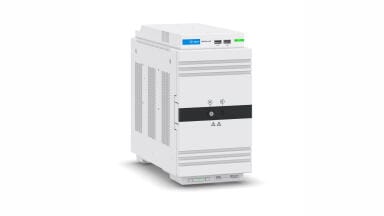
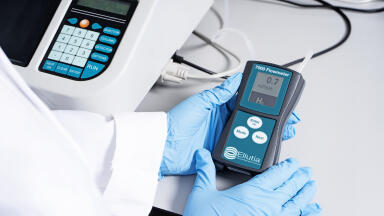
The Thermal Energy Analyser (TEA) works the other way round. It is a detector designed specifically to find nitrosamines, responding only to the nitrogen-oxide bond found in every nitrosamine rather than identifying compounds by mass. Coupled to a gas chromatograph, it separates individual nitrosamines and detects each as it elutes, identifying and quantifying each of your known targets.
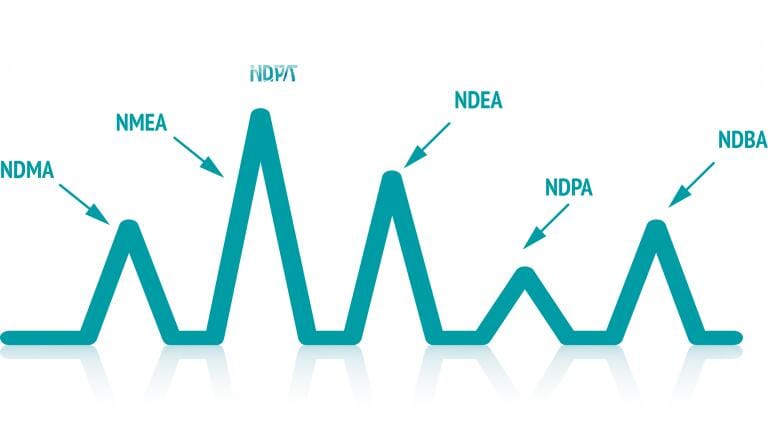
Compounds without the nitrogen-oxide bond produce no signal at all, so the surrounding matrix does not interfere. In a complex sample, nitrosamine peaks stand out clearly against a quiet baseline rather than competing with everything else present. The result is less ambiguity over what each peak represents, and more confidence in the number that goes into a report.
A nitrosamine the TEA was not calibrated for still produces a distinct peak, so an unexpected compound does not slip past. It appears in the chromatogram, the analyst can see that something is there, and that peak can be flagged, confirmed with a complementary technique, and acted on before it becomes a larger problem. Finding an unexpected nitrosamine in a routine screen is a far better position than learning about it from a regulator or a recall.
The contamination incidents that triggered the regulatory response, valsartan and the wider sartan recalls among them, involved compounds that were not on anyone's screening list until they were found. The value is in seeing what you were not looking for, before it becomes the next recall.
The TEA detects volatile and semi-volatile nitrosamines, and it connects to most GCs, so a laboratory can add this capability to a gas chromatograph it already owns rather than buying a separate instrument. And if you would like to see the results on your own samples first, we can run them for you.
Contact Ellutia to find out how nitrosamine detection could work in your laboratory.
More information online
ILM 51.6 Sept 2026


 Product directory


.jpg)
.jpg)













.jpg)
